Featured Story The Business of Making
The Hidden Dangers of AI-Generated Art
What Sellers and Artists Need to Know


Related products
Trending searches this week
Featured Story The Business of Making
The Hidden Dangers of AI-Generated Art
What Sellers and Artists Need to Know
Handmade.com Shares Exciting Platform News
Handmade Seller magazine, a leading publication for makers, has just featured the Handmade.com marketplace again in a lengthy Q&A interview with Catherine Ryan, spokesperson for NOVICA and Handmade.com.
In the interview, Ryan shared that Handmade.com receives daily applications from makers around the world, and that the approval process rollout continues carefully, to ensure the marketplace remains exclusively dedicated to genuinely handmade goods.
Ryan also highlighted the continued development of Handmade.com’s seller tools, including self-onboarding storefronts and AI-assisted listing and translation features designed to make onboarding and selling easy for makers everywhere.
Authenticity remained a central theme throughout the interview. The interview also reinforced Handmade.com’s mission to offer makers an alternative to larger marketplaces where handmade products can be overshadowed by mass-produced goods.
LOS ANGELES, CA, April 3, 2026—Handmade.com, the fast-growing, mission-driven marketplace launched by NOVICA, today announced that Goimagine’s Jon Lincoln and Stephanie Romkey have joined its team to help accelerate the platform’s next phase of growth.
Jon Lincoln, former Founder & CEO of Goimagine, a handmade marketplace that donated profits from every sale to charity, brings deep experience building a maker-focused platform and cultivating a strong community of independent creators across the United States. As Handmade.com’s Founding Advisor, Lincoln will support growth strategy, maker onboarding, and key partnerships, helping expand the platform’s reach and strengthen its community foundation.
Stephanie Romkey, former Creative Director of Goimagine, joins as Handmade.com’s Creative Director. She will play a key role in shaping how makers join, connect, and grow on the platform, with a strong focus on community and onboarding. Her work will include perfecting onboarding experiences, strengthening community foundations, and developing systems that scale while keeping the platform human-centered and uniquely personal.
The addition of Lincoln and Romkey marks an important step in Handmade.com’s evolution as a next-generation handmade marketplace. By pairing NOVICA’s global infrastructure and veteran team of marketplace experts with Goimagine’s community-driven and U.S.-maker expertise, Handmade.com continues to build a platform centered on handmade authenticity, personal connections, and promotional support for makers.
“Jon and Stephanie built an authentic and maker-centric marketplace at Goimagine. They add deep community understanding and creative leadership to Handmade.com,” said Roberto Milk, Co-Founder and CEO of NOVICA. “The alignment between Handmade.com and Goimagine, including their close connections to vast networks of talented regional makers, signals a natural and exciting step forward.”
“Handmade.com represents an opportunity to build an extraordinary handmade marketplace at global scale, while staying rooted in what matters most—supporting makers and building deep community roots with Handmade.com’s sellers,” Lincoln said.
A Goimagine community page is currently under development on Handmade.com, in addition to Smithsonian-focused and location-based community pages. Goimagine makers will receive priority onboarding, helping shape the Handmade.com community from the outset.
“We're thrilled to combine forces with the Handmade.com team to build something truly special. A marketplace where every maker feels seen, supported, and part of something bigger. From the very first onboarding experience to the community we grow together, our goal is to create a handmade marketplace that feels deeply personal, genuinely connected, and full of life,” Stephanie Romkey noted.
Handmade.com is a new division of NOVICA, designed as a social, video-first marketplace for handmade goods, directly connecting makers and customers around the world through storytelling, community, and commerce.
Handmade.com and sister marketplace Novica.com form the world’s largest fair trade artisan marketplace group, connecting millions of customers in more than 100 countries with master artisans worldwide. Originally launched in partnership with National Geographic in 2000, NOVICA pioneered direct-to-consumer global craft e-commerce, and today independently remains a leader in fair trade, artisan empowerment, and cultural preservation. The group offers an expanding catalog of more than 50,000 handcrafted SKUs, including handcrafted jewelry, handmade decor, handwoven textiles, ethical apparel, and original fine art, authenticated for quality and origin. Through long-term partnerships with skilled craftspeople, Handmade.com and Novica.com work to sustain craft traditions while delivering exceptional handmade luxury to the world.
The Handmade.com Ethical Pledge
Right now, we are all helping to shape the future of handmade.
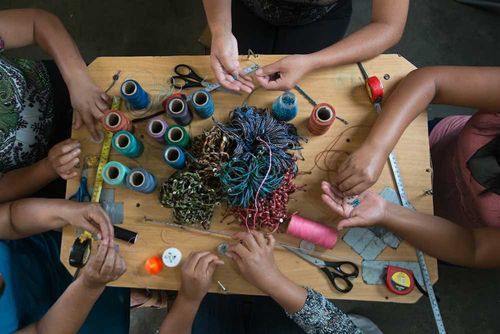
This is a community built on trust and the highest ethical principles. All sellers must commit to the Handmade.com Ethical Pledge to ensure that the items they list meet our definitions of handmade by category and that their practices conform to the highest ethical standards.
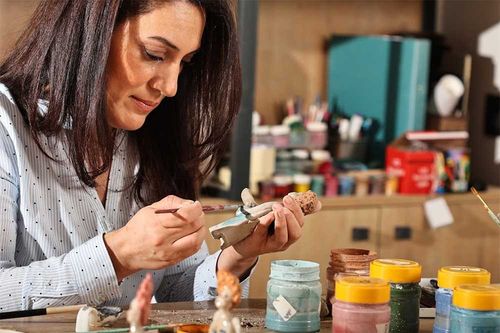
Made by hand. I pledge that every product I list on Handmade.com meets Handmade.com’s definitions of handmade by category. I understand that credible reports of violations will result in Handmade.com suspending sales of relevant products for review and potential suspension of my store. I understand that a confirmed violation may result in the immediate removal of my products and store from Handmade.com.
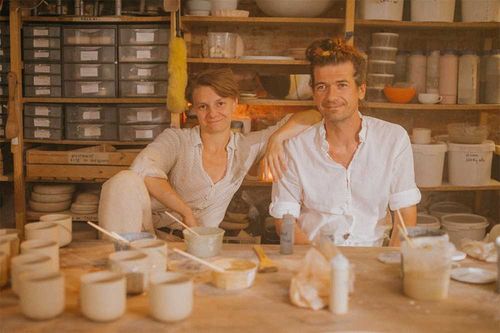
Keep it ethical. I pledge that I, and my place of business, and any artists, artisans, or artisan groups that I represent, commit to adhering to the highest ethical standards, including honesty, integrity, trustworthiness, and respect for the unique intrinsic value of all collaborators, sellers, shoppers, and staff at Handmade.com.
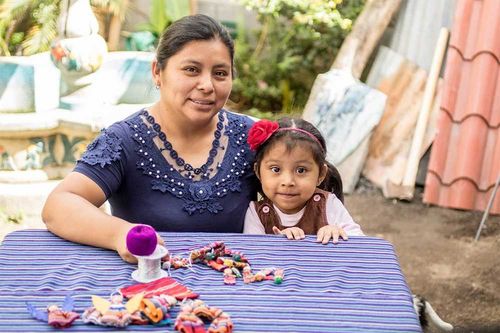
Uphold fair labor principles. Based on the Universal Declaration of Human Rights, as defined by the United Nations, and the International Labor Organization’s standards, I pledge to steadfastly uphold core values such as no forced labor, no child labor, to allow for freedom of association, and I pledge to provide wages, benefits, and working hours in compliance with all applicable national laws and regulations in the region where my listings are made and where I do business.
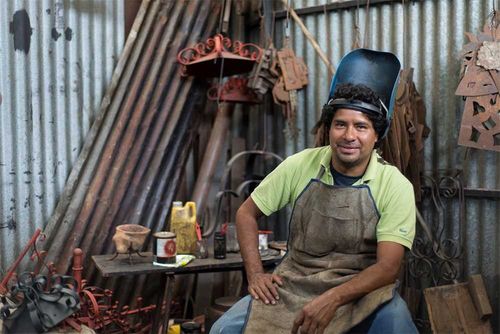
Ensure safe working conditions. I pledge that at my place of business and that of any artists, artisans, or artisan groups I represent, safe and healthy working conditions will be ensured for all, and that compliance with all applicable local environmental, safety and health regulations will likewise be guaranteed.

Prohibit harassment and abuse. I pledge that at my place of business and that of any artists, artisans and artisan groups I represent, everyone will be treated with respect and dignity, and no one will be subject to any physical, sexual, psychological or verbal harassment or abuse.

Practice nondiscrimination. I pledge that at my place of business and that of any artists, artisans, or artisan groups I represent, no discrimination will occur in any aspect of hiring, salary, benefits, advancement, discipline, termination or retirement, for any reason including gender, color, race, religion, age, disability, sexual orientation, pregnancy, marital status, nationality, political opinion or political affiliation, union involvement, or social or ethnic origin.
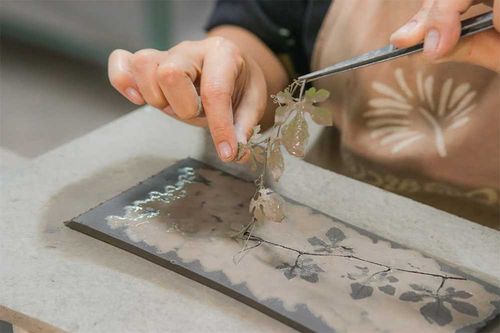
Take environmental responsibility. I pledge that my place of business and that of any artists, artisans, or artisan groups I represent will operate in a manner that is protective of the environment. I further pledge to minimize our carbon footprint and abide by environmentally supportive, sustainable practices, including sustainable raw materials choices and production methods.

Choose ethical materials. I pledge that my place of business and that of any artists, artisans, or artisan groups I represent will practice mindful material selection, prioritizing raw materials with minimal environmental impact while also adhering to ethical sourcing choices. I further pledge that we will diligently reduce our carbon footprint by including energy-efficient processes and equipment, and will take advantage of sunlight when possible, unplug electronic devices when not in use, and promote the use of shared transport and/or environmentally-friendly transportation options.

Minimize waste. I pledge that my place of business and that of any artists, artisans, or artisan groups I represent will minimize packaging and shipping waste, choosing biodegradable or recyclable options while minimizing or eliminating any unnecessary packaging. I further pledge that I will regularly review and enhance our environmental practices, and will embrace environmental innovation while staying abreast of the most sustainable options.
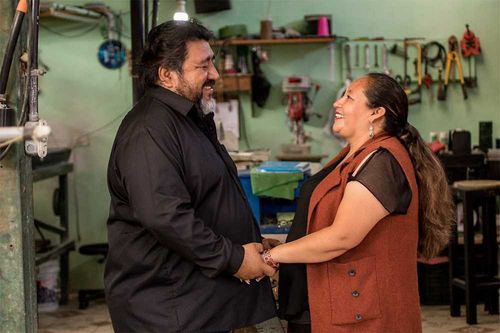
Be ethically upstanding. I pledge to honor the highest ethical standards of handmade and fair trade. I further pledge to participate as an upstanding member of the Handmade.com seller community, treating others with kindness and respect.
There’s no combination of words that creates harmonious magic. In the end, it comes down to our actions and our choices, and remembering to be kind to one another. Here, accountability matters.
The road ahead is filled with tremendous people, gorgeous discoveries, and unexpected delights.
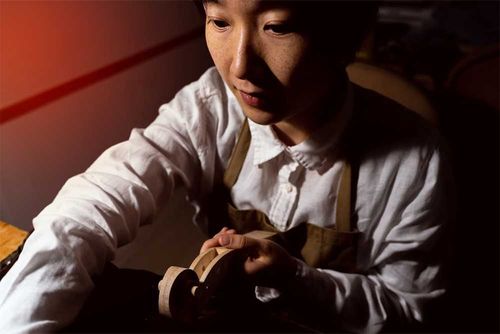
By signing the Pledge, artists, artisans, and their representatives commit to uphold all aspects of the Handmade.com Ethical Pledge.
Would you like to open your own Handmade.com storefront? We invite you to apply here now.
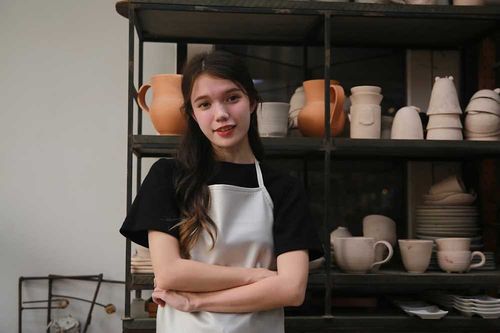
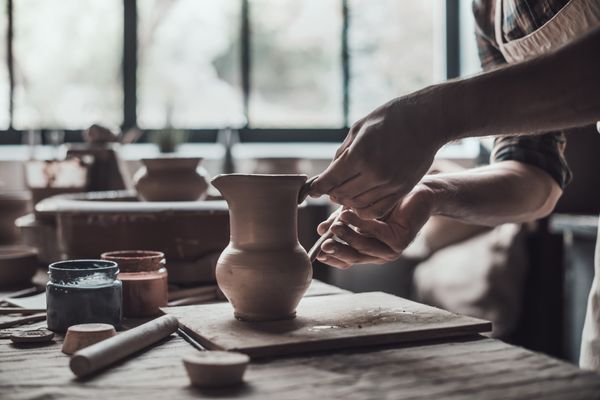
There is a quiet revolution sweeping the world.
You’ve noticed.
In almost every store. Somewhere in almost every refrigerator. Restaurant. Closet. Winery. Bakery. Beauty counter. Service provider. Artisan-made. It’s right there, boldly on the label, silently staring back at us.
Why? Because people really do care. In a world increasingly anonymous and consolidated, we seek balance. Instinctively and purposefully. We crave meaning and authenticity—now more than ever. And perhaps, just perhaps, we begin to remember who we are. Not so long ago, most of us were artisans. A hundred years ago? Less? Welcome home, we might start saying to each other. Welcome home. And let’s start talking about it.
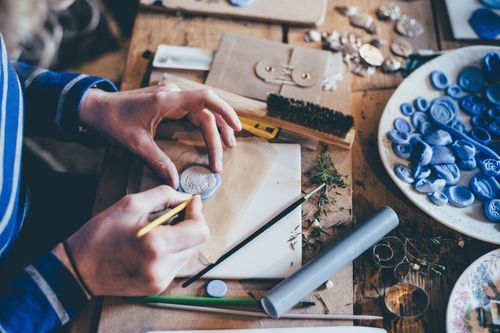
Handmade is a movement of We. It belongs to all of us. It is core to our beings. It is a partnership of many. Fundamental to those of us who choose to vote with our dollars for quality, fair trade, and authenticity—in every realm of our lives. The Handmade Movement is fast outgrowing its original niche of artisanal companies and supportive customers. We are many, many millions, everywhere.
Handmade is a very powerful concept. It is a belief system. One that appreciates quality. Culture. Heritage. Nature. Accountability. Fair trade. The Handmade Movement is relevant in all aspects of our lives, and bridges all lines of work, all cultures, all borders. It’s apolitical. Handmade is the alternative to a future most of us won’t accept. Where everything is the same. Where everyone looks the same. Eats the same. Where meaning and culture and tradition are lost.
Handmade is the beautiful, attainable alternative.
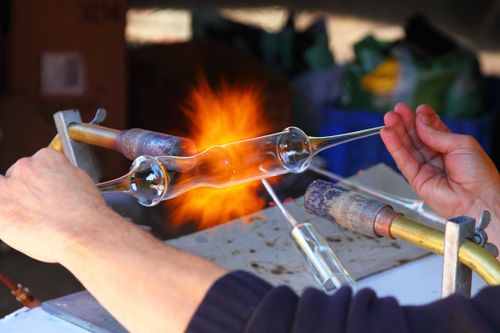
We are honored to be one of the founding voices in the Handmade Movement, dating back to our parent company Novica’s launch in 1999. We work very hard, every single day, to assist the world’s keepers of the arts. Handcrafts are our realm, our passion, our focus. We’re thrilled that our impact group has already climbed to millions of customers and tens of thousands of artisans and their dependents. So many lives improved thanks to our visionary logistics teams, our innovative tech teams, our devoted in-country region teams, and our impassioned customers.
To our customers—you make a difference every single time you choose handmade over factory made. We’re profoundly grateful to you for this choice.
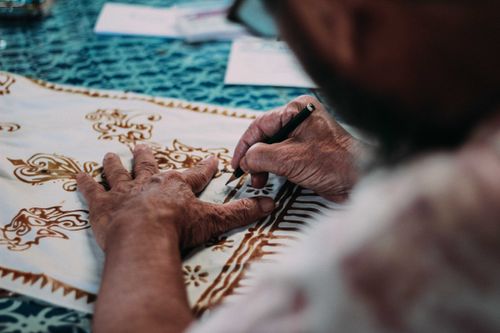
In every aspect of our lives, each of us encounters handmade choices every day. The choice to support our fellow human beings and small businesses, rather than anonymous conglomerates. The choice to buy or grow organic, rather than factory farmed. The choice to invest in meaningful products that endure—and a healthier, sustainable, equitable future. Because it’s the right thing to do.
Join us. And fasten your seatbelts!
Oh, and welcome home!
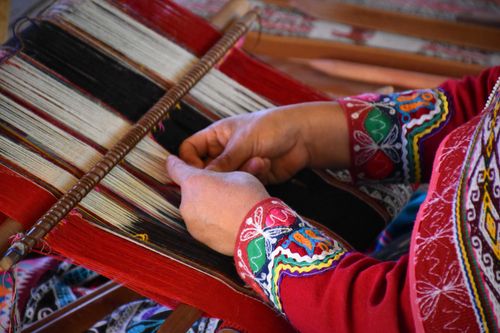

100% Happiness Guaranteed
If you aren't in LOVE with your purchases, let us know within 30 days and we'll make it right.
The Hidden Dangers of AI-Generated Art
In today's digital world, sellers and creators constantly seek eye-catching designs to make their products stand out. Recently, a new trend has emerged that seems too good to be true: AI-generated artwork. These visuals, often available at a fraction of the cost of human-created art, tempt many to incorporate them into their product lines. However, beneath the surface of this apparent bargain lies a web of ethical, legal, and creative concerns.
Thanks to powerful text-to-image AI models like DALL-E and Midjourney, anyone can now generate unique images with just a simple text prompt. These AI systems use complex algorithms trained on vast datasets of existing artworks and visual data to create new images that emulate various styles and patterns. While this technology is impressive, it raises significant questions about originality, copyright, and the future of human creativity in the art world.
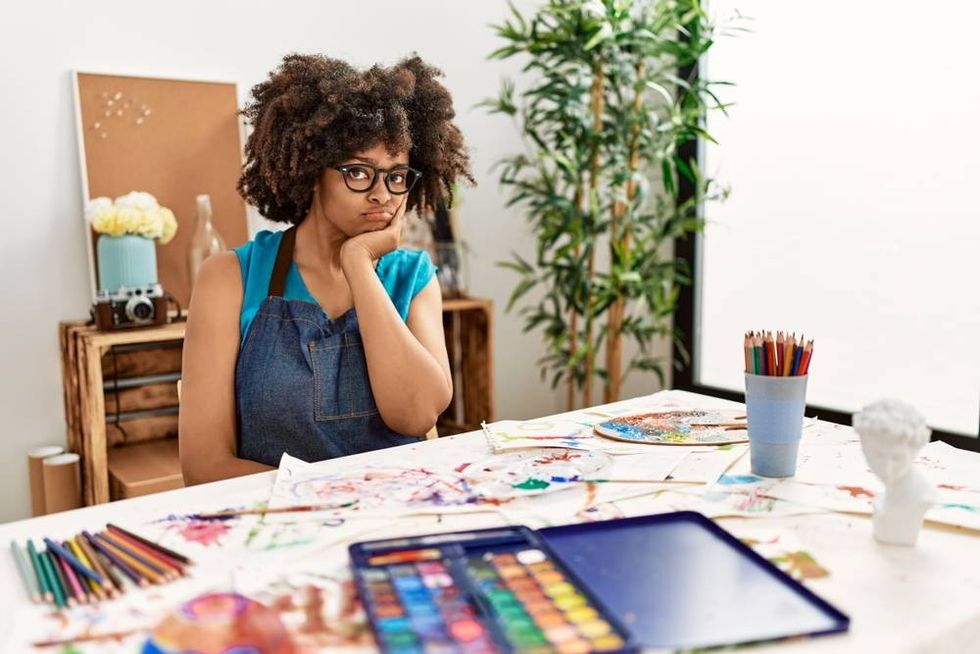
A common area where we see a lot of AI-generated artwork is with sublimated items. Sublimation printing is a digital process that uses heat and pressure to transfer dye onto different materials, such as mugs or t-shirts. It's becoming an increasingly popular craft. Many sublimators purchase art to use on their products. They could be accused of copyright infringement if they use an AI-generated image in their products without permission. Even if they purchased the art from a seller who claims the image is "royalty-free" or "commercial-use allowed," the rights to that image likely belong to the AI company, not the individual selling it.
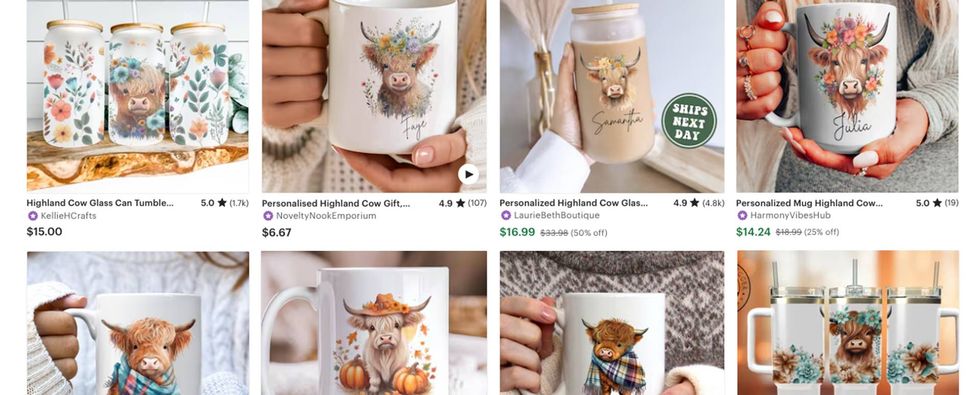
To protect yourself and your business, it's important to become a savvy "art detective." Here are some red flags to watch out for:
When in doubt, research the source of the design before using it commercially. Investing more in an authentic, hand-crafted design is better than risk legal issues down the line. Your customers will appreciate the care and attention you put into your products.
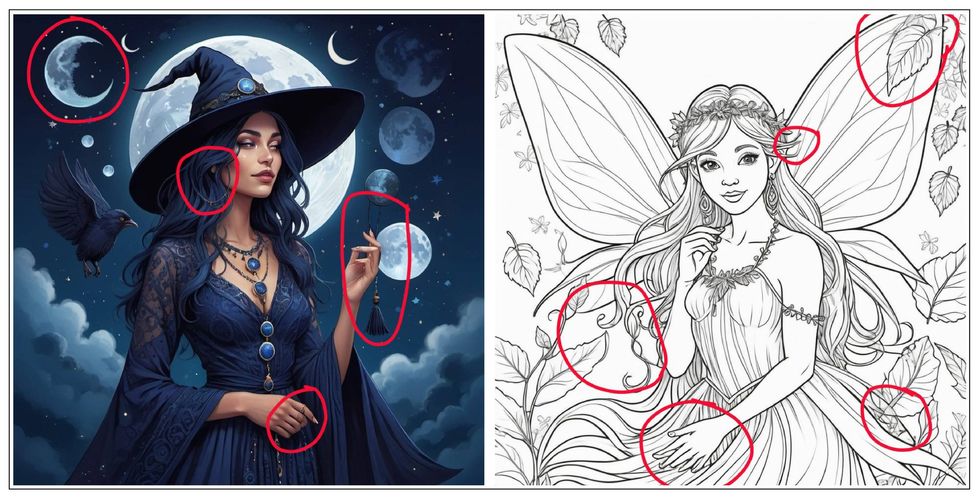
The proliferation of AI-generated art isn't just a concern for sellers – it also poses significant challenges for human artists:
If you're a seller considering using AI-generated art, here are some steps to protect yourself:
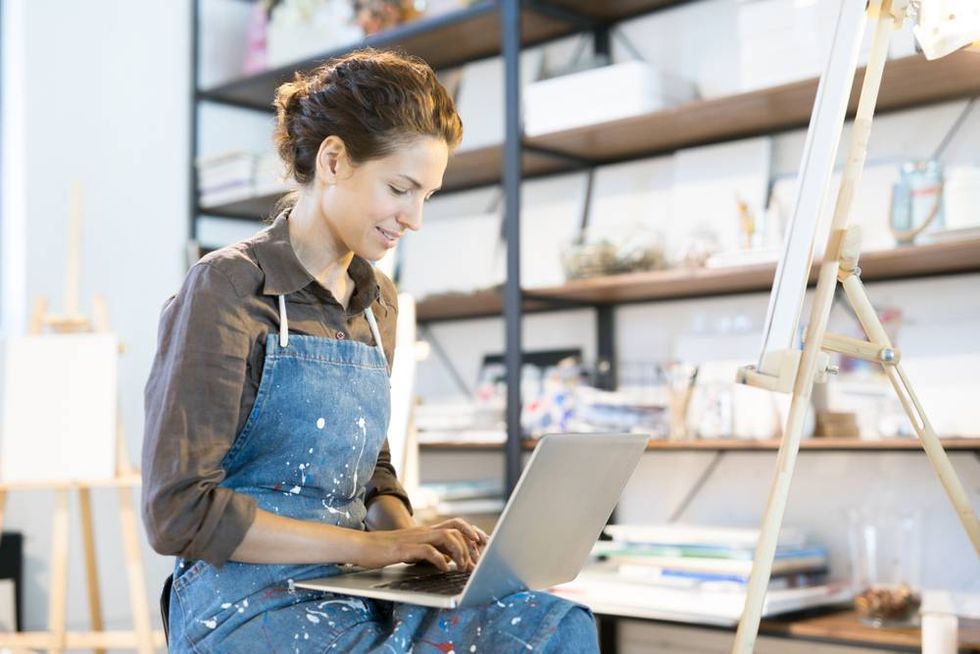
As AI technology continues to evolve, its role in design and art will undoubtedly grow. However, successful sellers and artists will find ethical, transparent ways to navigate this new landscape while prioritizing human creativity and maintaining customer trust.
By carefully considering the implications of AI-generated art and making informed decisions about your product designs or artistic practice, you can build a sustainable, ethical business or career that resonates with customers and stands the test of time. Remember, in a world increasingly dominated by artificial intelligence, the unique value of human creativity and authenticity may become more precious than ever.
At Handmade.com, we celebrate the unique spirit of handmade creations and the artists behind them. We believe that the personal stories, techniques, and emotions poured into each piece by our talented community are what make their creations truly special.
We also believe technology should work for makers, not against them. That's why we use AI-powered tools to help artists run their businesses more efficiently -- from listing their items to managing their shops -- so they can spend more time doing what they love: creating.
But there's an important distinction between using AI as a business tool and using AI to generate the art itself. Handmade.com remains committed to authentic, human-made goods. Our guidelines prohibit the sale of AI-generated art, ensuring our marketplace stays true to the makers and the craft behind every item.
We're grateful for the vibrant community of artists and makers who call Handmade.com home. Your creativity, dedication, and craftsmanship are what make this place special -- and we're here to help you thrive.
In a world dominated by one-click ordering and next-day delivery, I’ve been reflecting on a sentiment I’ve heard too often lately: “No one cares about handmade items anymore.” This statement has been weighing on me, not only as someone who appreciates craftsmanship but also as someone who believes in the human connections that handmade items represent. I want to make a case for why handmade still matters—perhaps now more than ever.
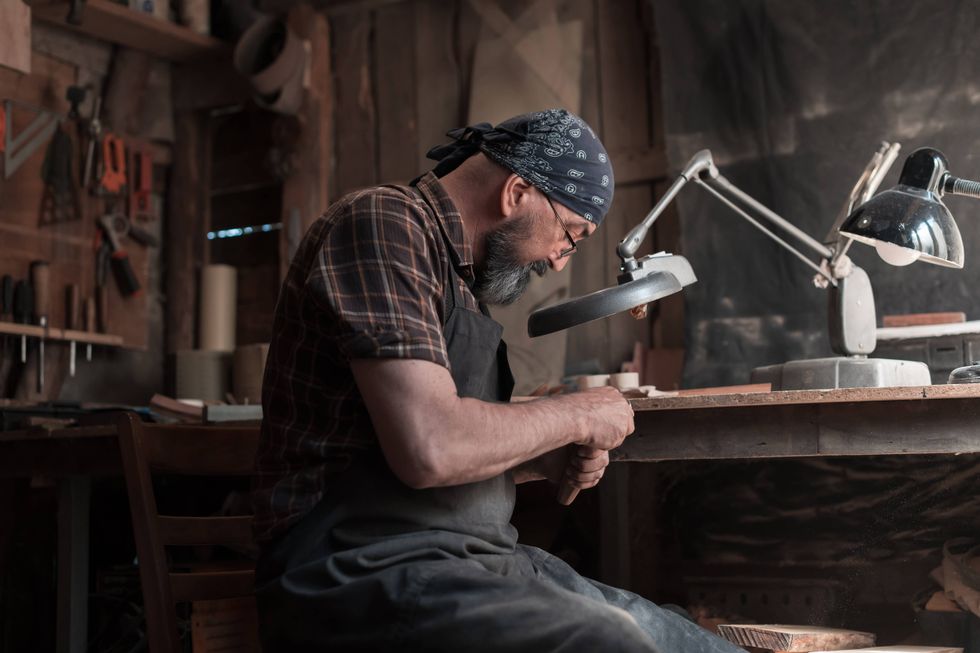
When you purchase something handmade, you’re not just buying an object. You’re directly supporting someone who has poured their time, skill, and passion into creating something unique. That ceramic mug wasn’t manufactured in a distant factory by machines; it was shaped by human hands and fired in a kiln tended by someone who has spent years perfecting their craft. The person who made it probably did a little dance when they saw your order come through.
It’s not just about the “handmade product”—it’s about supporting a small business, a real person with dreams, bills to pay, and a creative vision they’re brave enough to share with the world.
Those artisans you see at your local market? While some might be there purely for the joy of sharing their craft, many rely on these sales as a crucial source of income. That soap maker with the incredible scents or the seamstress with beautifully crafted bags isn’t just pursuing a weekend hobby—they’re running a business that puts food on their table and keeps the lights on. Your purchase might be the difference between them continuing their craft or having to find another source of income.
 Alpaca and Wool Blend Knit Beanie by Edison Canal
We don’t think twice about supporting our neighborhood pizza place. We understand that choosing the local spot over the chain restaurant keeps money in our community and preserves what makes our area special. Yet somehow, we’ve created a disconnect when it comes to handmade goods.
The woodworker crafting cutting boards, bowls, or spoons is no different than the pizza maker perfecting their dough. Both are skilled professionals creating something with care that enhances our daily lives. The only difference is that instead of feeding your stomach, the artisan is feeding your home, wardrobe, or gift-giving with items made with intention.
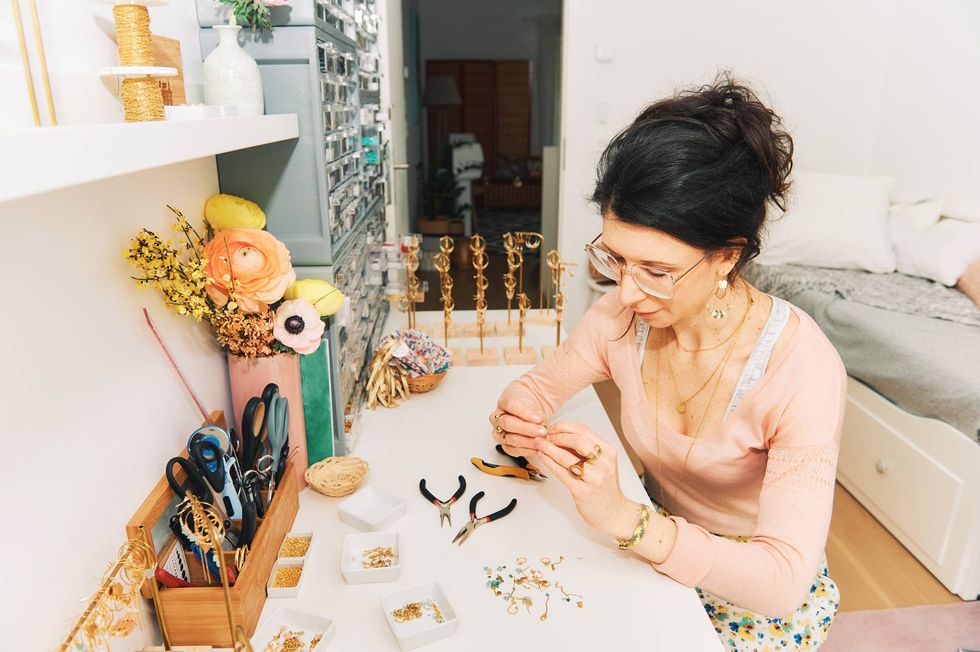
Art and handcrafted items serve as mood boosters in our lives—something many desperately need in today’s fast-paced, often overwhelming world. That hand-knit blanket doesn’t just keep you warm; it wraps you in someone else’s care. Handmade jewelry isn’t just an accessory; it’s a confidence booster worn with pride. That painting or print on your wall doesn’t just fill an empty space; it puts a smile on your face when you come home after a long, draining day.
Studies have shown that surrounding ourselves with meaningful objects actually improves our mental well-being. In an era of rising anxiety and digital overload, the tactile connection to something made by human hands provides a grounding force that mass-produced items cannot replicate.
 Corral Petroleo by One Thread Collective
Every handmade item carries a narrative woven into its very creation—from the inspiration that sparked it to the hands that brought it to life. Bringing a handmade piece into your home makes you part of its story. That handwoven scarf isn’t just a purchase; it’s a connection to the person who selected the fibers, chose the colors, and crafted each thread with intention.
Right now, social conversations are increasingly reduced to quick digital exchanges, and we find ourselves longing for something more substantial. The tangible nature of handmade goods offers a bridge to genuine human experience that our screen-dominated lives often lack. That unique glass piece hanging in your window or the beautiful necklace you’re wearing to grab coffee becomes a conversation starter—“Where did you get that?” —that opens the door to sharing the maker’s story, connecting you to guests in your home through something real and tangible.
These stories matter in a world where so much is anonymous and interchangeable. They connect us to our shared humanity and remind us that human hands and hearts are behind every creation.
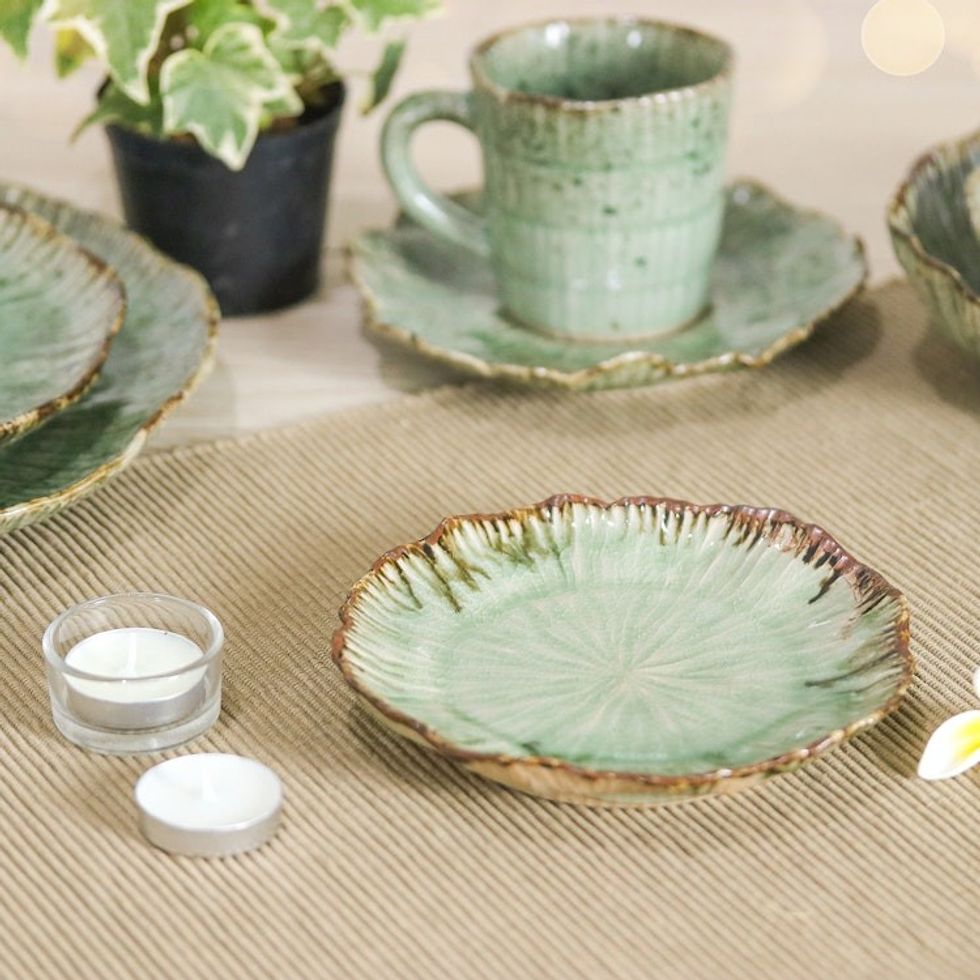 Lotus-Themed Speckled Green Celadon Ceramic Appetizer Plate by Thatsanee and Ramphan
When discussing sustainability, we often emphasize materials alone. However, true sustainability encompasses the entire lifecycle of products, including how they are produced, distributed, and ultimately discarded.
Many handmade items use locally-sourced materials, minimize waste, and are built to last. Artisans typically make in small batches, avoiding the overproduction that plagues fast fashion and home décor. When something is made with care and attention to detail, it’s more likely to become an heirloom than landfill fodder.
Shopping locally—whether in person or online—significantly reduces carbon emissions associated with shipping and transportation. When you purchase from a maker in your region, the item travels a much shorter distance to reach you than products shipped from overseas factories. Even shopping online from local artisans reduces the overall carbon footprint of your purchase. Platforms like handmade.com make this easier by allowing you to filter searches by state, helping you discover and support makers in your area.
By investing in handmade, you’re often making a choice that’s better for the planet, not because it’s marketed as “eco-friendly,” but because it’s inherently more aligned with thoughtful consumption and shorter supply chains.
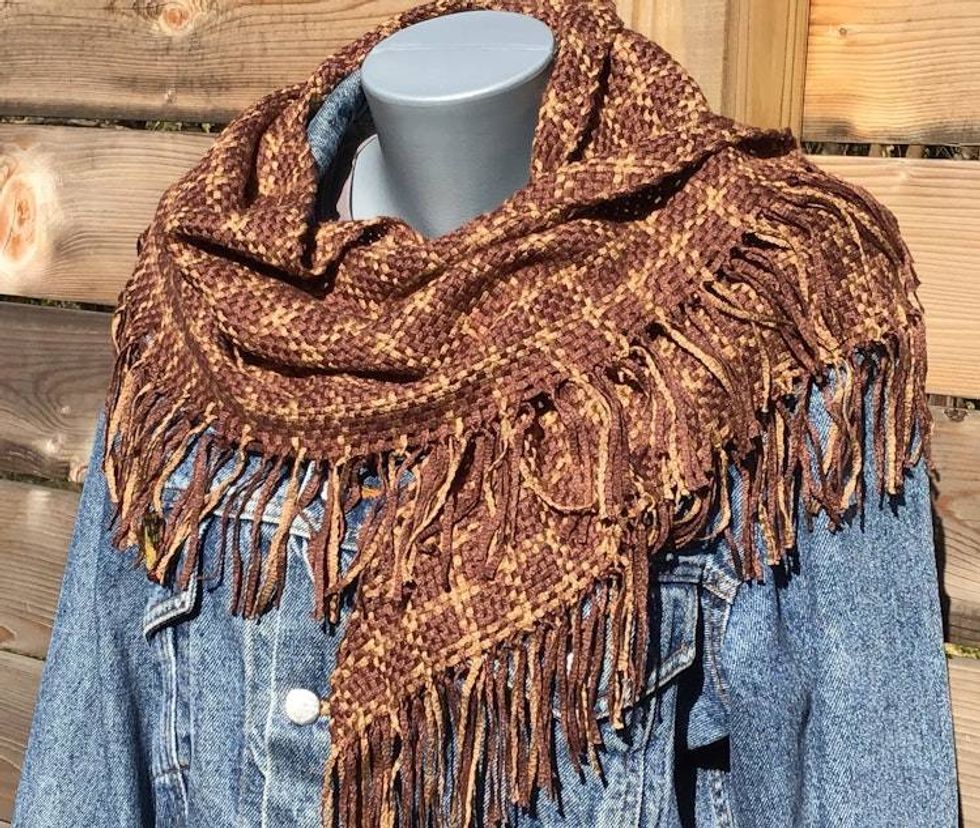 Brown and beige woven scarf by Lyon Handwoven
We increasingly live in a world curated by algorithms, which show us more of what we’ve already seen and steer us toward predictable choices. Social media feeds, shopping recommendations, and even search results are all filtered through invisible systems that narrow our experiences rather than expand them.
Handmade items break this cycle. They represent human creativity that isn’t constrained by what’s trending or what data suggests will sell best. Each maker brings their unique perspective, cultural background, and artistic vision to their work, resulting in pieces that algorithms might never recommend, but that could bring unexpected joy to your life.
Supporting handmade goods represents a small but meaningful act of resistance against the growing uniformity of our material world. It conveys the message: I appreciate the unexpected, the imperfect, and the truly unique expressions that arise from individual creativity. It’s about stepping outside the echo chamber of algorithm-driven recommendations to find something genuinely different.
In a time when so many of our choices are subtly guided by data-driven systems optimized for profit rather than human connection or artistic expression, choosing handmade helps keep diversity alive in our material culture. It ensures that not everything in our homes and lives looks like it came from the same few massive retailers. The handmade movement preserves variety, personality, and cultural richness in the things we surround ourselves with.
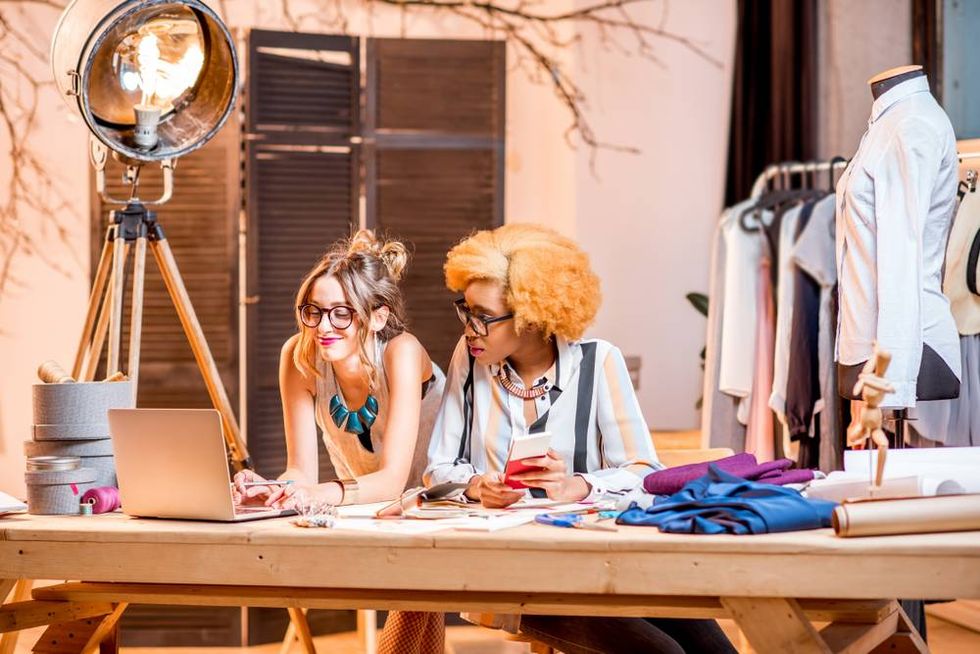
What we’re really missing in our rush to convenience is the joy of human connection. When you purchase something handmade, you often communicate directly with its maker. You can ask questions about their process, request customizations, or simply express appreciation for their work.
This exchange is worlds away from the anonymous transaction of mainstream shopping. It reminds us that commerce, at its best, can be a form of communion—a meaningful exchange between maker and appreciator.
Supporting these artisans, whether in person at local markets or online through their shops, is crucial to their survival. The artisan selling hand-knitted hats at your farmers market might also have an online shop to reach customers year-round. That candle maker you discovered on social media might depend on in-person events and digital sales to make their business viable.
Each purchase helps these small businesses find and connect with their ideal customers—people who truly value their unique vision and craftsmanship. In a marketplace dominated by massive corporations with enormous marketing budgets, your support gives these independent creators a fighting chance to continue doing what they love while making a living.
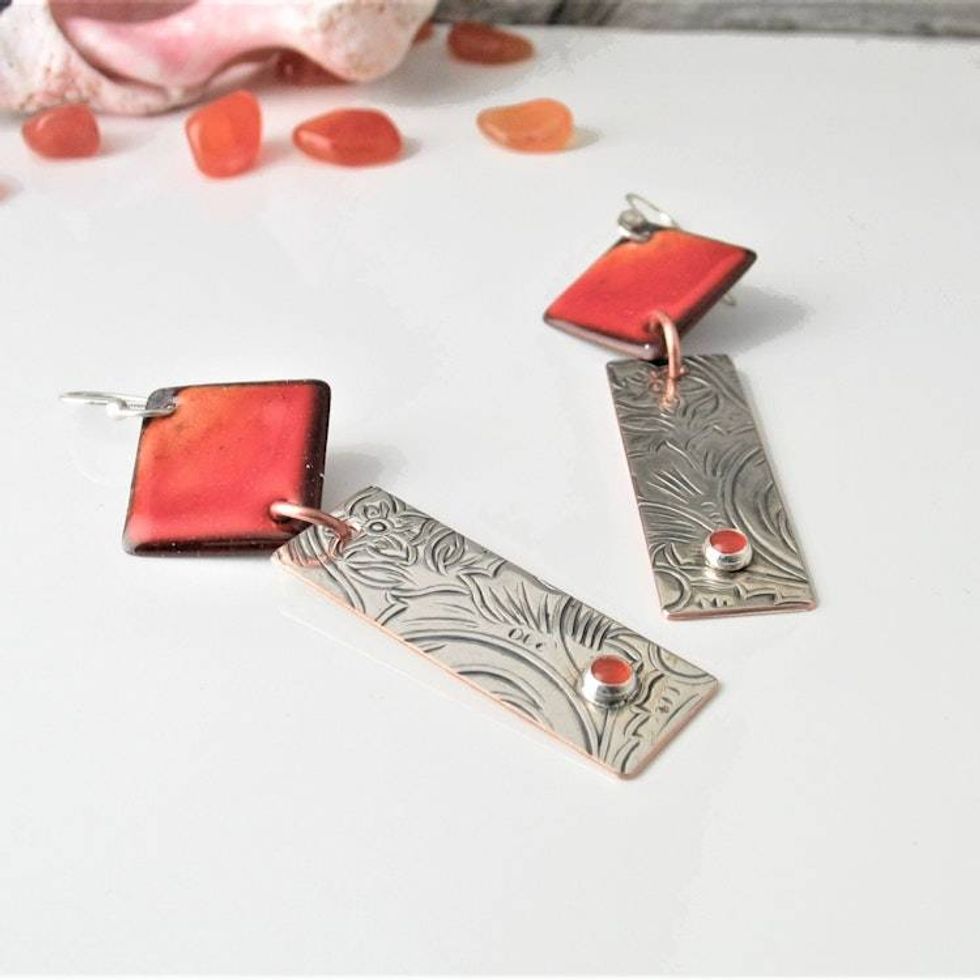 Carnelian Gemstone Sunset Orange Earrings with Silver Bar by Wild Gatherings
Plenty of people still care deeply about handmade. But in a world optimized for convenience and driven by algorithms prioritizing the most profitable options, choosing handmade requires more intention.
Whenever you choose to purchase from an independent maker, you vote for the world you want to live in. You’re supporting real people with dreams and bills to pay. You’re choosing quality over quantity, meaning over convenience, and human connection over corporate efficiency.
These small choices add up. They help sustain traditions and skills that might otherwise disappear. They keep money circulating in your local economy. They reduce environmental impact and preserve diversity in our material culture.
And perhaps most importantly, they bring more beauty, joy, and meaning into your daily life. That morning, coffee tastes better in a mug made by human hands. That scarf feels warmer knowing the care that went into creating it. That painting on your wall means more because you know the artist’s story.
So the next time you need something—a gift, a home item, or something for yourself—take that extra moment to seek out the independent creator. Visit your local craft market. Browse platforms dedicated to handmade goods. Look for the person creating what you need with care and skill.
In an increasingly disconnected world, objects made with love by human hands remind us of what truly matters—the beauty of connection, the value of craft, and the irreplaceable touch of someone who cares enough to create.
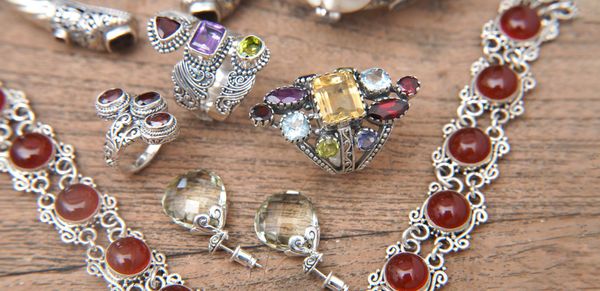
Silver Surge Could Mark a Turning Point for Handmade Jewelry Worldwide
Silver’s surge past $100 per ounce this January has set a market record, redrawing the economics of handmade jewelry, elevating sterling silver’s status in the luxury conversation, and creating new uncertainty for artisan silversmiths around the world. If silver prices remain elevated, this moment may prove a broader turning point in how handmade silver jewelry is valued worldwide.
For Handmade.com and sister marketplace Novica.com, the shift is unfolding in real time across artisan workshops, supply channels, and customer demand. The NOVICA group is watching silver’s historic climb transform both the cost and cultural meaning of handcrafted silver jewelry. Together, Handmade.com and Novica.com are believed to operate the world’s largest fair trade handmade jewelry marketplace group, serving customers in more than 100 countries and offering more than 27,000 unique jewelry SKUs at any given time.
Compared with a year ago, silver prices have roughly tripled. That rise is rippling across the jewelry industry, from independent artisan-designers to major commercial brands, while drawing renewed global attention to silver as both a precious metal and a luxury material.
“Inside this silver market disruption is a decisive shift we are witnessing in real time,” NOVICA CEO Roberto Milk says. “We are seeing new customers drawn to silver because sterling now carries greater luxury appeal at all-time highs. In some ways, this moment is rewriting the prestige of silver craftsmanship worldwide.”
That shift is especially significant for a marketplace where genuine .925 sterling silver accounts for approximately 20 percent of annual handmade jewelry sales. Long prized by silversmiths for its durability, malleability, and beauty, sterling silver has historically occupied a space between accessibility and refinement. Now, as prices climb, that balance is changing.
“We are living through a cultural and economic shift where silver is reclaiming its historical role as a truly precious metal,” says Nina Cooper, a jewelry artisan-designer who sells on Handmade.com. “Silver jewelry has been elevated beyond inexpensive or casual purchases. Today it stands firmly in a position of affordable luxury.”
The forces behind silver’s rise are unusually broad. Geopolitical instability, inflation concerns, multi-year supply deficits, rising industrial demand, retail investor interest, and concerns over future scarcity have all helped push the metal higher. Unlike gold, silver carries a dual identity: it is prized as an adornment and for its value as a precious metal, and also for its important role in electronics, solar technology, and advanced manufacturing.
That dual role has made silver newly central to conversations about value. While gold remains the dominant symbol of security and prestige, silver is increasingly being reassessed as a metal with both practical demand and growing luxury cachet. Some analysts have suggested the metal could move even higher in extended bullish conditions, though forecasts vary and should not be considered investment advice.
Silver’s late-January break above $100 per ounce marks the highest nominal price in recorded history. For artisan communities, that milestone carries a hard edge. Handmade jewelry production depends on daily access to raw materials. And in some regions, access is becoming more difficult and more expensive by the week.
“This could be devastating for many of the master silversmiths we work with in places such as Bali, India, Mexico, and Central America who are reporting that the street value of buying raw silver is higher than even the international market because supply is so limited, in some cases exceeding $125 per ounce locally,” Milk says.
That disconnect between benchmark prices and local purchasing realities is where the silver boom becomes most consequential. For many artisans, higher prices mean narrower margins, harder sourcing decisions, and the possibility that production itself may become unsustainable unless customers continue to buy at higher retail prices.
Yet there is another possibility embedded in the same moment: that rising silver prices may deepen global appreciation for the skill, labor, and cultural inheritance behind handmade silver jewelry. If silver is no longer seen as a secondary metal, then the work of artisan silversmiths may also be viewed through a new lens that recognizes handcrafted sterling silver jewelry as a category of luxury in its own right.
That tension now defines the market. The same surge that threatens artisan production may also elevate artisan prestige.
Handmade.com and Novica.com operate at the intersection of craftsmanship, culture, and global commerce. Originally launched in partnership with National Geographic in 2000, NOVICA helped pioneer direct-to-consumer global craft e-commerce and today remains a leading force in fair trade, artisan empowerment, and cultural preservation.
Together, its two online marketplaces offer a continuously evolving catalog of more than 50,000 handcrafted products, including jewelry, home decor, handwoven textiles, ethical apparel, and original fine art. A model built on long-term artisan partnerships and a commitment to sustaining traditional craftsmanship in a global retail environment.
Powered by Human Creativity
Established alongside our parent company NOVICA
More than a Marketplace
Enjoyed by over 1,000,000
customers across 50+ countries
Powered by NOVICA, a beloved global leader
in fair trade artisan goods.


Powered by

Partners and Collaborators





 You havein your cart
 Top
Top