The shelves are empty for now.Every piece Zenu Community makes is one of a kind, and they've all found homes. Follow to be first to see the next collection. Follow Zenu Community.

Zenu Community

Handmade: A Global Artisan Marketplace PE
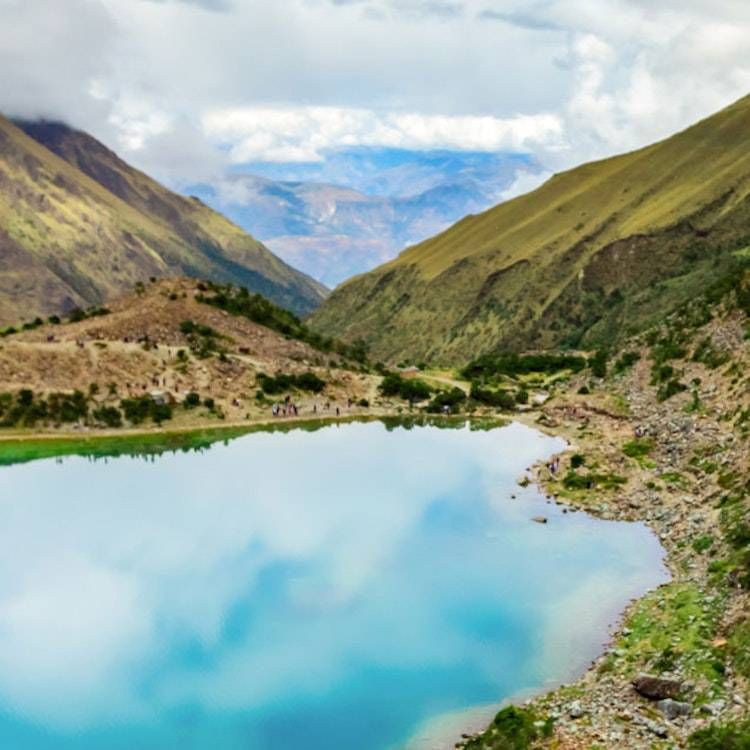
The Zenu are an Indigenous people in Colombia, whose ancestral territory comprises the Sinu Valleys and San Jorge Rivers as well as the Caribbean coast around the Gulf of Morrosquillo. For hundreds of years, they have been devoted to planting, cultivating, preparing, and braiding cana flecha (cane fiber). Cana flecha was originally used to build homes and to fabricate fishing rods, but the use of this fiber has evolved to wielding hats, baskets, handbags, backpacks, and bracelets.
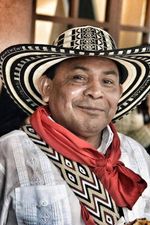
Making an item from cana flecha is a lengthy process and truly involves the entire community. To make a sombrero vueltiao (turned hat), for example, the fiber must be dried, and the veins removed using a knife to obtain uniform strands. The strands are then tinted black, dark brown, and cream by soaking in natural, plant-based dyes and burying underground for up to two weeks. After the dyeing process, the fiber is woven into intricate braids used to form the hat. Sometimes a braid can contain up to twenty-eight fibers woven by hand. The sombrero is finally sewn together using a treadle sewing machine.
Most of the pintas-geometric symbols and patterns woven into hats and other items-are used to delineate specific clans within the Zenu Tribe. One clan symbol, for instance, is the flor de cocorilla (cocorilla flower), which is depicted with a large central diamond and eight small surrounding diamond dots. Historically, this flower is known as the source of a fruit eaten by the first inhabitants of the Zenu territory. Pintas are a true testament to different plants and animals native to the Tribes territory. They also contain narratives of different life activities, such as hunting, fishing, the hacienda, and religion.
To keep these traditions alive, the Zenu teach cana flecha weaving and braiding at a local childrens school. Through a unique curriculum, the school approaches ethnocultural knowledge by teaching students to always integrate craftwork with oral history. As the sombrero vueltaio and other Indigenous crafts continue to popularize across Colombia and the rest of the world, the Zenu people only hope that their customers come to know the heritage stories behind the products they treasure.
The shelves are empty for now.Every piece Zenu Community makes is one of a kind, and they've all found homes. Follow to be first to see the next collection. Follow Zenu Community.
Behind every piece is a story in motion Zenu Community hasn't shared a video yet. Follow to be there when they do.
No badges yet Badges recognize verified commitments and milestones — fair-trade practices, sustainability, and community impact. Zenu Community 's first is on the way.
No reviews yet Be the first to share your experience with Zenu Community's work.
About Zenu Community

Meet Handmade: A Global Artisan Marketplace
The Zenu are an Indigenous people in Colombia, whose ancestral territory comprises the Sinu Valleys and San Jorge Rivers as well as the Caribbean coast around the Gulf of Morrosquillo. For hundreds of years, they have been devoted to planting, cultivating, preparing, and braiding cana flecha (cane fiber). Cana flecha was originally used to build homes and to fabricate fishing rods, but the use of this fiber has evolved to wielding hats, baskets, handbags, backpacks, and bracelets.
Making an item from cana flecha is a lengthy process and truly involves the entire community. To make a sombrero vueltiao (turned hat), for example, the fiber must be dried, and the veins removed using a knife to obtain uniform strands. The strands are then tinted black, dark brown, and cream by soaking in natural, plant-based dyes and burying underground for up to two weeks. After the dyeing process, the fiber is woven into intricate braids used to form the hat. Sometimes a braid can contain up to twenty-eight fibers woven by hand. The sombrero is finally sewn together using a treadle sewing machine.
Most of the pintas-geometric symbols and patterns woven into hats and other items-are used to delineate specific clans within the Zenu Tribe. One clan symbol, for instance, is the flor de cocorilla (cocorilla flower), which is depicted with a large central diamond and eight small surrounding diamond dots. Historically, this flower is known as the source of a fruit eaten by the first inhabitants of the Zenu territory. Pintas are a true testament to different plants and animals native to the Tribes territory. They also contain narratives of different life activities, such as hunting, fishing, the hacienda, and religion.
To keep these traditions alive, the Zenu teach cana flecha weaving and braiding at a local childrens school. Through a unique curriculum, the school approaches ethnocultural knowledge by teaching students to always integrate craftwork with oral history. As the sombrero vueltaio and other Indigenous crafts continue to popularize across Colombia and the rest of the world, the Zenu people only hope that their customers come to know the heritage stories behind the products they treasure.