

Related products
Trending searches this week
Home Decor
- Wall Decor (1882)
- Decor Accessories (2786)
- Tableware (0)
- Holiday Decor & Ornaments (0)
- Outdoor Living (0)
- Pillows & Throws (436)
- Furniture (185)
- Musical Instruments (0)
- Baskets (0)
- Chess Sets Games (0)
- Jewelry Boxes (0)
- Kitchen & Dining (2145)
- Vases & Vessels (537)
- Outdoor & Garden (642)
- Holiday Decor (1713)
- Candles & Lighting (361)
- Bathroom (0)
- Bedding (7)
- Car Accessories (0)
- Nursery & Kids Room (1)
- Office & Desk (150)
- Rugs & Textiles (208)
- Storage & Organization (68)
Accessories
- Hats (210)
- Keychains and Straps (126)
- Hair Accessories (95)
- Other Accessories (143)
- Walking Sticks (0)
- Footwear (24)
- Bags & Purses (1635)
- Scarves & Wraps (1556)
- Belts & Sashes (68)
- Ties & Formal Accessories (5)
- Gloves & Mittens (106)
- Baby & Kids Accessories (5)
- Luggage & Travel (4)
- Tech Accessories (100)

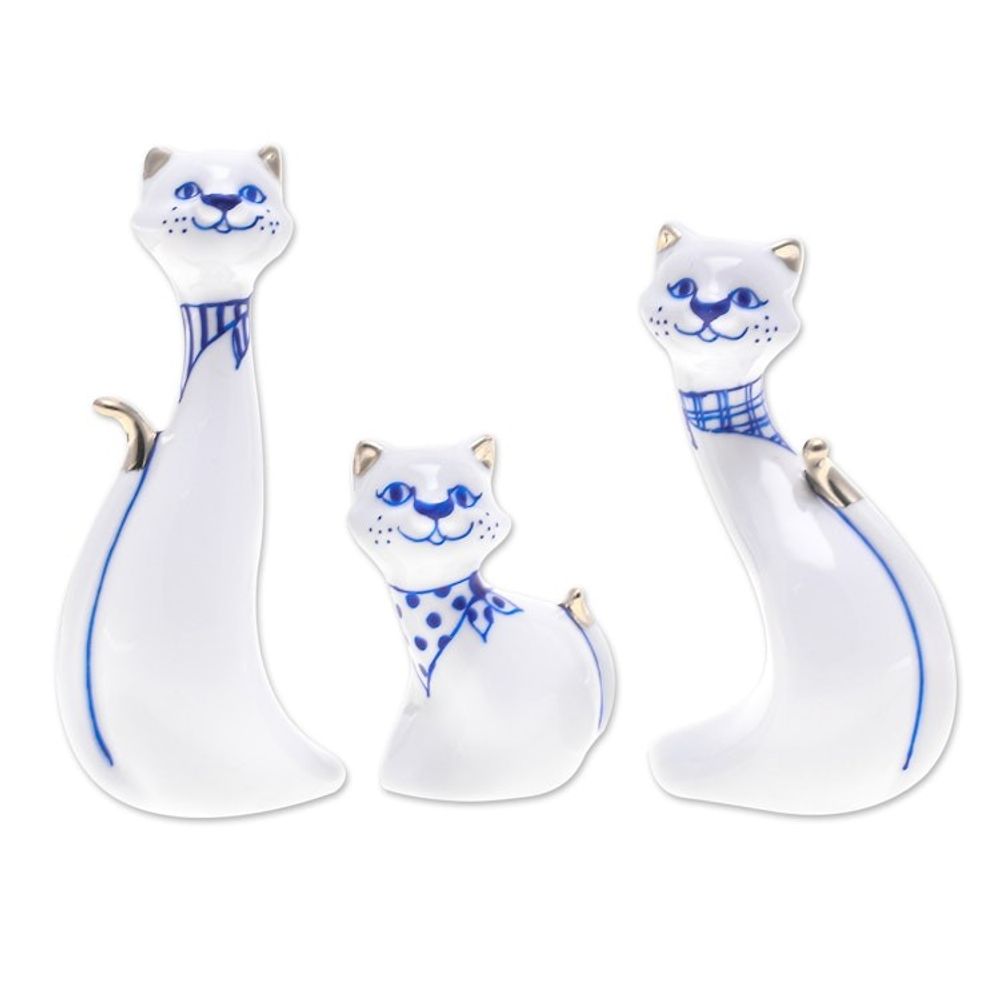
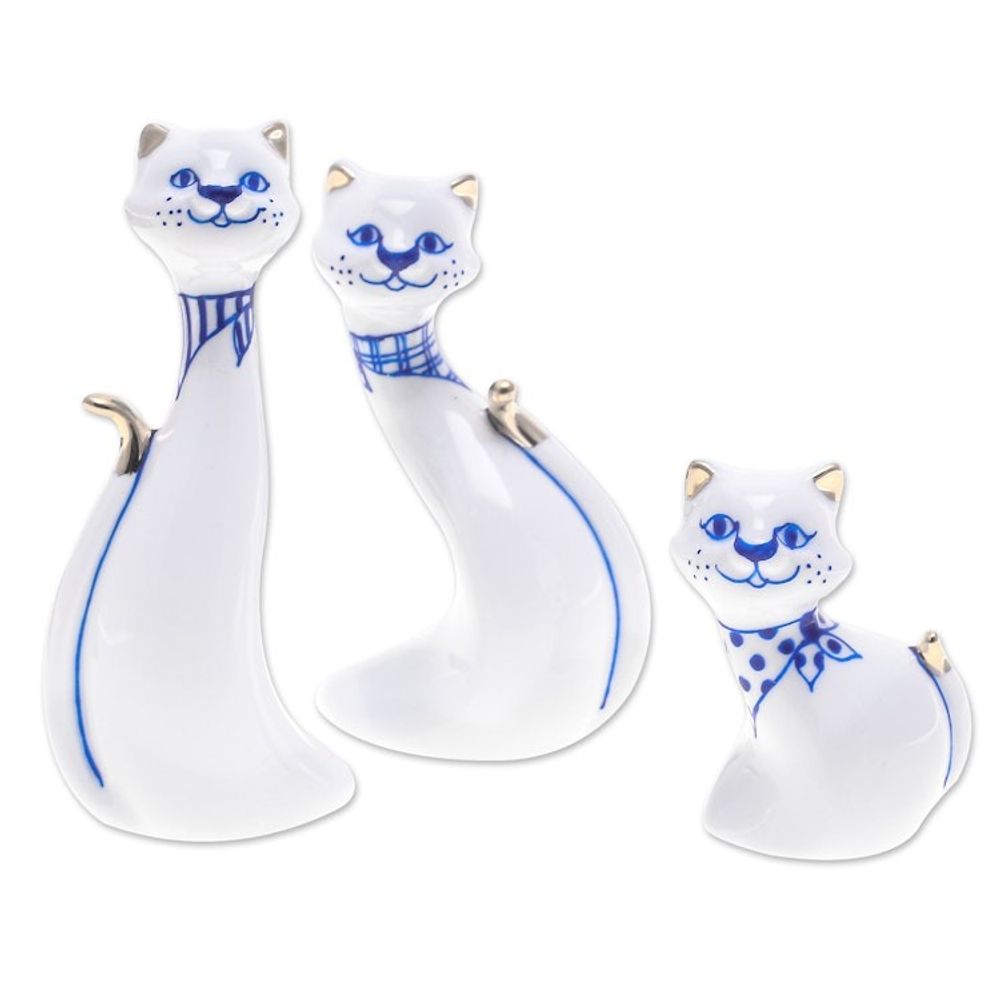
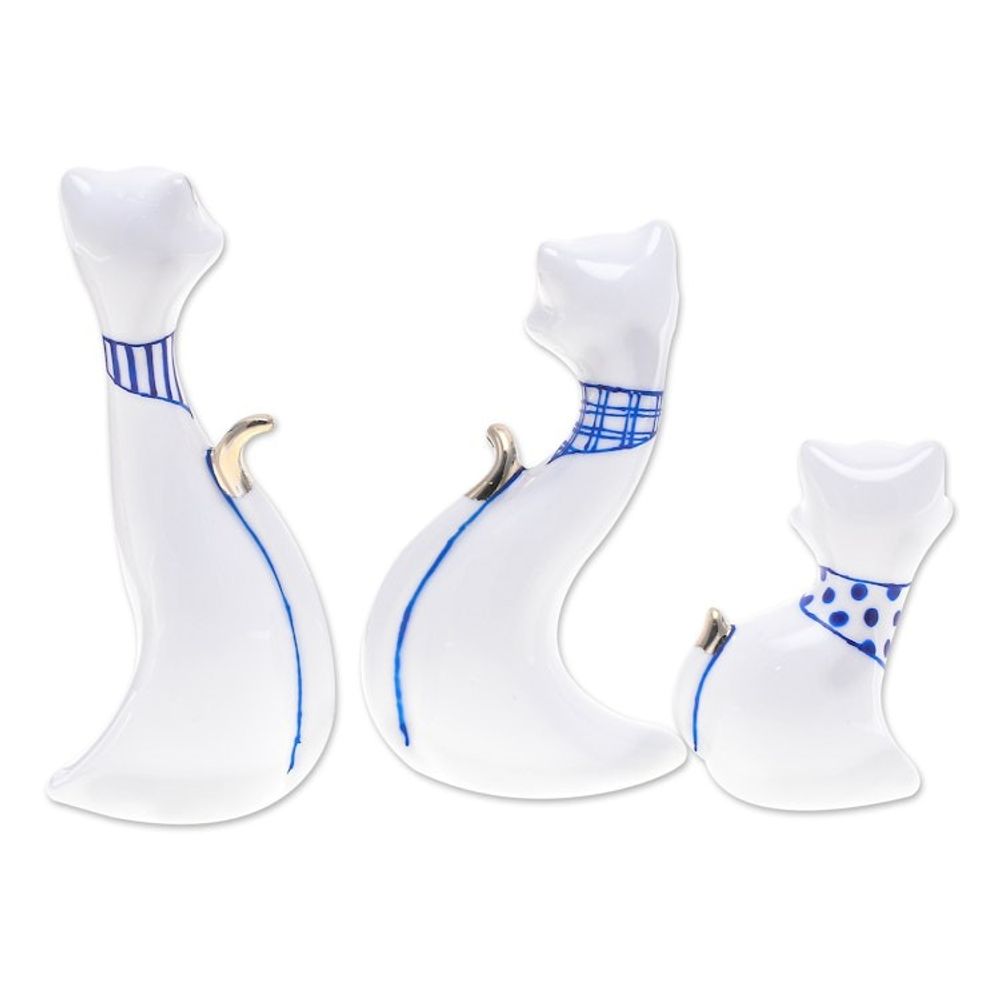

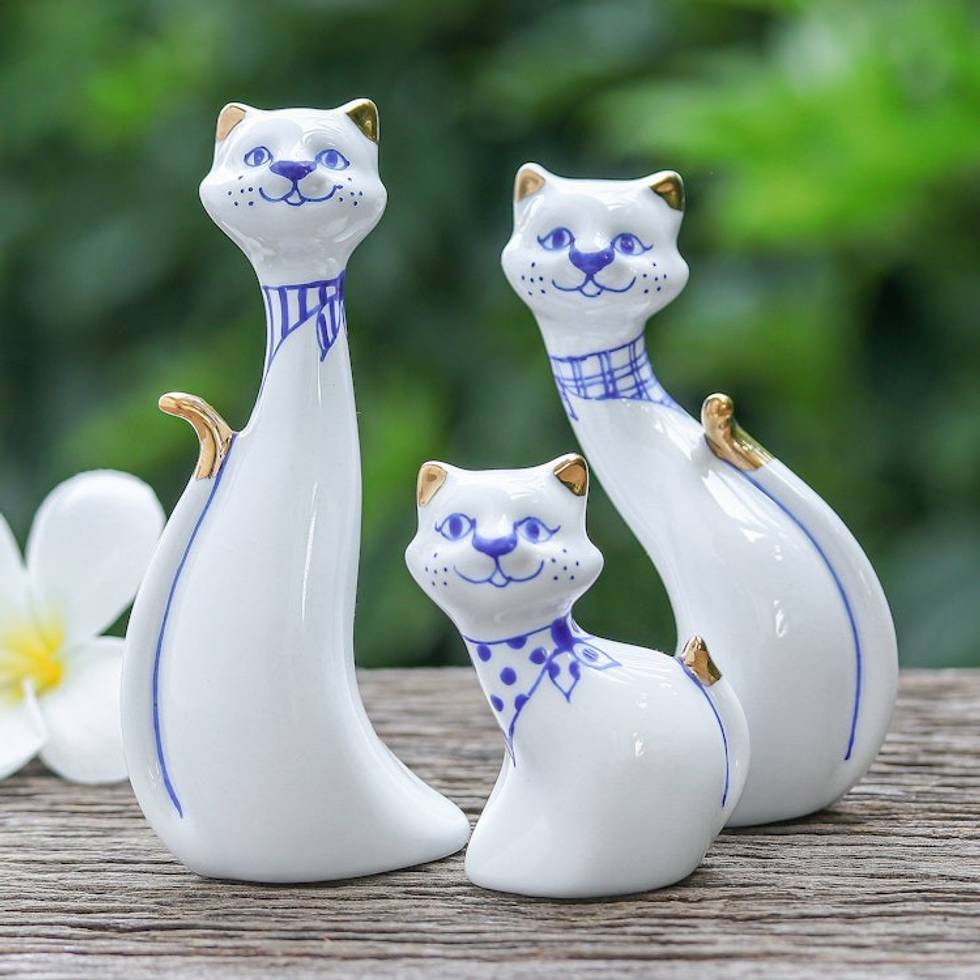
Set of 3 Porcelain Cat Statuettes with Gilded Accents 'Cat Family' Item ID: 2669894186
$104.99-1+
 Add to favorites
 In your favorites.
This is your own listing item.
- 0.35 lbs
- Smallest Piece: 2.6 inches H x 2 inches W x 1.3 inches D
- Largest Piece: 4.6 inches H x 2 inches W x 1.4 inches D
- Porcelain
- gilt
- Hand-crafted item -- color
- size and/or motif may vary slightly
 Made in Thailand
100% Happiness Guaranteed!
 Shop with Confidence
 Easy 30 day returns!

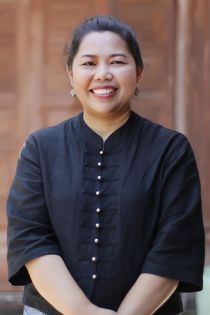
"I'm Panida Tamjun from Southern Thailand. I was a professor at a technical college in Bangkok. My husband is an engineer and worked in a factory.
"Benjarong-style porcelain is beautiful. In ancient times, Benjarong was created only for the royal court and aristocracy. One day, my husband and I went to visit a friend in an artisan village where traditional Thai Benjarong porcelain is made. During that trip, I learned about the process of crafting Benjarong porcelain. I was very excited when I began painting patterns and became passionate about this craft. Since then, my husband and I have been interested in Benjarong.
"My husband and I spent every holiday learning and practicing for three years until we became experts. We were confident we could earn enough for our family and live a happy life by making and selling Benjarong porcelain. In 2004, we decided to quit our jobs and set up a workshop to produce Benjarong. We also organized a small group of people from our community. The members spend their time after work to be trained on how to draw Benjarong patterns to earn extra income.
"The main feature of my craft is the pattern. I utilize the batik patterns common in Southern Thailand fabric in my Benjarong, which makes my creations colorful and represents the regional artistic identity through its pattern. Besides general porcelain items, we also create a trophy cup.
"Currently, our group has opened a learning center for people interested in this craft, including tourists, so that we can maintain and preserve this unique Thai art form.
"There's no exact date when Benjarong crafts began. The Benjarong we create is a glazed pottery painted with five enamel colors, which include black, white, yellow, red and green. We also use pink, purple, brown and orange. Our popular patterns include traditional Thai motifs, lotus, Chinese cabbage, flowers and mythical animals. The artisan creating the Benjarong has to be very skillful and careful.
"Some evidence from an archaeological piece found in Ayutthaya, the former capital of Thailand, depicts a pattern and color similar to Chinese wares and it is believed to have been made and ordered from China since that ancient era. Thai people could also order plain white porcelain to paint their own patterns and then send the piece back to China to be fired to complete the process. If it was for the royal court, it needed to be diligently created and the artisan would closely control the firing process.
"To create Benjarong, we start by drawing motifs on white porcelain. We then paint within the lines and fire the pieces in a kiln. I currently create a wide range of items designed for daily use. It is an opportunity to present my crafts around the world and to earn income for our group members. I hope you will support us. Thank you very much."
5 Reviews for
 Panida Tamjun
January 28, 2021
★★★★★
A
Ana
Adorable cat and conversation piece. So, so pretty. The gold on the ears and tail gives it a dressier look. I bought it for my daughter to match her blue and white bedroom decor. She absolutely loved it. Thank you Panida! :)
Reviewed item
March 10, 2023
★★★★★
C
Cynthia
Elegant and lovely, this cat makes me smile! She was shipped very securely.
Reviewed item
October 2, 2022
★★★★★
L
Linda
The workmanship is impeccable and I love the color and design..please keep making more items of this caliber. The fact that this is the second mug I purchased says it all... Love this stuff!
Reviewed item
June 2, 2022
★★★★☆
G
Giulia
Standing regally with handsome blue and gold detail, this is wonderful replacement for a cat figurine that broke while I was cleaning. This cat is now in a protected location.
Reviewed item
"I'm Panida Tamjun from Southern Thailand. I was a professor at a technical college in Bangkok. My husband is an engineer and worked in a factory.
"Benjarong-style porcelain is beautiful. In ancient times, Benjarong was created only for the royal court and aristocracy. One day, my husband and I went to visit a friend in an artisan village where traditional Thai Benjarong porcelain is made. During that trip, I learned about the process of crafting Benjarong porcelain. I was very excited when I began painting patterns and became passionate about this craft. Since then, my husband and I have been interested in Benjarong.
"My husband and I spent every holiday learning and practicing for three years until we became experts. We were confident we could earn enough for our family and live a happy life by making and selling Benjarong porcelain. In 2004, we decided to quit our jobs and set up a workshop to produce Benjarong. We also organized a small group of people from our community. The members spend their time after work to be trained on how to draw Benjarong patterns to earn extra income.
"The main feature of my craft is the pattern. I utilize the batik patterns common in Southern Thailand fabric in my Benjarong, which makes my creations colorful and represents the regional artistic identity through its pattern. Besides general porcelain items, we also create a trophy cup.
"Currently, our group has opened a learning center for people interested in this craft, including tourists, so that we can maintain and preserve this unique Thai art form.
"There's no exact date when Benjarong crafts began. The Benjarong we create is a glazed pottery painted with five enamel colors, which include black, white, yellow, red and green. We also use pink, purple, brown and orange. Our popular patterns include traditional Thai motifs, lotus, Chinese cabbage, flowers and mythical animals. The artisan creating the Benjarong has to be very skillful and careful.
"Some evidence from an archaeological piece found in Ayutthaya, the former capital of Thailand, depicts a pattern and color similar to Chinese wares and it is believed to have been made and ordered from China since that ancient era. Thai people could also order plain white porcelain to paint their own patterns and then send the piece back to China to be fired to complete the process. If it was for the royal court, it needed to be diligently created and the artisan would closely control the firing process.
"To create Benjarong, we start by drawing motifs on white porcelain. We then paint within the lines and fire the pieces in a kiln. I currently create a wide range of items designed for daily use. It is an opportunity to present my crafts around the world and to earn income for our group members. I hope you will support us. Thank you very much."
Read full story →

Panida Tamjun Benjarong porcelain tableware and home decor
"I'm Panida Tamjun from Southern Thailand. I was a professor at a technical college in Bangkok. My husband is an engineer and worked in a factory.
"Benjarong-style porcelain is beautiful. In ancient times, Benjarong was created only for the royal court and aristocracy. One day, my husband and I went to visit a friend in an artisan village where traditional Thai Benjarong porcelain is made. During that trip, I learned about the process of crafting Benjarong porcelain. I was very excited when I began painting patterns and became passionate about this craft. Since then, my husband and I have been interested in Benjarong.
"My husband and I spent every holiday learning and practicing for three years until we became experts. We were confident we could earn enough for our family and live a happy life by making and selling Benjarong porcelain. In 2004, we decided to quit our jobs and set up a workshop to produce Benjarong. We also organized a small group of people from our community. The members spend their time after work to be trained on how to draw Benjarong patterns to earn extra income.
"The main feature of my craft is the pattern. I utilize the batik patterns common in Southern Thailand fabric in my Benjarong, which makes my creations colorful and represents the regional artistic identity through its pattern. Besides general porcelain items, we also create a trophy cup.
"Currently, our group has opened a learning center for people interested in this craft, including tourists, so that we can maintain and preserve this unique Thai art form.
"There's no exact date when Benjarong crafts began. The Benjarong we create is a glazed pottery painted with five enamel colors, which include black, white, yellow, red and green. We also use pink, purple, brown and orange. Our popular patterns include traditional Thai motifs, lotus, Chinese cabbage, flowers and mythical animals. The artisan creating the Benjarong has to be very skillful and careful.
"Some evidence from an archaeological piece found in Ayutthaya, the former capital of Thailand, depicts a pattern and color similar to Chinese wares and it is believed to have been made and ordered from China since that ancient era. Thai people could also order plain white porcelain to paint their own patterns and then send the piece back to China to be fired to complete the process. If it was for the royal court, it needed to be diligently created and the artisan would closely control the firing process.
"To create Benjarong, we start by drawing motifs on white porcelain. We then paint within the lines and fire the pieces in a kiln. I currently create a wide range of items designed for daily use. It is an opportunity to present my crafts around the world and to earn income for our group members. I hope you will support us. Thank you very much."
"Benjarong-style porcelain is beautiful. In ancient times, Benjarong was created only for the royal court and aristocracy. One day, my husband and I went to visit a friend in an artisan village where traditional Thai Benjarong porcelain is made. During that trip, I learned about the process of crafting Benjarong porcelain. I was very excited when I began painting patterns and became passionate about this craft. Since then, my husband and I have been interested in Benjarong.
"My husband and I spent every holiday learning and practicing for three years until we became experts. We were confident we could earn enough for our family and live a happy life by making and selling Benjarong porcelain. In 2004, we decided to quit our jobs and set up a workshop to produce Benjarong. We also organized a small group of people from our community. The members spend their time after work to be trained on how to draw Benjarong patterns to earn extra income.
"The main feature of my craft is the pattern. I utilize the batik patterns common in Southern Thailand fabric in my Benjarong, which makes my creations colorful and represents the regional artistic identity through its pattern. Besides general porcelain items, we also create a trophy cup.
"Currently, our group has opened a learning center for people interested in this craft, including tourists, so that we can maintain and preserve this unique Thai art form.
"There's no exact date when Benjarong crafts began. The Benjarong we create is a glazed pottery painted with five enamel colors, which include black, white, yellow, red and green. We also use pink, purple, brown and orange. Our popular patterns include traditional Thai motifs, lotus, Chinese cabbage, flowers and mythical animals. The artisan creating the Benjarong has to be very skillful and careful.
"Some evidence from an archaeological piece found in Ayutthaya, the former capital of Thailand, depicts a pattern and color similar to Chinese wares and it is believed to have been made and ordered from China since that ancient era. Thai people could also order plain white porcelain to paint their own patterns and then send the piece back to China to be fired to complete the process. If it was for the royal court, it needed to be diligently created and the artisan would closely control the firing process.
"To create Benjarong, we start by drawing motifs on white porcelain. We then paint within the lines and fire the pieces in a kiln. I currently create a wide range of items designed for daily use. It is an opportunity to present my crafts around the world and to earn income for our group members. I hope you will support us. Thank you very much."
Handmade: A Global Artisan Marketplace Chiang Mai, Thailand

Thailand Artisan Empowerment Hub
In Thailand, artistic skills and traditions have been passed down from generation to generation. As you explore our Thailand Collection you will discover handwoven silks and hand embroidered textiles, celadon and benjarong pottery, teak carvings, lacquerware and exquisite jewelry. All are handcrafted in traditional and contemporary designs by talented Thai artisans.
Maker BadgeEmpowering Women
The Women's Empowerment badge is awarded to female artisans or artisan groups that are led by women.
Maker BadgeJob Creator
This artist positively impacts their community through job creation and provides jobs for 2 or more people.
Maker BadgePreserving Traditions
This artist uses traditional techniques handed down through the generations and/or creates culturally significant items, helping keep these traditions alive.
More from this maker
Visit store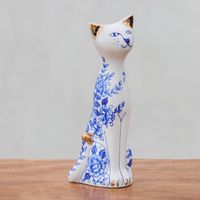



Other favorites
View more












100% Happiness Guaranteed
If you aren't in LOVE with your purchases, let us know within 30 days and we'll make it right.
- Easy Returns
- Hassle-free Exchange
- Dedicated Support

Powered by Human Creativity
Established alongside our parent company NOVICA
10K+
Master Artisans
1M+
Happy Customers
25 yrs
Empowering Makers
4.8
Average Rating
More than a Marketplace
Enjoyed by over 1,000,000
customers across 50+ countries
Powered by NOVICA, a beloved global leader
in fair trade artisan goods.
Go!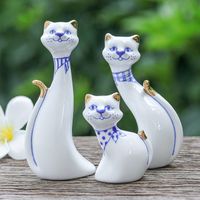
Item added to your cart!
Set of 3 Porcelain Cat Statuettes with Gilded Accents 'Cat Family'
Quantity:


Powered by

Partners and Collaborators




© 2026 
 You havein your cartTop