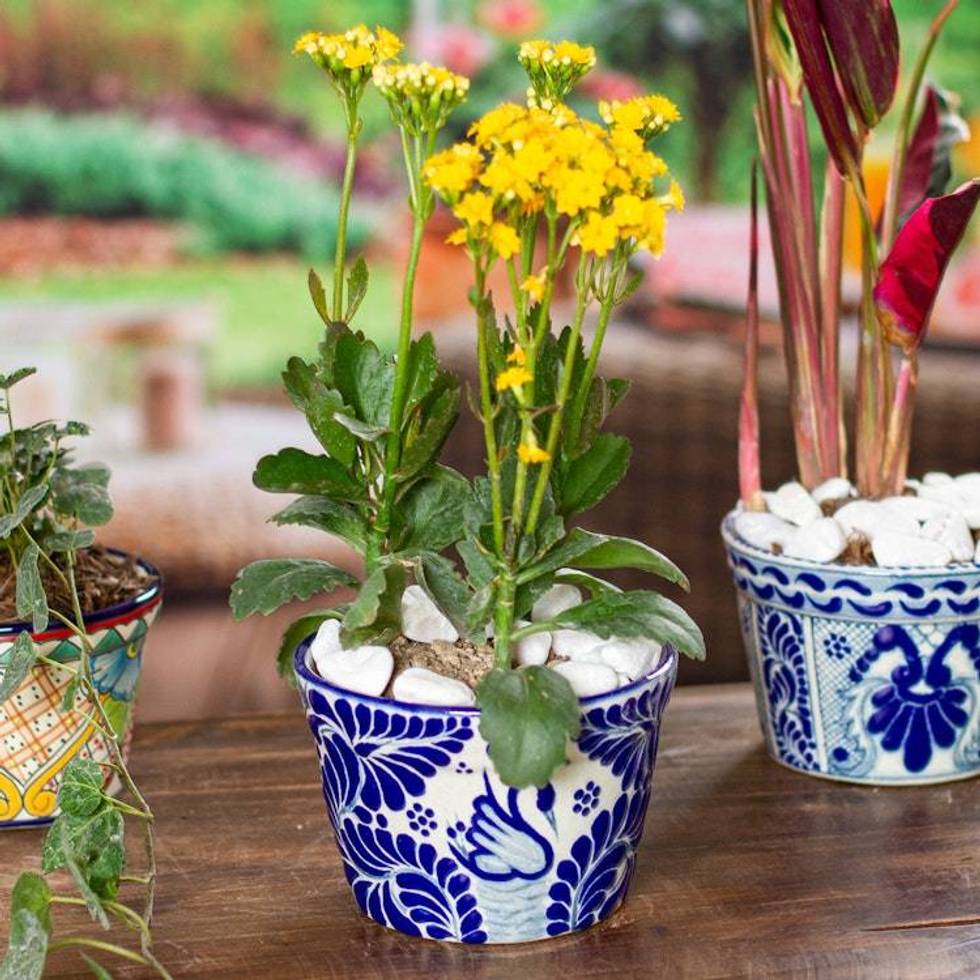


Related products
Trending searches this week
Home Decor
- Wall Decor (1882)
- Decor Accessories (2786)
- Tableware (0)
- Holiday Decor & Ornaments (0)
- Outdoor Living (0)
- Pillows & Throws (436)
- Furniture (185)
- Musical Instruments (0)
- Baskets (0)
- Chess Sets Games (0)
- Jewelry Boxes (0)
- Kitchen & Dining (2145)
- Vases & Vessels (537)
- Outdoor & Garden (642)
- Holiday Decor (1713)
- Candles & Lighting (361)
- Bathroom (0)
- Bedding (7)
- Car Accessories (0)
- Nursery & Kids Room (1)
- Office & Desk (150)
- Rugs & Textiles (208)
- Storage & Organization (68)
Accessories
- Hats (210)
- Keychains and Straps (126)
- Hair Accessories (95)
- Other Accessories (143)
- Walking Sticks (0)
- Footwear (24)
- Bags & Purses (1635)
- Scarves & Wraps (1556)
- Belts & Sashes (68)
- Ties & Formal Accessories (5)
- Gloves & Mittens (106)
- Baby & Kids Accessories (5)
- Luggage & Travel (4)
- Tech Accessories (100)

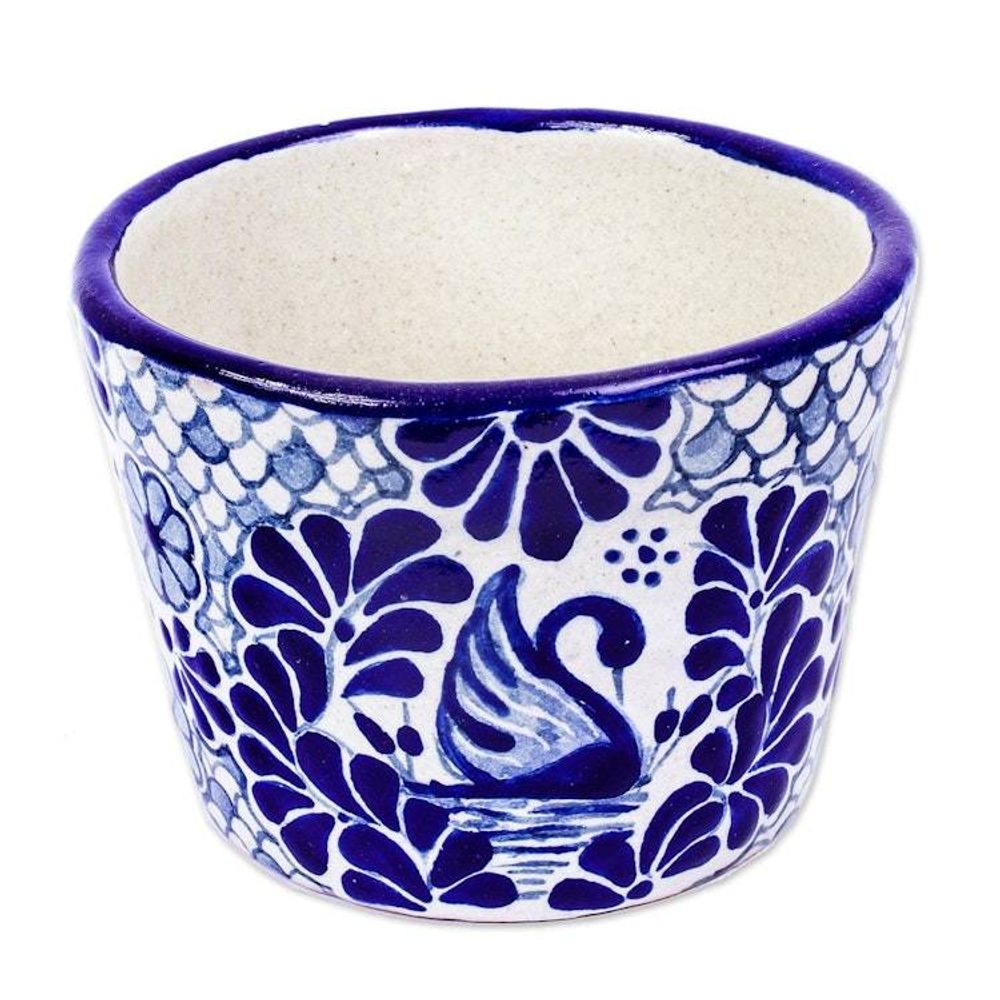
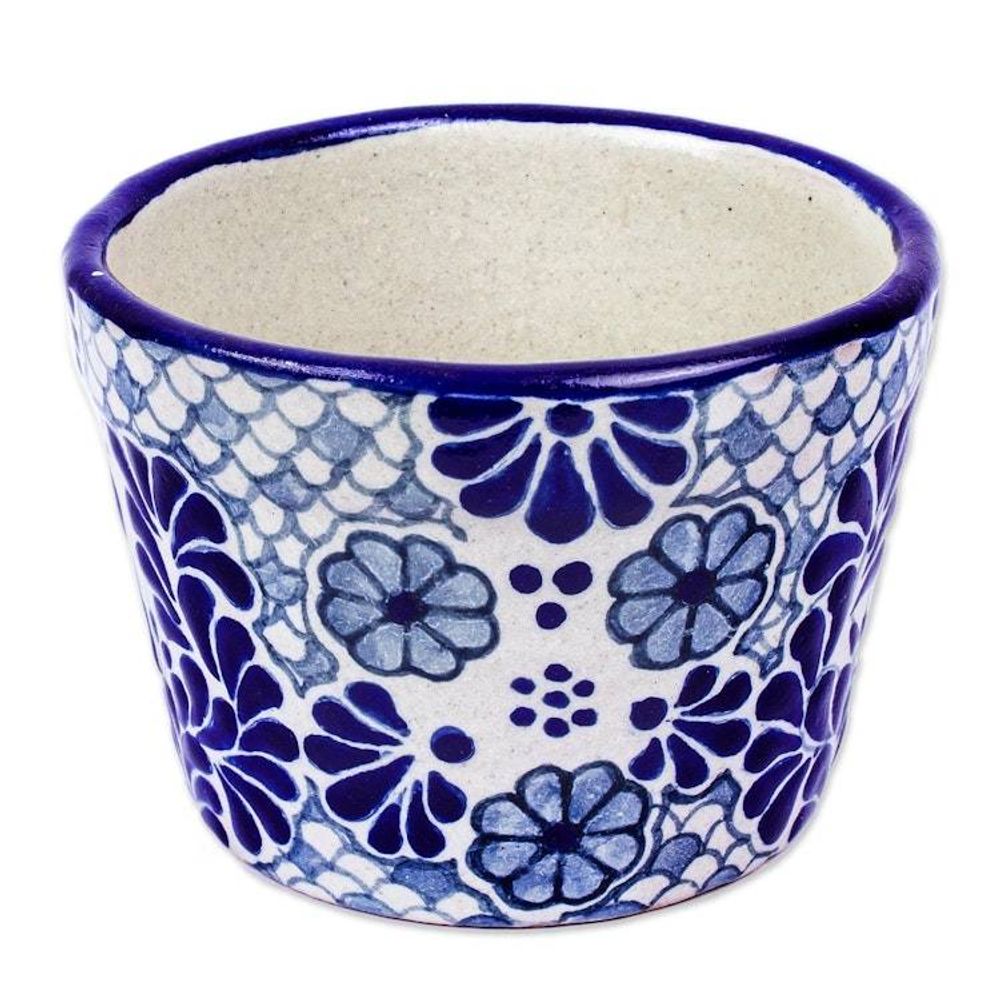
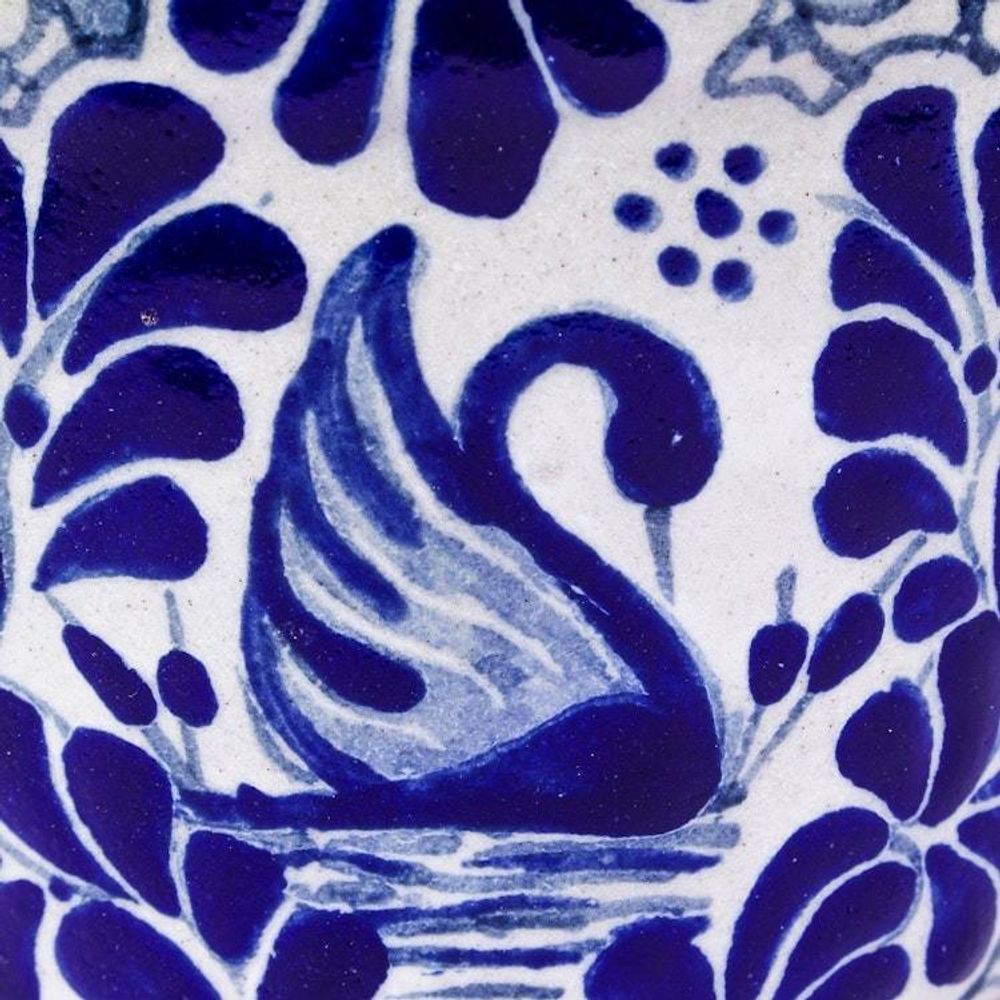

Handmade Talavera-Style Flower Pot 'Blue Swan' Item ID: 2671808501
$149.99-1+
 Add to favorites
 In your favorites.
This is your own listing item.
- 1.46 lbs
- 4.3 inches H x 6 inches Diam.
- Ceramic
- Allows for drainage
- Hand-crafted item -- color
- size and/or motif may vary slightly
- Signed by the artist
 Made in Mexico
100% Happiness Guaranteed!
 Shop with Confidence
 Easy 30 day returns!

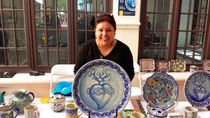
Isabelle Collins's work is inspired by historical motifs, seen in tiles around her birthplace of Puebla, Mexico, while also playing with influences from other traditions, including Moroccan or Chinese designs.
"The splendid Talavera ceramics of Puebla are a true work of art. I don't say this because it's what I do. It's because of the origins, the history and the wonderful tradition of Talavera over time. Talavera still lives because it not only offers functionality or life and color, but also explicit and transcendental meanings, inspiration, perspective, life and significance.
"We know of a number of different techniques that have contributed to Talavera. However I work to preserve the traditional methods that have been used from the beginning — our procedures, the glazes that we make ourselves, and the paintbrushes which are made with mule hair or the mane and tail hair of horses, depending on whether they'll be used to outline or fill in the motifs.
"For our ceramics, we use two types of clay. One is white, one is black and we mix them in equal amounts. First, we clean it of any impurities by putting it through a sieve. Then we mix it and put it into sedimentation tanks until the water is eliminated. This helps improve the quality of the clay.
"Next, to obtain a uniform and moist texture, we mix it vigorously with our feet and shape it into blocks to be stored.
"We shape our designs on the potter's wheel or by placing flat pieces of clay into molds we have created. They are left to dry slowly in unventilated rooms, then fired for some ten hours. It is now bisque or, as it is known in the Nahuatl language, jahuete.
"Finally, we decorate them using natural colors we mix ourselves and mineral pigments characteristic of Talavera — deep cobalt blue, light blue, black, yellow, green, and orange. Finally, we immerse the finished piece in a glaze containing tin and lead, and fire it once more where it acquires its glossy finish and slightly-raised motifs.
"All our designs are made with all the dedication and passion we have, and all are completely crafted by hand. They reveal stylistic nuances of Italy, Spain, Morocco, China and Mexico in a blend of the cultures that influenced this art.
"My goal is to continue promoting this wonderful art form, preserving the traditional techniques and creating more designs that will be treasured as handcrafted works of ceramic art. I want my work to tell you stories, to take you on a trip across time to colonial Puebla and, always, to exalt our Mexican traditions."
1 Review for
 Isabelle Collins
August 19, 2021
★★★★★
K
Kathy
This is a beautiful hand-painted planter and it came packaged VERY carefully.
Reviewed item
Isabelle Collins's work is inspired by historical motifs, seen in tiles around her birthplace of Puebla, Mexico, while also playing with influences from other traditions, including Moroccan or Chinese designs.
"The splendid Talavera ceramics of Puebla are a true work of art. I don't say this because it's what I do. It's because of the origins, the history and the wonderful tradition of Talavera over time. Talavera still lives because it not only offers functionality or life and color, but also explicit and transcendental meanings, inspiration, perspective, life and significance.
"We know of a number of different techniques that have contributed to Talavera. However I work to preserve the traditional methods that have been used from the beginning — our procedures, the glazes that we make ourselves, and the paintbrushes which are made with mule hair or the mane and tail hair of horses, depending on whether they'll be used to outline or fill in the motifs.
"For our ceramics, we use two types of clay. One is white, one is black and we mix them in equal amounts. First, we clean it of any impurities by putting it through a sieve. Then we mix it and put it into sedimentation tanks until the water is eliminated. This helps improve the quality of the clay.
"Next, to obtain a uniform and moist texture, we mix it vigorously with our feet and shape it into blocks to be stored.
"We shape our designs on the potter's wheel or by placing flat pieces of clay into molds we have created. They are left to dry slowly in unventilated rooms, then fired for some ten hours. It is now bisque or, as it is known in the Nahuatl language, jahuete.
"Finally, we decorate them using natural colors we mix ourselves and mineral pigments characteristic of Talavera — deep cobalt blue, light blue, black, yellow, green, and orange. Finally, we immerse the finished piece in a glaze containing tin and lead, and fire it once more where it acquires its glossy finish and slightly-raised motifs.
"All our designs are made with all the dedication and passion we have, and all are completely crafted by hand. They reveal stylistic nuances of Italy, Spain, Morocco, China and Mexico in a blend of the cultures that influenced this art.
"My goal is to continue promoting this wonderful art form, preserving the traditional techniques and creating more designs that will be treasured as handcrafted works of ceramic art. I want my work to tell you stories, to take you on a trip across time to colonial Puebla and, always, to exalt our Mexican traditions."
Read full story →

Isabelle Collins traditional Talavera-style pottery
Isabelle Collins's work is inspired by historical motifs, seen in tiles around her birthplace of Puebla, Mexico, while also playing with influences from other traditions, including Moroccan or Chinese designs.
"The splendid Talavera ceramics of Puebla are a true work of art. I don't say this because it's what I do. It's because of the origins, the history and the wonderful tradition of Talavera over time. Talavera still lives because it not only offers functionality or life and color, but also explicit and transcendental meanings, inspiration, perspective, life and significance.
"We know of a number of different techniques that have contributed to Talavera. However I work to preserve the traditional methods that have been used from the beginning — our procedures, the glazes that we make ourselves, and the paintbrushes which are made with mule hair or the mane and tail hair of horses, depending on whether they'll be used to outline or fill in the motifs.
"For our ceramics, we use two types of clay. One is white, one is black and we mix them in equal amounts. First, we clean it of any impurities by putting it through a sieve. Then we mix it and put it into sedimentation tanks until the water is eliminated. This helps improve the quality of the clay.
"Next, to obtain a uniform and moist texture, we mix it vigorously with our feet and shape it into blocks to be stored.
"We shape our designs on the potter's wheel or by placing flat pieces of clay into molds we have created. They are left to dry slowly in unventilated rooms, then fired for some ten hours. It is now bisque or, as it is known in the Nahuatl language, jahuete.
"Finally, we decorate them using natural colors we mix ourselves and mineral pigments characteristic of Talavera — deep cobalt blue, light blue, black, yellow, green, and orange. Finally, we immerse the finished piece in a glaze containing tin and lead, and fire it once more where it acquires its glossy finish and slightly-raised motifs.
"All our designs are made with all the dedication and passion we have, and all are completely crafted by hand. They reveal stylistic nuances of Italy, Spain, Morocco, China and Mexico in a blend of the cultures that influenced this art.
"My goal is to continue promoting this wonderful art form, preserving the traditional techniques and creating more designs that will be treasured as handcrafted works of ceramic art. I want my work to tell you stories, to take you on a trip across time to colonial Puebla and, always, to exalt our Mexican traditions."
"The splendid Talavera ceramics of Puebla are a true work of art. I don't say this because it's what I do. It's because of the origins, the history and the wonderful tradition of Talavera over time. Talavera still lives because it not only offers functionality or life and color, but also explicit and transcendental meanings, inspiration, perspective, life and significance.
"We know of a number of different techniques that have contributed to Talavera. However I work to preserve the traditional methods that have been used from the beginning — our procedures, the glazes that we make ourselves, and the paintbrushes which are made with mule hair or the mane and tail hair of horses, depending on whether they'll be used to outline or fill in the motifs.
"For our ceramics, we use two types of clay. One is white, one is black and we mix them in equal amounts. First, we clean it of any impurities by putting it through a sieve. Then we mix it and put it into sedimentation tanks until the water is eliminated. This helps improve the quality of the clay.
"Next, to obtain a uniform and moist texture, we mix it vigorously with our feet and shape it into blocks to be stored.
"We shape our designs on the potter's wheel or by placing flat pieces of clay into molds we have created. They are left to dry slowly in unventilated rooms, then fired for some ten hours. It is now bisque or, as it is known in the Nahuatl language, jahuete.
"Finally, we decorate them using natural colors we mix ourselves and mineral pigments characteristic of Talavera — deep cobalt blue, light blue, black, yellow, green, and orange. Finally, we immerse the finished piece in a glaze containing tin and lead, and fire it once more where it acquires its glossy finish and slightly-raised motifs.
"All our designs are made with all the dedication and passion we have, and all are completely crafted by hand. They reveal stylistic nuances of Italy, Spain, Morocco, China and Mexico in a blend of the cultures that influenced this art.
"My goal is to continue promoting this wonderful art form, preserving the traditional techniques and creating more designs that will be treasured as handcrafted works of ceramic art. I want my work to tell you stories, to take you on a trip across time to colonial Puebla and, always, to exalt our Mexican traditions."
Handmade: A Global Artisan Marketplace Guadalajara, Mexico

Mexico Artisan Empowerment Hub
Explore Mexico. You'll discover the rich artistic heritage drawn from the Maya, Olmec, Toltec, Zapotec, and Aztec civilizations, as well as the distinctive living folk art traditions of modern Mexico. From Taxco Silver Jewelry to intricate Huichol beadwork, and from handpainted Talavera-style pottery to handblown glassware and fantastical alebrijes, you will fall under the spell of magical Mexico.
Maker BadgeSmithsonian Folklife Festival
Isabelle's work is inspired by historical motifs, seen in tiles around her birthplace of Puebla, Mexico, while also playing with influences from other traditions, including Moroccan or Chinese designs.
More from this maker
Visit store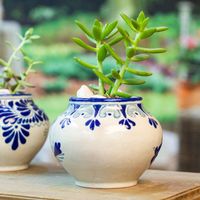













Other favorites
View more









100% Happiness Guaranteed
If you aren't in LOVE with your purchases, let us know within 30 days and we'll make it right.
- Easy Returns
- Hassle-free Exchange
- Dedicated Support

Powered by Human Creativity
Established alongside our parent company NOVICA
10K+
Master Artisans
1M+
Happy Customers
25 yrs
Empowering Makers
4.8
Average Rating
More than a Marketplace
Enjoyed by over 1,000,000
customers across 50+ countries
Powered by NOVICA, a beloved global leader
in fair trade artisan goods.
Go!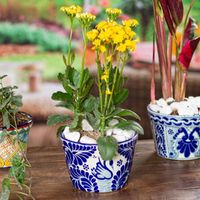
Item added to your cart!
Handmade Talavera-Style Flower Pot 'Blue Swan'
Quantity:


Powered by

Partners and Collaborators




© 2026 
 You havein your cartTop