

Related products
Trending searches this week
Home Decor
- Wall Decor (1884)
- Decor Accessories (2786)
- Tableware (0)
- Holiday Decor & Ornaments (0)
- Outdoor Living (0)
- Pillows & Throws (435)
- Furniture (185)
- Musical Instruments (0)
- Baskets (0)
- Chess Sets Games (0)
- Jewelry Boxes (0)
- Kitchen & Dining (2145)
- Vases & Vessels (537)
- Outdoor & Garden (642)
- Holiday Decor (1724)
- Candles & Lighting (361)
- Bathroom (0)
- Bedding (7)
- Car Accessories (0)
- Nursery & Kids Room (7)
- Office & Desk (150)
- Rugs & Textiles (208)
- Storage & Organization (69)
Accessories
- Hats (210)
- Keychains and Straps (128)
- Hair Accessories (97)
- Other Accessories (143)
- Walking Sticks (0)
- Footwear (24)
- Bags & Purses (1636)
- Scarves & Wraps (1556)
- Belts & Sashes (68)
- Ties & Formal Accessories (5)
- Gloves & Mittens (106)
- Baby & Kids Accessories (5)
- Luggage & Travel (4)
- Tech Accessories (100)

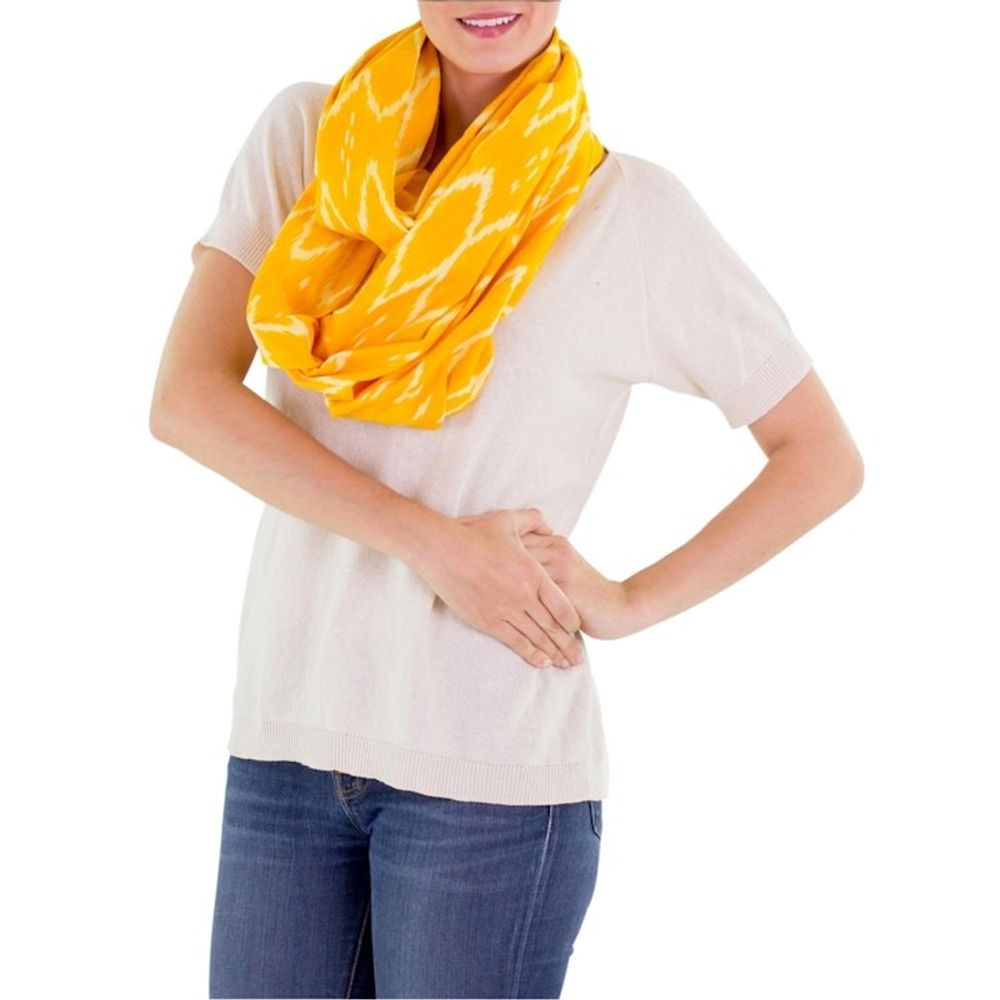
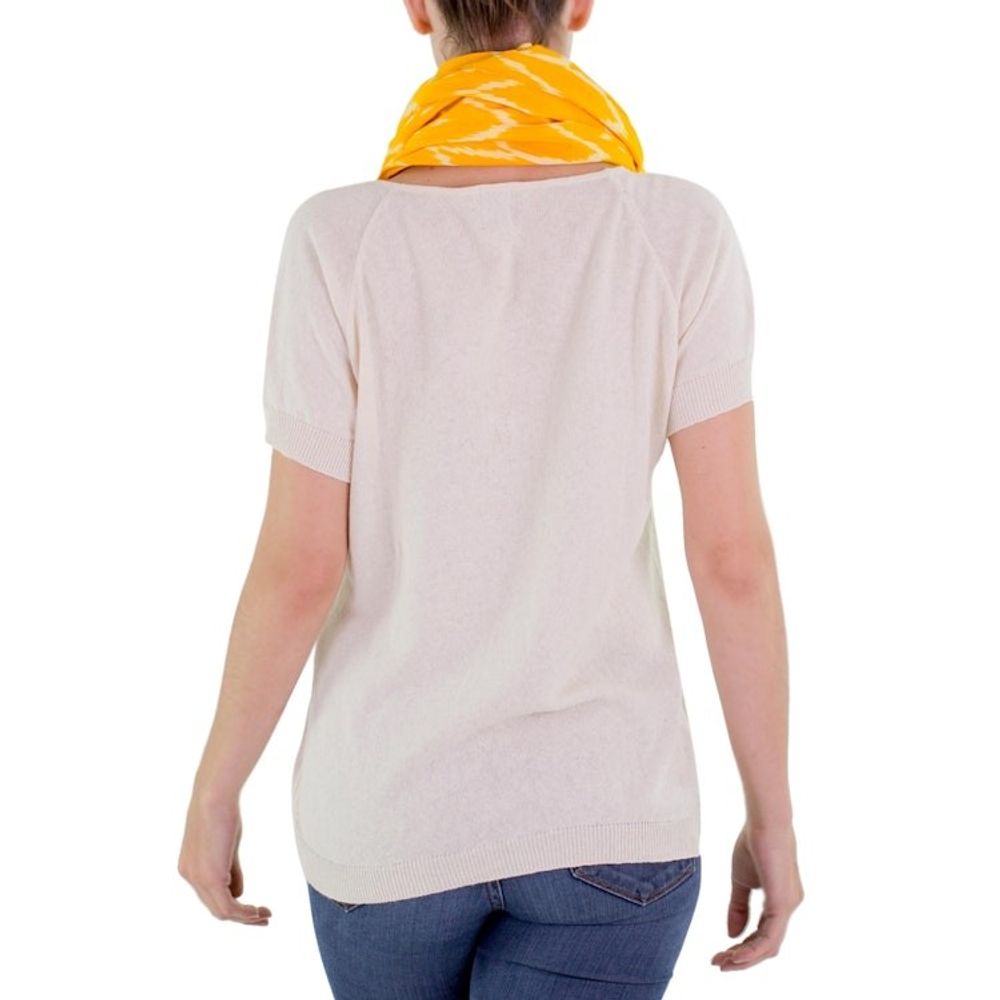
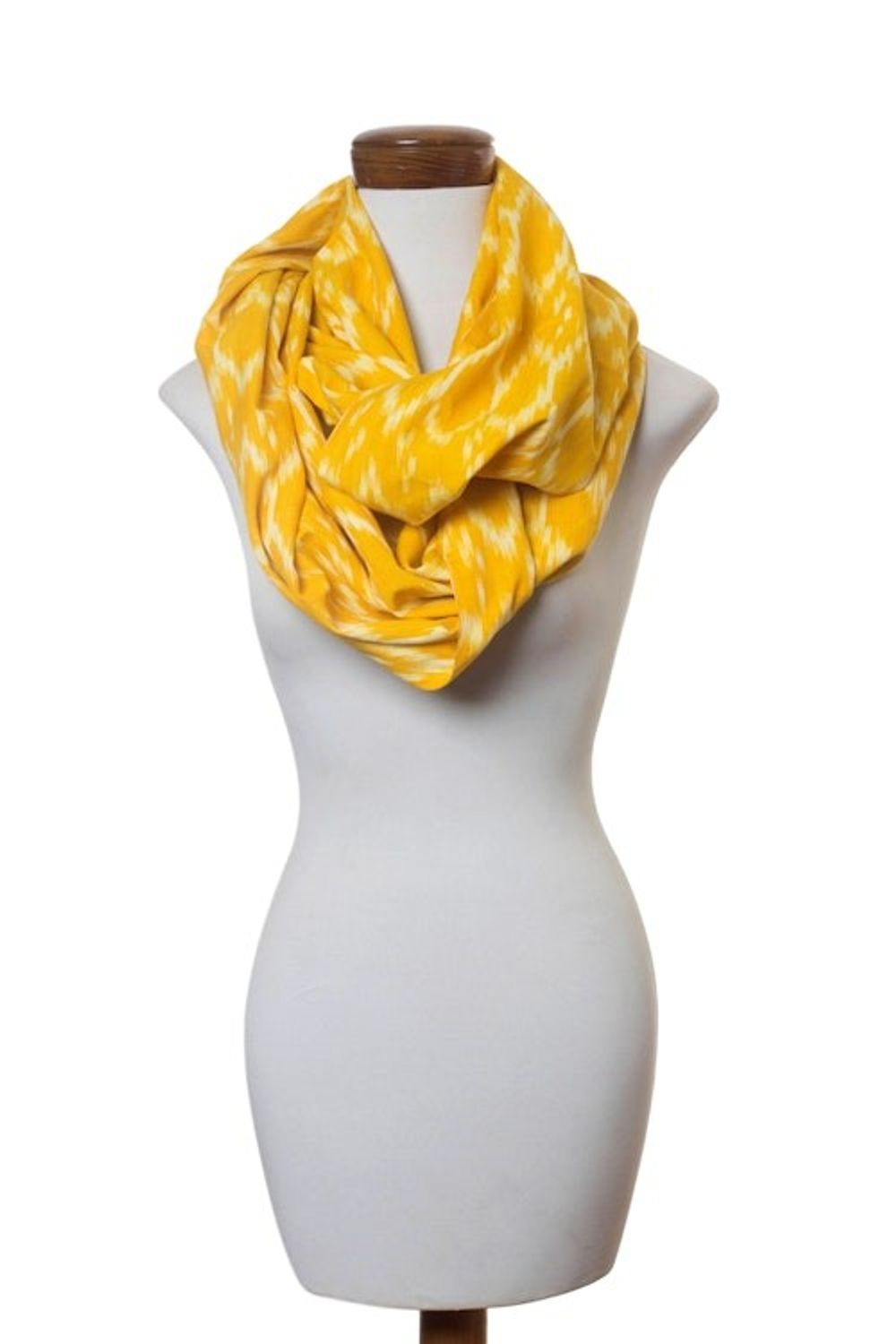
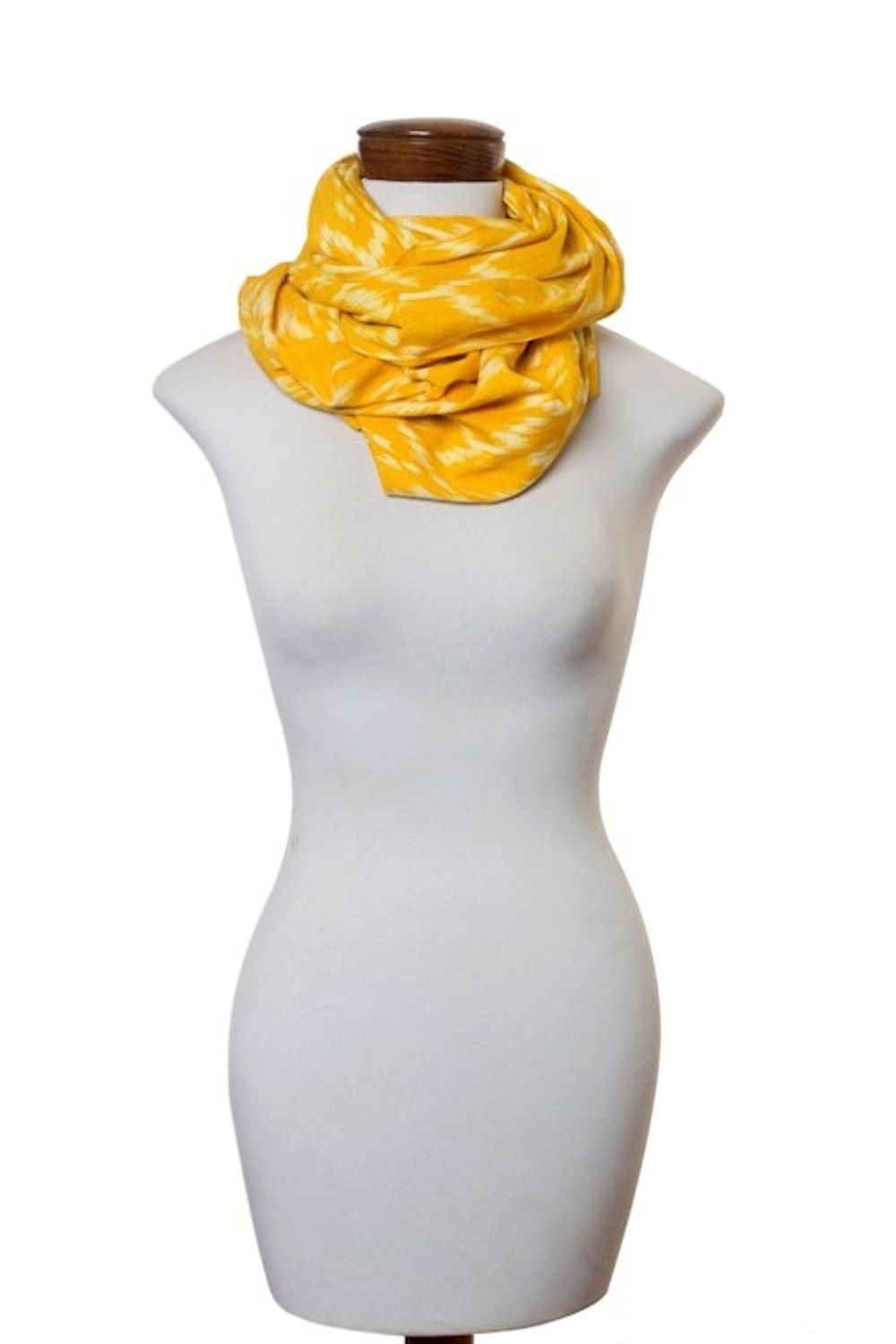
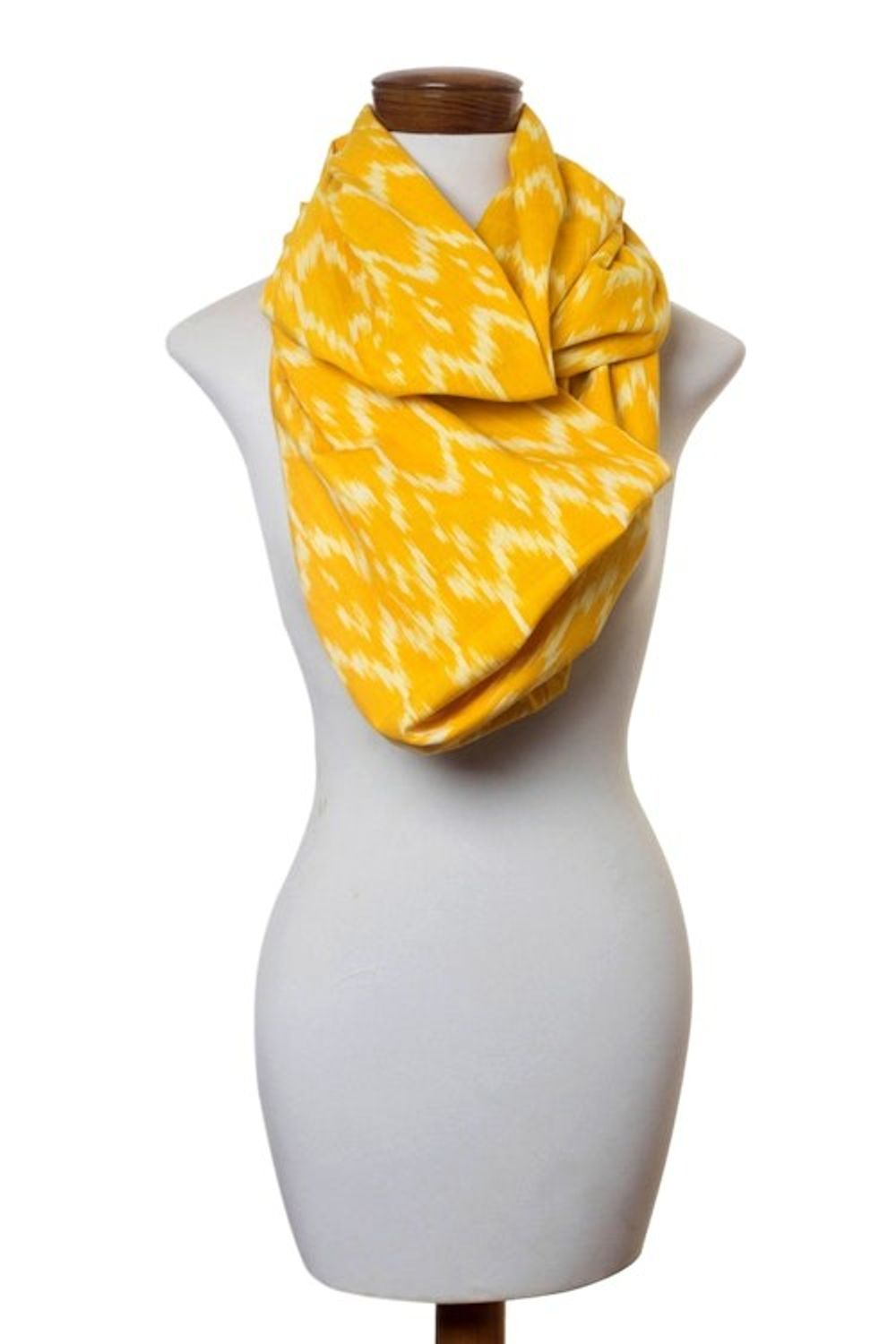

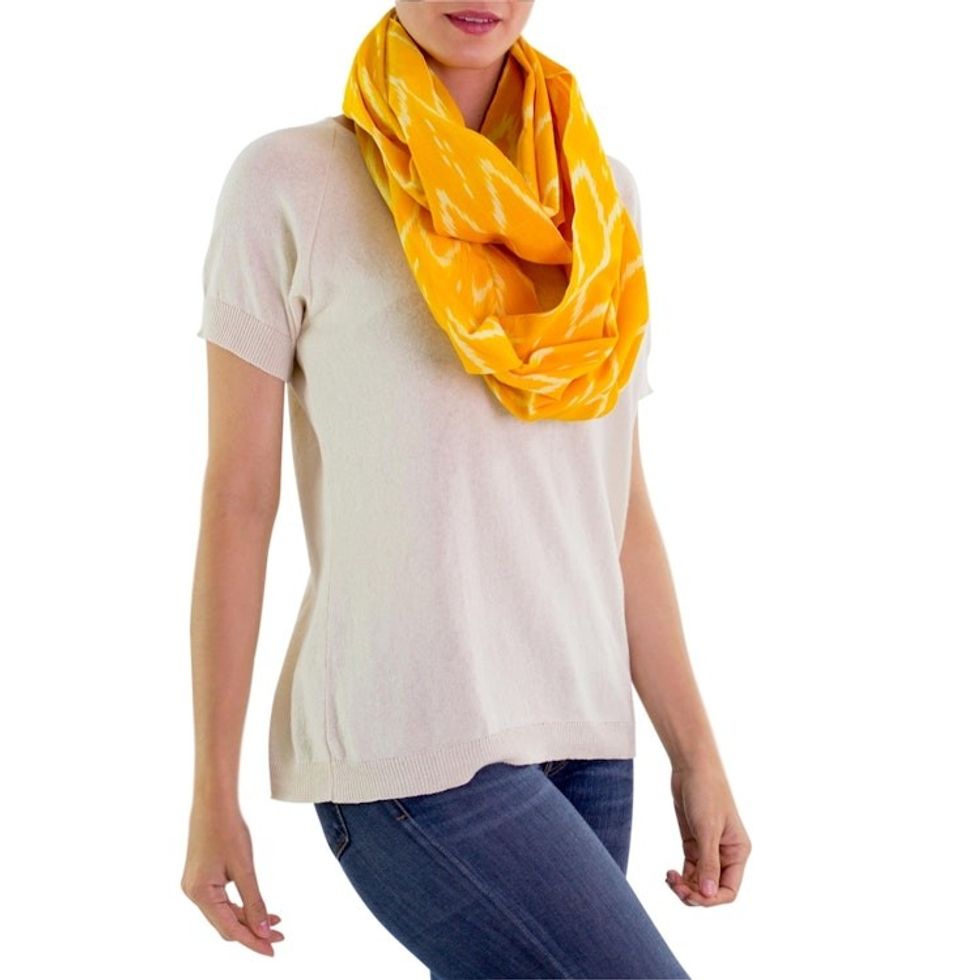
Hand Woven Cotton Infinity Scarf in Bright Yellow and White 'Maya Sunlight' Item ID: 2671778346
$49.99-1+
 Add to favorites
 In your favorites.
This is your own listing item.
- 0.44 lb
- 74 inches Inner Circ. x 17 inches W
- 0.34 lbs
- 74 inches Inner Circ. x 17 inches W
- 100% cotton
- Hand wash in cold water
 Made in Guatemala
100% Happiness Guaranteed!
 Shop with Confidence
 Easy 30 day returns!
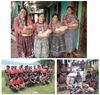
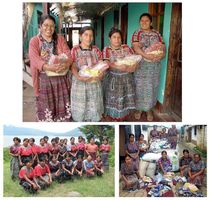
Yama Aj Chixot Artisan Group was started by women from San Juan Comalapa in the year 2000. In the Maya Kaqchiquel language, Aj Chixot means "from Comalapa," but Chi Xot also means comal a smooth griddle we use to make tortillas, and it makes reference to the shape of their village: round with a drop in the center.
"The Yama part of our name is actually 'Maya' spelt backwards, and we did it to stand out from most groups featuring Maya in their name," says Mirian Otzin, who heads the group.
"I grew up in Comalapa, just like most of the women in the group. It is a village of humble means where families are large, on average seven members per family. Women start teaching their daughters how to weave when they are 10 years old. As we grow up and have daughters ourselves, we teach them too so the tradition never ends. This is also we ensure that the weaving techniques of Comalapa are preserved.
"When I realized that people did indeed like what I wove, I ventured out looking for a place to sell my creations. That’s when I changed from using the back strap loom to the pedal loom to save on costs. It was a challenge for me to make this switch because the pedal loom is usually only used by men, and women are expected to use only the back strap loom.
"As a women's group we have received different training courses in order to improve our quality so that our products are valued as more than a piece of cloth. We have purchased sewing machines so we can offer a better finish for our bags, purses, and other items.
"My dream is to be able to help other women, be able to guide them and tell them that life is always filled with ups and downs. But that no matter how complicated problems can be, there is always a tomorrow to fix them.
"My hope is that we can live in a better world where women are always respected and loved, not because of what she produces, but for what she is, because one day she may stop producing, but she'll never cease to be what she is, a Woman.
"I remember the first time I went to a building in Guatemala City – it was the first time I had used an elevator and when it started to move I screamed so loud! All the people in the elevator looked at me and started to laugh, which made me feel so embarrassed but the only thing I could do at that moment was to laugh too.
"To me, in order to become successful, it is very important to be able to help one another. That's why we are part of a group. For example, once one of the women was struggling with a particular weaving technique and was disappointed that she couldn't do it on her own. Another member of the group offered to help and taught her how to do it in a way that was easier for her to understand. She was patient with her, and now this woman has become experienced in so many different techniques! She now teaches others, understanding first-hand how frustrating it could be when learning something new. To share what we know so that we can help each other out is one of the greatest gifts we can give if we set our minds to it.
"We are a group of women from a Kaqchiquel community in search of our own social and economic empowerment, so that we may break the cycle of poverty that has been affecting us for several generations. Thanks to the art we share, we can have more benefits and sow seeds for our children to reap."
3 Reviews for
 Yama Aj Chixot Artisan Group
September 8, 2020
★★★★★
R
Ruthy
The colors are even brighter in person than in the photos, believe it or not. The cloth feels very strong and well-stitched, and while I haven't had the opportunity to travel with it yet, it's very compact, so it's perfect for saving space even by just sitting on my dresser.
Reviewed item
March 2, 2019
★★★★★
J
Judy
This is just what I need for travel. The design allows you to bring as much or as little jewelry as you want and it takes minimal space in your carry-on.
Reviewed item
May 15, 2017
★★★★★
C
Christina
The colors on this are even better in person. Vibrant jewel tones that just pop. The feel of the weave is smooth and thick. It will not thin, nor rip easily. This bag is great for carrying essential oils. This is a thoughtfully designed and executed bag. I finally figured out that the two straps can also be used for securing it inside a pack! Extra care was taken in sewing an extra piece of materi... read more
Reviewed item
May 15, 2017
★★★★★
C
Christina
The colors on this are even better in person. Vibrant jewel tones that just pop. The feel of the weave is smooth and thick. It will not thin, nor rip easily. This bag is great for carrying essential oils. This is a thoughtfully designed and executed bag. I finally figured out that the two straps can also be used for securing it inside a pack! Extra care was taken in sewing an extra piece of material on top of the large magnetic button - otherwise the cumbersome size would be sticking out of the material, as well as wearing through it quickly. Makes a big difference in quality. Thank you for such care and detail, it will travel through many years and adventures.
Yama Aj Chixot Artisan Group was started by women from San Juan Comalapa in the year 2000. In the Maya Kaqchiquel language, Aj Chixot means "from Comalapa," but Chi Xot also means comal a smooth griddle we use to make tortillas, and it makes reference to the shape of their village: round with a drop in the center.
"The Yama part of our name is actually 'Maya' spelt backwards, and we did it to stand out from most groups featuring Maya in their name," says Mirian Otzin, who heads the group.
"I grew up in Comalapa, just like most of the women in the group. It is a village of humble means where families are large, on average seven members per family. Women start teaching their daughters how to weave when they are 10 years old. As we grow up and have daughters ourselves, we teach them too so the tradition never ends. This is also we ensure that the weaving techniques of Comalapa are preserved.
"When I realized that people did indeed like what I wove, I ventured out looking for a place to sell my creations. That’s when I changed from using the back strap loom to the pedal loom to save on costs. It was a challenge for me to make this switch because the pedal loom is usually only used by men, and women are expected to use only the back strap loom.
"As a women's group we have received different training courses in order to improve our quality so that our products are valued as more than a piece of cloth. We have purchased sewing machines so we can offer a better finish for our bags, purses, and other items.
"My dream is to be able to help other women, be able to guide them and tell them that life is always filled with ups and downs. But that no matter how complicated problems can be, there is always a tomorrow to fix them.
"My hope is that we can live in a better world where women are always respected and loved, not because of what she produces, but for what she is, because one day she may stop producing, but she'll never cease to be what she is, a Woman.
"I remember the first time I went to a building in Guatemala City – it was the first time I had used an elevator and when it started to move I screamed so loud! All the people in the elevator looked at me and started to laugh, which made me feel so embarrassed but the only thing I could do at that moment was to laugh too.
"To me, in order to become successful, it is very important to be able to help one another. That's why we are part of a group. For example, once one of the women was struggling with a particular weaving technique and was disappointed that she couldn't do it on her own. Another member of the group offered to help and taught her how to do it in a way that was easier for her to understand. She was patient with her, and now this woman has become experienced in so many different techniques! She now teaches others, understanding first-hand how frustrating it could be when learning something new. To share what we know so that we can help each other out is one of the greatest gifts we can give if we set our minds to it.
"We are a group of women from a Kaqchiquel community in search of our own social and economic empowerment, so that we may break the cycle of poverty that has been affecting us for several generations. Thanks to the art we share, we can have more benefits and sow seeds for our children to reap."
Read full story →

Yama Aj Chixot Artisan Group handwoven scarves, handbags and table linens
Yama Aj Chixot Artisan Group was started by women from San Juan Comalapa in the year 2000. In the Maya Kaqchiquel language, Aj Chixot means "from Comalapa," but Chi Xot also means comal a smooth griddle we use to make tortillas, and it makes reference to the shape of their village: round with a drop in the center.
"The Yama part of our name is actually 'Maya' spelt backwards, and we did it to stand out from most groups featuring Maya in their name," says Mirian Otzin, who heads the group.
"I grew up in Comalapa, just like most of the women in the group. It is a village of humble means where families are large, on average seven members per family. Women start teaching their daughters how to weave when they are 10 years old. As we grow up and have daughters ourselves, we teach them too so the tradition never ends. This is also we ensure that the weaving techniques of Comalapa are preserved.
"When I realized that people did indeed like what I wove, I ventured out looking for a place to sell my creations. That’s when I changed from using the back strap loom to the pedal loom to save on costs. It was a challenge for me to make this switch because the pedal loom is usually only used by men, and women are expected to use only the back strap loom.
"As a women's group we have received different training courses in order to improve our quality so that our products are valued as more than a piece of cloth. We have purchased sewing machines so we can offer a better finish for our bags, purses, and other items.
"My dream is to be able to help other women, be able to guide them and tell them that life is always filled with ups and downs. But that no matter how complicated problems can be, there is always a tomorrow to fix them.
"My hope is that we can live in a better world where women are always respected and loved, not because of what she produces, but for what she is, because one day she may stop producing, but she'll never cease to be what she is, a Woman.
"I remember the first time I went to a building in Guatemala City – it was the first time I had used an elevator and when it started to move I screamed so loud! All the people in the elevator looked at me and started to laugh, which made me feel so embarrassed but the only thing I could do at that moment was to laugh too.
"To me, in order to become successful, it is very important to be able to help one another. That's why we are part of a group. For example, once one of the women was struggling with a particular weaving technique and was disappointed that she couldn't do it on her own. Another member of the group offered to help and taught her how to do it in a way that was easier for her to understand. She was patient with her, and now this woman has become experienced in so many different techniques! She now teaches others, understanding first-hand how frustrating it could be when learning something new. To share what we know so that we can help each other out is one of the greatest gifts we can give if we set our minds to it.
"We are a group of women from a Kaqchiquel community in search of our own social and economic empowerment, so that we may break the cycle of poverty that has been affecting us for several generations. Thanks to the art we share, we can have more benefits and sow seeds for our children to reap."
"The Yama part of our name is actually 'Maya' spelt backwards, and we did it to stand out from most groups featuring Maya in their name," says Mirian Otzin, who heads the group.
"I grew up in Comalapa, just like most of the women in the group. It is a village of humble means where families are large, on average seven members per family. Women start teaching their daughters how to weave when they are 10 years old. As we grow up and have daughters ourselves, we teach them too so the tradition never ends. This is also we ensure that the weaving techniques of Comalapa are preserved.
"When I realized that people did indeed like what I wove, I ventured out looking for a place to sell my creations. That’s when I changed from using the back strap loom to the pedal loom to save on costs. It was a challenge for me to make this switch because the pedal loom is usually only used by men, and women are expected to use only the back strap loom.
"As a women's group we have received different training courses in order to improve our quality so that our products are valued as more than a piece of cloth. We have purchased sewing machines so we can offer a better finish for our bags, purses, and other items.
"My dream is to be able to help other women, be able to guide them and tell them that life is always filled with ups and downs. But that no matter how complicated problems can be, there is always a tomorrow to fix them.
"My hope is that we can live in a better world where women are always respected and loved, not because of what she produces, but for what she is, because one day she may stop producing, but she'll never cease to be what she is, a Woman.
"I remember the first time I went to a building in Guatemala City – it was the first time I had used an elevator and when it started to move I screamed so loud! All the people in the elevator looked at me and started to laugh, which made me feel so embarrassed but the only thing I could do at that moment was to laugh too.
"To me, in order to become successful, it is very important to be able to help one another. That's why we are part of a group. For example, once one of the women was struggling with a particular weaving technique and was disappointed that she couldn't do it on her own. Another member of the group offered to help and taught her how to do it in a way that was easier for her to understand. She was patient with her, and now this woman has become experienced in so many different techniques! She now teaches others, understanding first-hand how frustrating it could be when learning something new. To share what we know so that we can help each other out is one of the greatest gifts we can give if we set our minds to it.
"We are a group of women from a Kaqchiquel community in search of our own social and economic empowerment, so that we may break the cycle of poverty that has been affecting us for several generations. Thanks to the art we share, we can have more benefits and sow seeds for our children to reap."
Handmade: A Global Artisan Marketplace Guatemala City, Guatemala

Central America Artisan Empowerment Hub
Explore Central America. Rich rainforests and active volcanoes shelter the vestiges of the Mayan civilization that lives on in the languages and the arts of Central America. You'll discover the weaving traditions recorded on the backstrap looms, the glyphs and geometry that define the jewelry and pottery, and the vibrantly-painted folk art statues and masks among all the unique, handcrafted artisan treasures in our Central America Collection.
Maker BadgeCaring for Children
The Yama Aj Chixot artisan group enables women to make a fair wage that helps them support their children.
Maker BadgeEnabling Education
Thanks to the work of these women, their children have the opportunity to study and have a better future. As an association, part of their income is donated to school infrastructure.
Maker BadgeConfronting Adversity
Unfortunately many women in this area have been affected by miscarriages and the loss of newborns. This can cause a woman to go into a deep depression. Together they overcome these tragic events and provide constant support for one another.
Maker BadgeJob Creator
This association generates employment for more than 125 women.
Maker BadgePreserving Traditions
The association prides itself on protecting and preserving the very long-standing tradition of weaving using a floor loom. The women have all learned this technique from their mothers or grandmothers, and plan to teach their daughters as well.
Maker BadgeMoving On Up
The association has been able to grow and increase their sales, which is then passed along to the women and their families.
Maker BadgeEmpowering Women
The Women's Empowerment badge is awarded to female artisans or artisan groups that are led by women.
Maker BadgeMicrocredit Financing
Yama Aj Chixot Artisan Group has received a $200 microcredit loan with 0% interest.
More from this maker
Visit store













Other favorites
View more











100% Happiness Guaranteed
If you aren't in LOVE with your purchases, let us know within 30 days and we'll make it right.
- Easy Returns
- Hassle-free Exchange
- Dedicated Support

Powered by Human Creativity
Established alongside our parent company NOVICA
10K+
Master Artisans
1M+
Happy Customers
25 yrs
Empowering Makers
4.8
Average Rating
More than a Marketplace
Enjoyed by over 1,000,000
customers across 50+ countries
Powered by NOVICA, a beloved global leader
in fair trade artisan goods.
Go!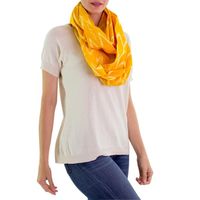
Item added to your cart!
Hand Woven Cotton Infinity Scarf in Bright Yellow and White 'Maya Sunlight'
Quantity:


Powered by

Partners and Collaborators




© 2026 
 You havein your cartTop