

Related products
Trending searches this week
Home Decor
- Wall Decor (1879)
- Decor Accessories (2786)
- Tableware (0)
- Holiday Decor & Ornaments (0)
- Outdoor Living (0)
- Pillows & Throws (433)
- Furniture (185)
- Musical Instruments (0)
- Baskets (0)
- Chess Sets Games (0)
- Jewelry Boxes (0)
- Kitchen & Dining (2143)
- Vases & Vessels (537)
- Outdoor & Garden (642)
- Holiday Decor (1710)
- Candles & Lighting (360)
- Bathroom (0)
- Bedding (7)
- Car Accessories (0)
- Nursery & Kids Room (0)
- Office & Desk (150)
- Rugs & Textiles (208)
- Storage & Organization (68)
Accessories
- Hats (208)
- Keychains and Straps (126)
- Hair Accessories (95)
- Other Accessories (142)
- Walking Sticks (0)
- Footwear (24)
- Bags & Purses (1635)
- Scarves & Wraps (1555)
- Belts & Sashes (68)
- Ties & Formal Accessories (5)
- Gloves & Mittens (106)
- Baby & Kids Accessories (5)
- Luggage & Travel (4)
- Tech Accessories (100)

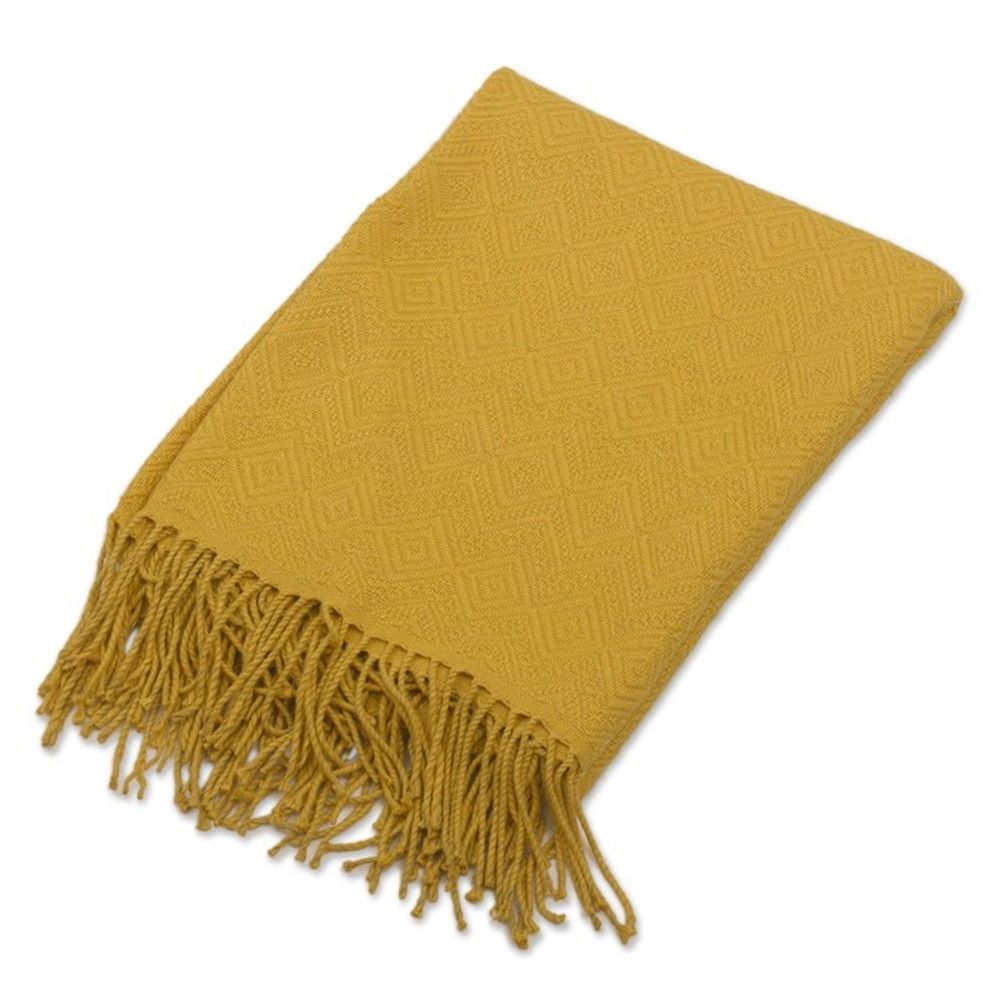
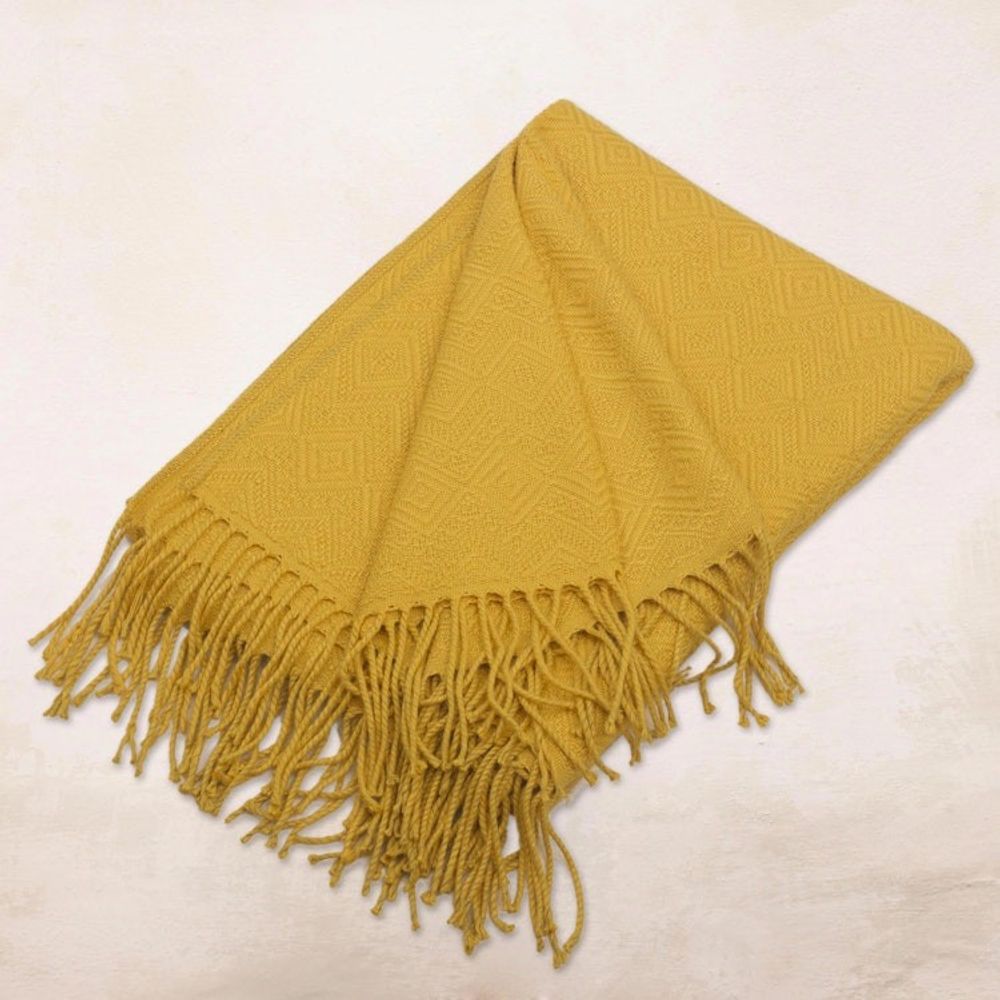
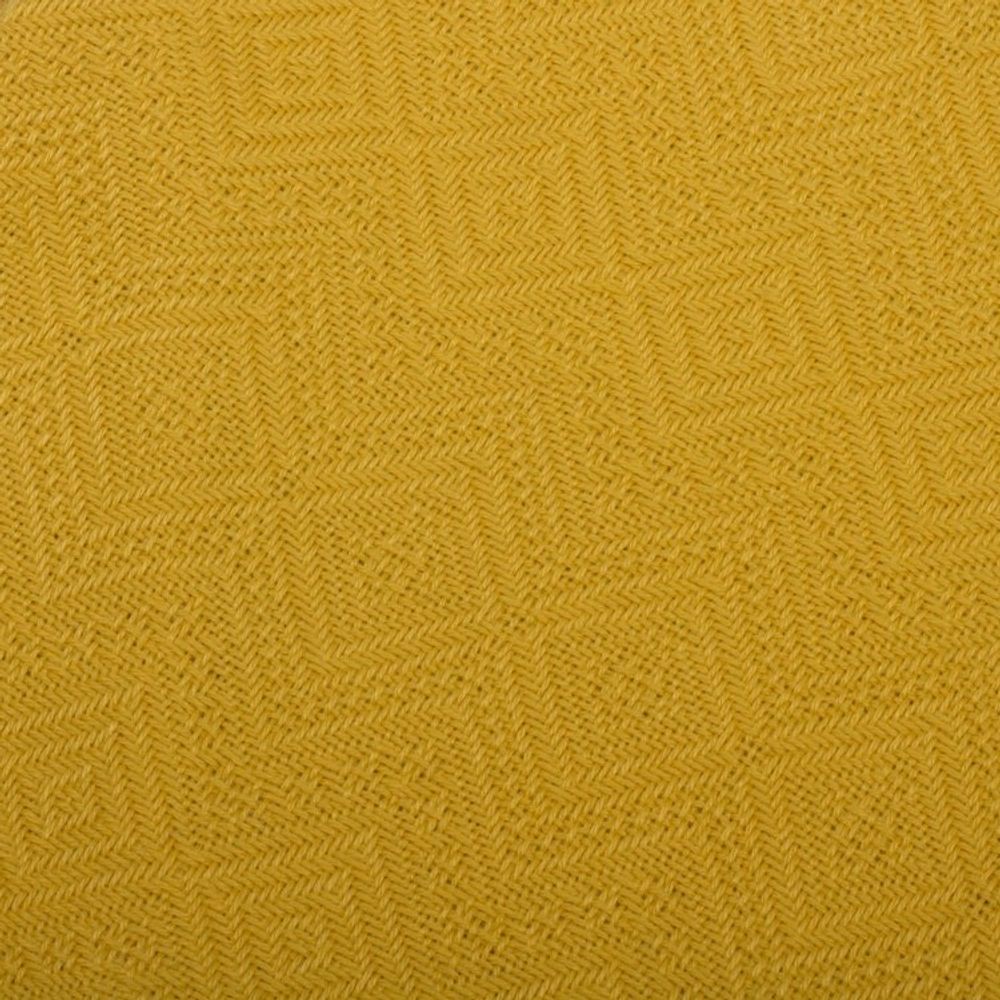
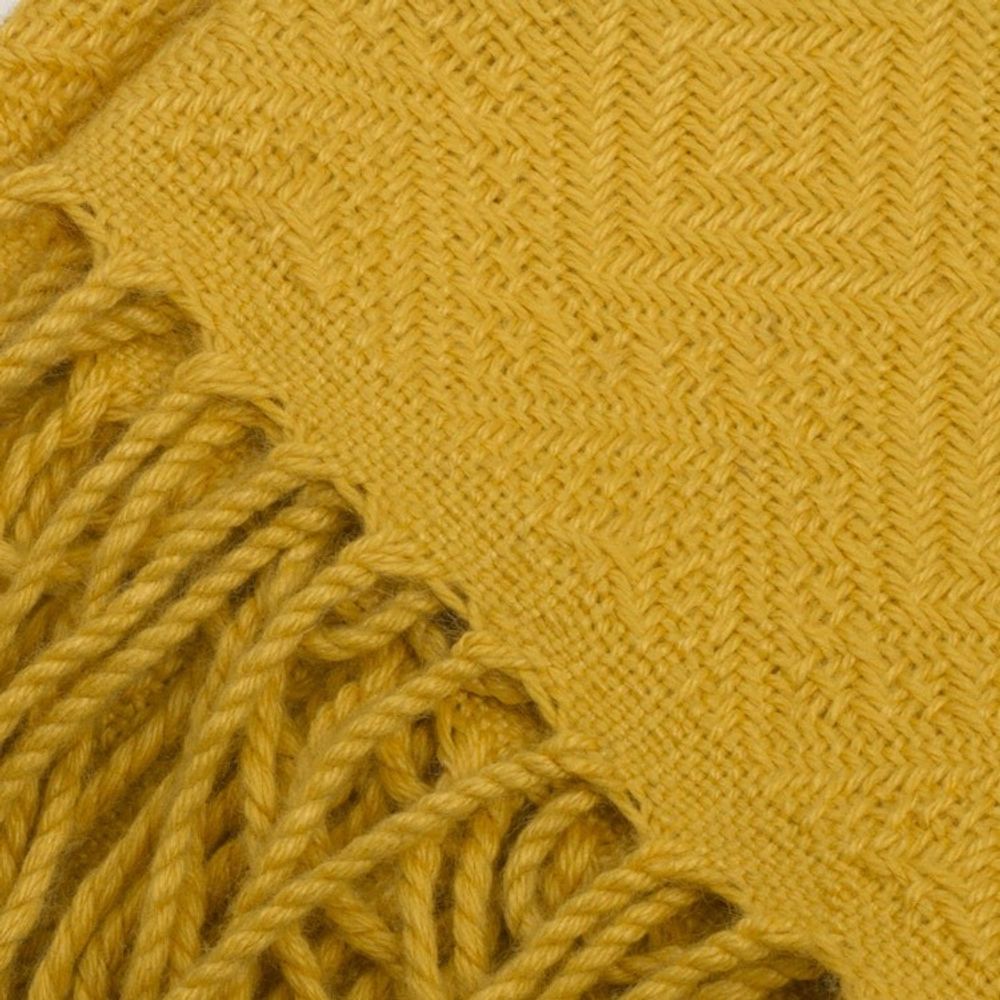

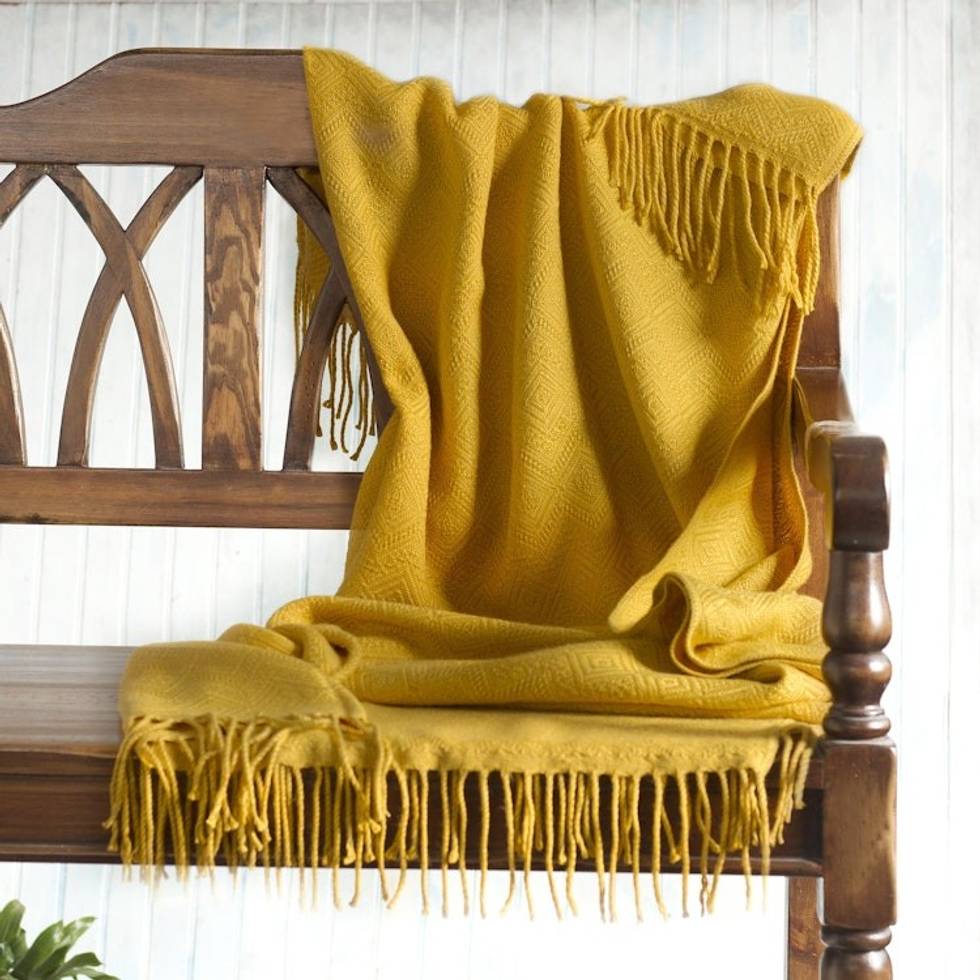
Diamond-Patterned Acrylic Blend Throw Blanket 'Diamond Mine in Gold' Item ID: 2671820073
$59.99-1+
 Add to favorites
 In your favorites.
This is your own listing item.
- 1.34 lbs
- 66 inches L x 54 inches W
- Fringe: 4.1 inches L
- 90% acrylic
- 10% alpaca
- Machine washable
 Made in Peru
100% Happiness Guaranteed!
 Shop with Confidence
 Easy 30 day returns!

"Greetings from the highest regions of the Peruvian Andes, where the air is fresh and pure, where the spring water helps preserve nature and keep alive our precious fauna such as the alpaca, which has been part of Quechua and Aymara families throughout our history. This is a history that is preserved through artisan hands such as my family's, and by you, too, who help us show our history to the world. And by you, our clients and friends because, together, we will continue to write this history. You can be sure that each piece of alpaca apparel is made with the loving care of many Peruvians, from shepherds to weavers.
"On behalf of many Andean families including mine, I would like to send greetings filled with the same warmth of our alpaca wool, as well as our eternal gratitude! Many thanks, and best wishes for joy and prosperity!"
Nestor Yana was born on August 29, 1964. He hails from the Puno region, situated in the Peruvian highlands, which are renowned for quality alpaca and sheep wool. He has been dedicated to the textile arts for more than 25 years – it has been a family trade for generations.
Yana and his siblings learned the different weaving and knitting techniques from their parents. When he first began to weave, he worked on rustic looms, which he and other family members built themselves. Together they sold their wares at local markets until eventually they were able to acquire modern knitting machines, which in turn allowed them to develop newer designs.
Yana designs and creates a variety of apparel styles, including cloaks, sweaters and ponchos. Each one showcases the unique attributes of alpaca wool. Alpacas are members of the camelid family. They are about the size of a pony and live up to 20 years. They make good and loyal pets. In fact, many owners say they are just like man's best friend. They are gentle and enjoy hugging. Alpacas are sometimes used as therapy animals in schools and hospitals. They do not bite but will occasionally spit when annoyed, though rarely at people. Pregnant alpacas are easily annoyed with the male, and will spit at him to go away.
Because of their value, alpacas are carefully protected and they are shorn only once a year – each alpaca can produce enough fleece for up to eight sweaters.
The Incas gave the alpaca an important place in society and religion, and alpaca fiber was so highly treasured it was reserved for Inca royalty.
Although alpaca wool is produced in less quantity per year than cashmere, it is considered a luxury fiber because it is as soft as cashmere and has the luster of silk. It is as durable as wool, and the fleece is extraordinarily light and warm – in fact, it is reported that alpaca wool is five times warmer than sheep's wool! That's because the fiber is semi-hollow and curly, thus creating microscopic air pockets that are ideal for insulation. Any garment made with alpaca fibers is certain to preserve its appearance over time.
The fashion industry considers alpaca wool to be one of the most exclusive of fibers. It is so versatile it is used in the creation of tweeds and fine gabardines. Alpaca fiber is naturally water-resistant and wrinkles less than wool, which makes it ideal for travel. Compared to wool, alpaca fibers are stronger, resilient and of good elasticity.
Reviews for

February 23, 2021
★★★★★
P
Paige
This was a gift for a first time mom's nursery. It went so well and was so soft! She used it in the rocking chair every night and is now a reminder of such sweet memories.
Reviewed item
February 6, 2021
★★★★★
C
Christina
I gave these as a gift. When I received the gloves, I wanted to keep them for myself. Beautiful colors, great fabric, and very distinctive!
Reviewed item
January 2, 2021
★★★★★
J
Janette
The blanket is a beautiful addition to our home. Soft and amazing craftmanship. Thank you for sharing the gift of your creations.Toronto, Canada
Reviewed item
December 20, 2020
★★★★★
C
Carissa
I absolutely love this blanket. It's so beautifully made, the pattern and color are gorgeous. It's not too heavy but it is very warm. It looks great draped over a chair and it's so comfy to curl up with at night. I would definitely recommend this throw blanket.
Reviewed item
August 13, 2020
★★★★★
H
Heather
I bought these as a gift for my Aunt, and she LOVED them! They are well made and very soft. I’m going to buy a pair for myself soon!
Reviewed item
April 20, 2020
★★★★★
K
Kelda
These gloves are soft, stylish and SO warm. They can easily be paired with most any scarf.
Reviewed item
February 22, 2020
★★★★★
J
Judy
These gloves are gorgeous. I love all the colors and that they are 100% Alpaca wool. I will get a lot of wear out of them.
Reviewed item
November 19, 2019
★★★★★
J
Judy
Beautiful throw. Keeps me warm in cool winter nights. I love this!
Reviewed item
April 17, 2019
★★★★★
R
Rebecca
Great size, very soft, and a very rich looking pattern made this throw a big hit.
Reviewed item
April 4, 2018
★★★★☆
R
Rebecca
Soft and colorful, on the thin side (which is fine for temps above freezing). I smidge tight, would be fine if I didn't wear a wedding ring (the prongs catch on the yarns, so I'm very careful when putting them on). Super cute though!
Reviewed item
January 30, 2018
★★★★★
N
Nick
I purchased this as a gift for someone and it is very impressive, much softer than I expected. I may have to get my own.
Reviewed item
January 27, 2018
★★★★☆
J
Joyce
The gloves were very beautiful but 2 inches too long for my fingers, I need to return them unfortunately.
Reviewed item
January 7, 2018
★★★★★
C
Claire
Soft and large. Beautifully made. Colors are subtle but make a big statement!
Reviewed item
September 28, 2017
★★★★★
P
Paula
I love this blanket. I also just ordered it in red! They are so soft and warm!! They are nice to cozy up to on the couch!
Reviewed item
March 14, 2017
★★★★★
A
Angela
This blanket is subtle, soft and beautiful. The colors are rich and warm, and the texture is soft and cozy. I can't wait to sit by the fire with this blanket and a good book.
Reviewed item
December 14, 2016
★★★★★
M
Mary
This throw blanket is beautifully made. It has a lovely pattern and is true to the color 'cadet blue'. It would be a terrific gift and is so reasonably priced for its quality and uniqueness. I have also purchased this artisan's Long Sleeved Grey cardigan sweater with a side tail hem which I absolutely love for its warmth and comfort. Thank You!
Reviewed item
December 11, 2016
★★★★★
M
Mary A.
Gave them as a gift and they were thrilled with the gloves and the gift wrapping.
Reviewed item
June 17, 2022
★★★★★
M
Melody
Perfect light weight throw. I didn’t want something too heavy for Southern California and this is perfect. Love the way it’s woven and the nice fringe at the bottom. Highly recommend this.
Reviewed item
May 18, 2022
★★★★☆
S
Summer
These gloves were so soft. They kept me so toasty warm throughout the Wisconsin winter. They pair well with my navy blue winter beanie. Got many compliments on them.
Reviewed item
March 18, 2022
★★★★☆
D
Donna
This is a very nice soft throw. The color was just what I needed. The only reason I gave it 4 stars instead of 5, is that the weave is a little loose and threads will pull.
Reviewed item
March 17, 2022
★★★★☆
G
Gerald
Ola NestorThe color & style/pattern of your gloves are beautiful . There's just 1 thing . I'm a man , with somewhat large hands ; so it would be good if you made some larger size pairs also , for us to choose from .Gracias y pazGeraldo
Reviewed item
March 9, 2022
★★★★★
K
Kathleen
This is the most beautiful blanket! So beautifully made and soft, and the design is unique and suits my tastes perfectly. I will certainly treasure this piece and display it in my home. Muchas gracias, Nestor Yana.Kathleen FarleyDel Mar, California
Reviewed item
August 16, 2023
★★★★★
J
Julie
Wonderful throw. Very soft and detailed weaving. It made an excellent gift and I ordered more.
Reviewed item
December 31, 2021
★★★★★
C
Christine
This throw blanket is so perfect. It complements any decor.
Reviewed item
August 1, 2023
★★★★★
N
Nancy
I have purchased tw of these for myself and one as a gift -that is how much I like this throw. I highly recommend.
Reviewed item
July 13, 2023
★★★★★
B
Brandon
These are the perfect mix of art and functionality. Couldn't ask for anything more.
Reviewed item
June 17, 2021
★★★★★
J
Jacqueline
Super soft and warm, and the design is so fun! Brightens up a dreary winter day.
Reviewed item
Reviews for
March 18, 2022
★★★★☆
D
Donna
This is a very nice soft throw. The color was just what I needed. The only reason I gave it 4 stars instead of 5, is that the weave is a little loose and threads will pull.
"Greetings from the highest regions of the Peruvian Andes, where the air is fresh and pure, where the spring water helps preserve nature and keep alive our precious fauna such as the alpaca, which has been part of Quechua and Aymara families throughout our history. This is a history that is preserved through artisan hands such as my family's, and by you, too, who help us show our history to the world. And by you, our clients and friends because, together, we will continue to write this history. You can be sure that each piece of alpaca apparel is made with the loving care of many Peruvians, from shepherds to weavers.
"On behalf of many Andean families including mine, I would like to send greetings filled with the same warmth of our alpaca wool, as well as our eternal gratitude! Many thanks, and best wishes for joy and prosperity!"
Nestor Yana was born on August 29, 1964. He hails from the Puno region, situated in the Peruvian highlands, which are renowned for quality alpaca and sheep wool. He has been dedicated to the textile arts for more than 25 years – it has been a family trade for generations.
Yana and his siblings learned the different weaving and knitting techniques from their parents. When he first began to weave, he worked on rustic looms, which he and other family members built themselves. Together they sold their wares at local markets until eventually they were able to acquire modern knitting machines, which in turn allowed them to develop newer designs.
Yana designs and creates a variety of apparel styles, including cloaks, sweaters and ponchos. Each one showcases the unique attributes of alpaca wool. Alpacas are members of the camelid family. They are about the size of a pony and live up to 20 years. They make good and loyal pets. In fact, many owners say they are just like man's best friend. They are gentle and enjoy hugging. Alpacas are sometimes used as therapy animals in schools and hospitals. They do not bite but will occasionally spit when annoyed, though rarely at people. Pregnant alpacas are easily annoyed with the male, and will spit at him to go away.
Because of their value, alpacas are carefully protected and they are shorn only once a year – each alpaca can produce enough fleece for up to eight sweaters.
The Incas gave the alpaca an important place in society and religion, and alpaca fiber was so highly treasured it was reserved for Inca royalty.
Although alpaca wool is produced in less quantity per year than cashmere, it is considered a luxury fiber because it is as soft as cashmere and has the luster of silk. It is as durable as wool, and the fleece is extraordinarily light and warm – in fact, it is reported that alpaca wool is five times warmer than sheep's wool! That's because the fiber is semi-hollow and curly, thus creating microscopic air pockets that are ideal for insulation. Any garment made with alpaca fibers is certain to preserve its appearance over time.
The fashion industry considers alpaca wool to be one of the most exclusive of fibers. It is so versatile it is used in the creation of tweeds and fine gabardines. Alpaca fiber is naturally water-resistant and wrinkles less than wool, which makes it ideal for travel. Compared to wool, alpaca fibers are stronger, resilient and of good elasticity.
Read full story →

Nestor Yana alpaca apparel and throws
"Greetings from the highest regions of the Peruvian Andes, where the air is fresh and pure, where the spring water helps preserve nature and keep alive our precious fauna such as the alpaca, which has been part of Quechua and Aymara families throughout our history. This is a history that is preserved through artisan hands such as my family's, and by you, too, who help us show our history to the world. And by you, our clients and friends because, together, we will continue to write this history. You can be sure that each piece of alpaca apparel is made with the loving care of many Peruvians, from shepherds to weavers.
"On behalf of many Andean families including mine, I would like to send greetings filled with the same warmth of our alpaca wool, as well as our eternal gratitude! Many thanks, and best wishes for joy and prosperity!"
Nestor Yana was born on August 29, 1964. He hails from the Puno region, situated in the Peruvian highlands, which are renowned for quality alpaca and sheep wool. He has been dedicated to the textile arts for more than 25 years – it has been a family trade for generations.
Yana and his siblings learned the different weaving and knitting techniques from their parents. When he first began to weave, he worked on rustic looms, which he and other family members built themselves. Together they sold their wares at local markets until eventually they were able to acquire modern knitting machines, which in turn allowed them to develop newer designs.
Yana designs and creates a variety of apparel styles, including cloaks, sweaters and ponchos. Each one showcases the unique attributes of alpaca wool. Alpacas are members of the camelid family. They are about the size of a pony and live up to 20 years. They make good and loyal pets. In fact, many owners say they are just like man's best friend. They are gentle and enjoy hugging. Alpacas are sometimes used as therapy animals in schools and hospitals. They do not bite but will occasionally spit when annoyed, though rarely at people. Pregnant alpacas are easily annoyed with the male, and will spit at him to go away.
Because of their value, alpacas are carefully protected and they are shorn only once a year – each alpaca can produce enough fleece for up to eight sweaters.
The Incas gave the alpaca an important place in society and religion, and alpaca fiber was so highly treasured it was reserved for Inca royalty.
Although alpaca wool is produced in less quantity per year than cashmere, it is considered a luxury fiber because it is as soft as cashmere and has the luster of silk. It is as durable as wool, and the fleece is extraordinarily light and warm – in fact, it is reported that alpaca wool is five times warmer than sheep's wool! That's because the fiber is semi-hollow and curly, thus creating microscopic air pockets that are ideal for insulation. Any garment made with alpaca fibers is certain to preserve its appearance over time.
The fashion industry considers alpaca wool to be one of the most exclusive of fibers. It is so versatile it is used in the creation of tweeds and fine gabardines. Alpaca fiber is naturally water-resistant and wrinkles less than wool, which makes it ideal for travel. Compared to wool, alpaca fibers are stronger, resilient and of good elasticity.
"On behalf of many Andean families including mine, I would like to send greetings filled with the same warmth of our alpaca wool, as well as our eternal gratitude! Many thanks, and best wishes for joy and prosperity!"
Nestor Yana was born on August 29, 1964. He hails from the Puno region, situated in the Peruvian highlands, which are renowned for quality alpaca and sheep wool. He has been dedicated to the textile arts for more than 25 years – it has been a family trade for generations.
Yana and his siblings learned the different weaving and knitting techniques from their parents. When he first began to weave, he worked on rustic looms, which he and other family members built themselves. Together they sold their wares at local markets until eventually they were able to acquire modern knitting machines, which in turn allowed them to develop newer designs.
Yana designs and creates a variety of apparel styles, including cloaks, sweaters and ponchos. Each one showcases the unique attributes of alpaca wool. Alpacas are members of the camelid family. They are about the size of a pony and live up to 20 years. They make good and loyal pets. In fact, many owners say they are just like man's best friend. They are gentle and enjoy hugging. Alpacas are sometimes used as therapy animals in schools and hospitals. They do not bite but will occasionally spit when annoyed, though rarely at people. Pregnant alpacas are easily annoyed with the male, and will spit at him to go away.
Because of their value, alpacas are carefully protected and they are shorn only once a year – each alpaca can produce enough fleece for up to eight sweaters.
The Incas gave the alpaca an important place in society and religion, and alpaca fiber was so highly treasured it was reserved for Inca royalty.
Although alpaca wool is produced in less quantity per year than cashmere, it is considered a luxury fiber because it is as soft as cashmere and has the luster of silk. It is as durable as wool, and the fleece is extraordinarily light and warm – in fact, it is reported that alpaca wool is five times warmer than sheep's wool! That's because the fiber is semi-hollow and curly, thus creating microscopic air pockets that are ideal for insulation. Any garment made with alpaca fibers is certain to preserve its appearance over time.
The fashion industry considers alpaca wool to be one of the most exclusive of fibers. It is so versatile it is used in the creation of tweeds and fine gabardines. Alpaca fiber is naturally water-resistant and wrinkles less than wool, which makes it ideal for travel. Compared to wool, alpaca fibers are stronger, resilient and of good elasticity.
Handmade: A Global Artisan Marketplace Lima, Peru

Andes Artisan Empowerment Hub
Explore the Andes region, once home to the Inca, Wari, Chavin and other ancient empires. Today, the influences of these ancient civilizations can be found in the artistic handicraft traditions that artisans use to create the vast array of jewelry, home furnishings, pottery, textiles, paintings and folk art that preserve the diverse, complex heritage of this colorful Latin land.
Maker BadgeCaring for Children
Nestor still provides for his son who is in the university.
Maker BadgeEnabling Education
Nestor pays for his son to attend the university and employs other artisans who pay for their own children's education.
Maker BadgeConfronting Adversity
Nestor was recently diagnosed with a calcaneal bone spur, a condition is often brought about by repetitive motion. He has been forced to modify his daily routine, however he continues to design and craft fine alpaca apparel in his workshop.
Maker BadgeWorking with Disabilities
Nestor loves his community and does what he can to help it. He employs disabled elderly craftswomen to create the unique hand finishes applied to his designs. These women would be unable to care for themselves without the support Nestor gives them.
Maker BadgeJob Creator
Nestor's persistence and determination have paid off. He not only is able to support himself but has grown his workshop and now offers work to others.
Maker BadgePreserving Traditions
Nestor's mother is from Juliaca in the Peruvian altiplano. She taught Nestor to weave and he, in turn, has taught his wife, his two children and his employees. He finds his inspiration in traditional Peruvian art and constantly searches art and history books to refine his craft.
Maker BadgeMoving On Up
Nestor is not only an employer, he is an important member of his community. He continues to grow his business providing full-time employment to 23 workers and part-time employment to others when he can. He recognizes his good fortune and shares with those less fortunate whenever the opportunity arises. The income from Nestor's Novica sales not only supports his wife, son and elderly parents - it helps to support others in his community. Many of Nestor's employees were homeless. Nestor not only provides them with work, he provides a place to stay or live.
Maker BadgeMicrocredit Financing
Nestor Yana has received 8 microcredit loans with 0% interest from Kiva and Novica, the first for $2850 and the most recent for $2850. Proceeds were used to buy yarn in the colors of this season's fashion trends for production.
More from this maker
Visit store










Other favorites
View more










100% Happiness Guaranteed
If you aren't in LOVE with your purchases, let us know within 30 days and we'll make it right.
- Easy Returns
- Hassle-free Exchange
- Dedicated Support

Powered by Human Creativity
Established alongside our parent company NOVICA
10K+
Master Artisans
1M+
Happy Customers
25 yrs
Empowering Makers
4.8
Average Rating
More than a Marketplace
Enjoyed by over 1,000,000
customers across 50+ countries
Powered by NOVICA, a beloved global leader
in fair trade artisan goods.
Go!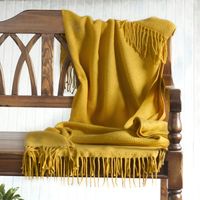
Item added to your cart!
Diamond-Patterned Acrylic Blend Throw Blanket 'Diamond Mine in Gold'
Quantity:


Powered by

Partners and Collaborators




© 2026 
 You havein your cartTop