

Related products
Trending searches this week
Home Decor
- Wall Decor (1884)
- Decor Accessories (2786)
- Tableware (0)
- Holiday Decor & Ornaments (0)
- Outdoor Living (0)
- Pillows & Throws (435)
- Furniture (185)
- Musical Instruments (0)
- Baskets (0)
- Chess Sets Games (0)
- Jewelry Boxes (0)
- Kitchen & Dining (2145)
- Vases & Vessels (537)
- Outdoor & Garden (642)
- Holiday Decor (1726)
- Candles & Lighting (361)
- Bathroom (0)
- Bedding (7)
- Car Accessories (0)
- Nursery & Kids Room (7)
- Office & Desk (150)
- Rugs & Textiles (208)
- Storage & Organization (69)
Accessories
- Hats (210)
- Keychains and Straps (129)
- Hair Accessories (97)
- Other Accessories (143)
- Walking Sticks (0)
- Footwear (24)
- Bags & Purses (1636)
- Scarves & Wraps (1556)
- Belts & Sashes (68)
- Ties & Formal Accessories (5)
- Gloves & Mittens (106)
- Baby & Kids Accessories (5)
- Luggage & Travel (4)
- Tech Accessories (100)

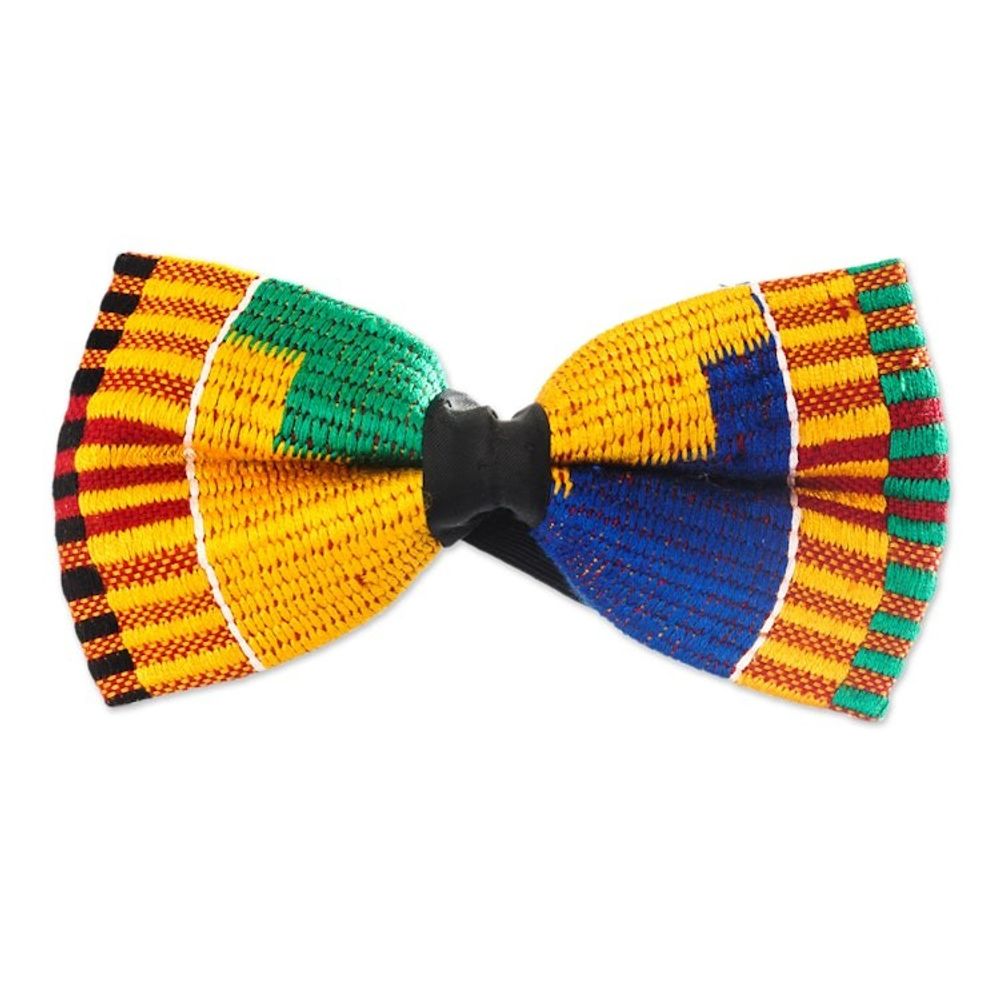

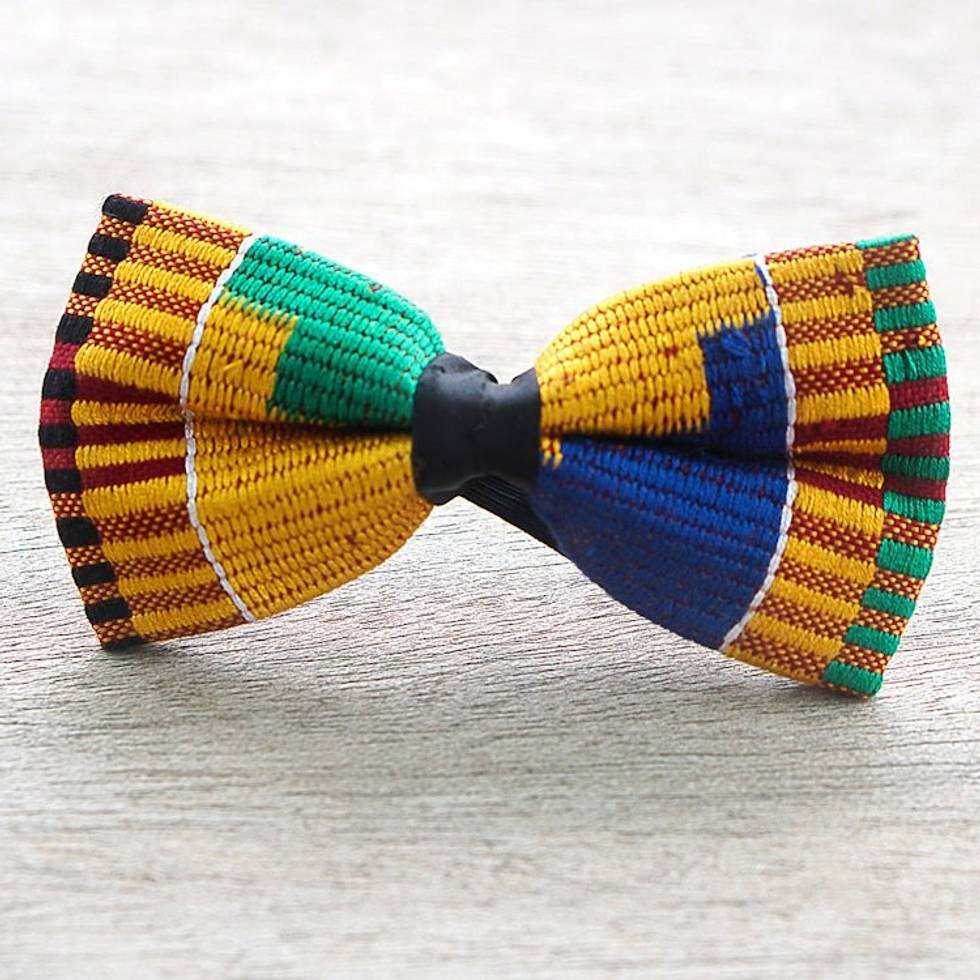
Colorful Cotton Kente Cloth Bow Tie from Ghana 'Akan Delight' Item ID: 2671805848
$47.99Currently not available
We're sorry but it looks like we're late on getting more items for you. Please check back in a few days.
This is your own listing item.
- 0.44 lb
- 5 inches L x 2.4 inches W
- 0.56 oz
- 5 inches L x 2.4 inches W
- 100% cotton
- nylon elastic
- Dry clean only
- Hand-crafted item -- color
- size and/or motif may vary slightly
 Made in Ghana
100% Happiness Guaranteed!
 Shop with Confidence
 Easy 30 day returns!

I became interested in weaving at a tender age. My grandfather, Opanyin Kwame Kwarteng of blessed memory, saw the potential to weave in me. He taught me earnestly to weave anytime I visited him on holidays.
I am the last of nine children, born in June of 1965 in Accra, the capital of Ghana. I am also the mother of three. Apart from weaving, I also love to travel.
I became a weaver because I wanted to continue the family trade and make a mark as well. Through kente cloth, I can express my appreciation of how the Ashanti culture and Western culture have found a point of integration, and this motivates me. I have six trainees who are learning this craft under my guidance.
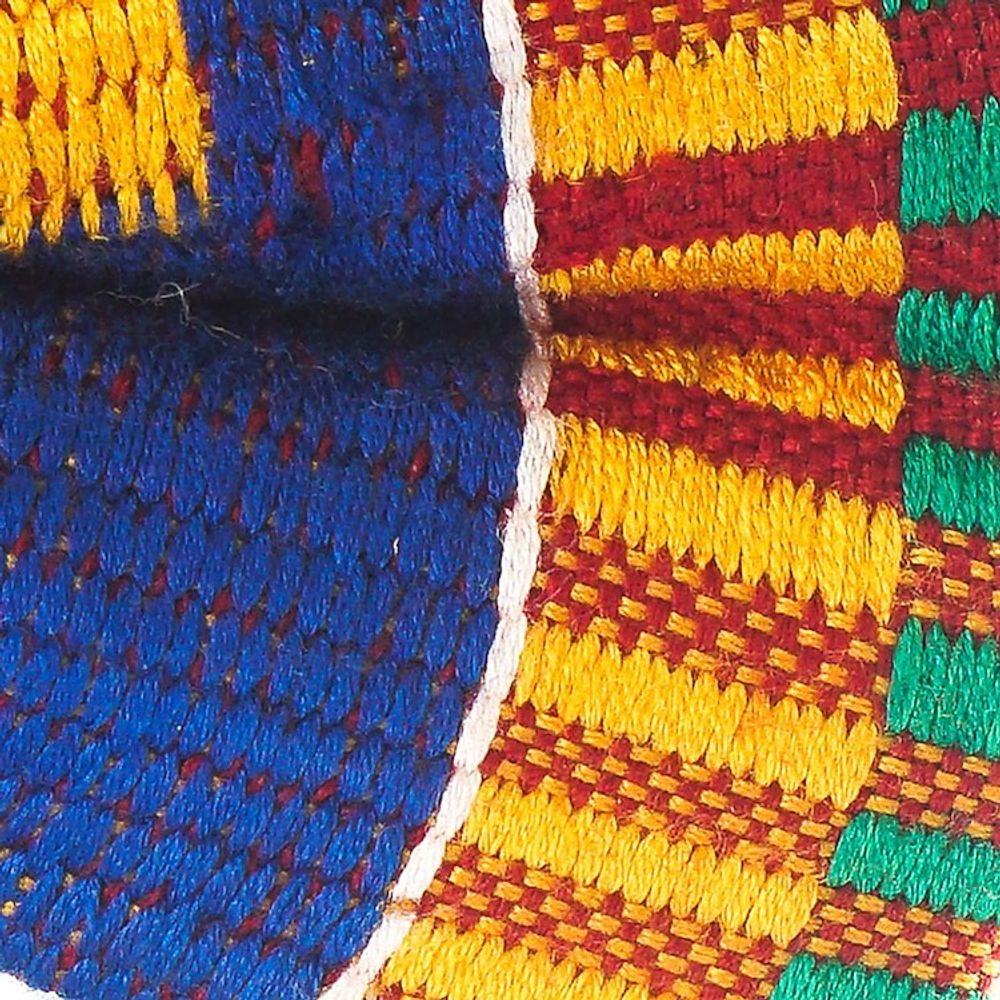
My work is complex because it involves the careful selection of yarns for specific designs. Kente cloth basically requires silk, rayon and cotton yarns and a shuttle box. I begin by stretching yarns from a shuttle box to form the base color of the Kente stole. I then shuttle different colors of yarns to create specific designs.
Over time, a modification in the designs has taken place, though traditional designs are patronized.
The climate is a challenge. It is virtually impossible to weave during the rainy season since weaving is normally done outdoors.
I have shown my weavings in the Kentefest commemorating Ghana's Golden Jubilee celebrations, as well as other venues. Now, I can show them to the entire world.
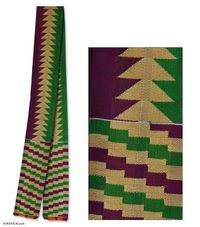
Kente cloth is woven in strips. Each strip requires considerable effort, and the looms are worked with both hands and feet. Strips are generally three to four inches wide and seven to ten feet long, and the length of time it takes to complete one strip varies by the complexity of the chosen pattern. The simplest use mostly vertical, or warp patterns, and an experienced weaver can make several of those in one day. But patterns with nearly all weft (horizontal thread) patterns where the warp design is hardly visible can take up to four days to complete an individual strip. Each color has its own meanings in Ashanti culture. Green is fertility and new harvest, gold is royalty, black is strength, aging, and spirituality, while white is purity. The patterns themselves are carefully chosen symbols, which a master weaver develops and names, often to honor people, historical events, or proverbs.
I became interested in weaving at a tender age. My grandfather, Opanyin Kwame Kwarteng of blessed memory, saw the potential to weave in me. He taught me earnestly to weave anytime I visited him on holidays.I am the last of nine children, born in June of 1965 in Accra, the capital of Ghana. I am also the mother of three. Apart from weaving, I also love to travel.I became a weaver because I wanted to continue the family trade and make a mark as well. Through kente cloth, I can express my appreciation of how the Ashanti culture and Western culture have found a point of integration, and this motivates me. I have six trainees who are learning this craft under my guidance.My work is complex because it involves the careful selection of yarns for specific designs. Kente cloth basically requires silk, rayon and cotton yarns and a shuttle box. I begin by stretching yarns from a shuttle box to form the base color of the Kente stole. I then shuttle different colors of yarns to create specific designs.Over time, a modification in the designs has taken place, though traditional designs are patronized.The climate is a challenge. It is virtually impossible to weave during the rainy season since weaving is normally done outdoors.I have shown my weavings in the Kentefest commemorating Ghana's Golden Jubilee celebrations, as well as other venues. Now, I can show them to the entire world.Kente cloth is woven in strips. Each strip requires considerable effort, and the looms are worked with both hands and feet. Strips are generally three to four inches wide and seven to ten feet long, and the length of time it takes to complete one strip varies by the complexity of the chosen pattern. The simplest use mostly vertical, or warp patterns, and an experienced weaver can make several of those in one day. But patterns with nearly all weft (horizontal thread) patterns where the warp design is hardly visible can take up to four days to complete an individual strip. Each color has its own meanings in Ashanti culture. Green is fertility and new harvest, gold is royalty, black is strength, aging, and spirituality, while white is purity. The patterns themselves are carefully chosen symbols, which a master weaver develops and names, often to honor people, historical events, or proverbs.
Read full story →


Deborah Osei Boakye kente cloth art
I became interested in weaving at a tender age. My grandfather, Opanyin Kwame Kwarteng of blessed memory, saw the potential to weave in me. He taught me earnestly to weave anytime I visited him on holidays.
I am the last of nine children, born in June of 1965 in Accra, the capital of Ghana. I am also the mother of three. Apart from weaving, I also love to travel.
I became a weaver because I wanted to continue the family trade and make a mark as well. Through kente cloth, I can express my appreciation of how the Ashanti culture and Western culture have found a point of integration, and this motivates me. I have six trainees who are learning this craft under my guidance.
My work is complex because it involves the careful selection of yarns for specific designs. Kente cloth basically requires silk, rayon and cotton yarns and a shuttle box. I begin by stretching yarns from a shuttle box to form the base color of the Kente stole. I then shuttle different colors of yarns to create specific designs.
Over time, a modification in the designs has taken place, though traditional designs are patronized.
The climate is a challenge. It is virtually impossible to weave during the rainy season since weaving is normally done outdoors.
I have shown my weavings in the Kentefest commemorating Ghana's Golden Jubilee celebrations, as well as other venues. Now, I can show them to the entire world.
Kente cloth is woven in strips. Each strip requires considerable effort, and the looms are worked with both hands and feet. Strips are generally three to four inches wide and seven to ten feet long, and the length of time it takes to complete one strip varies by the complexity of the chosen pattern. The simplest use mostly vertical, or warp patterns, and an experienced weaver can make several of those in one day. But patterns with nearly all weft (horizontal thread) patterns where the warp design is hardly visible can take up to four days to complete an individual strip. Each color has its own meanings in Ashanti culture. Green is fertility and new harvest, gold is royalty, black is strength, aging, and spirituality, while white is purity. The patterns themselves are carefully chosen symbols, which a master weaver develops and names, often to honor people, historical events, or proverbs.
I am the last of nine children, born in June of 1965 in Accra, the capital of Ghana. I am also the mother of three. Apart from weaving, I also love to travel.
I became a weaver because I wanted to continue the family trade and make a mark as well. Through kente cloth, I can express my appreciation of how the Ashanti culture and Western culture have found a point of integration, and this motivates me. I have six trainees who are learning this craft under my guidance.
My work is complex because it involves the careful selection of yarns for specific designs. Kente cloth basically requires silk, rayon and cotton yarns and a shuttle box. I begin by stretching yarns from a shuttle box to form the base color of the Kente stole. I then shuttle different colors of yarns to create specific designs.
Over time, a modification in the designs has taken place, though traditional designs are patronized.
The climate is a challenge. It is virtually impossible to weave during the rainy season since weaving is normally done outdoors.
I have shown my weavings in the Kentefest commemorating Ghana's Golden Jubilee celebrations, as well as other venues. Now, I can show them to the entire world.
Kente cloth is woven in strips. Each strip requires considerable effort, and the looms are worked with both hands and feet. Strips are generally three to four inches wide and seven to ten feet long, and the length of time it takes to complete one strip varies by the complexity of the chosen pattern. The simplest use mostly vertical, or warp patterns, and an experienced weaver can make several of those in one day. But patterns with nearly all weft (horizontal thread) patterns where the warp design is hardly visible can take up to four days to complete an individual strip. Each color has its own meanings in Ashanti culture. Green is fertility and new harvest, gold is royalty, black is strength, aging, and spirituality, while white is purity. The patterns themselves are carefully chosen symbols, which a master weaver develops and names, often to honor people, historical events, or proverbs.
Handmade: A Global Artisan Marketplace

Africa Artisan Empowerment Hub
The traditional arts are a vibrant aspect of everyday life in West Africa. From richly intricate handwoven kente cloth fabrics, to intricately colorful beaded arts, ceremonial masks, and exquisite jewelry, to traditional throne-stools hand-carved for customers by the Ashanti king's actual chief carver, artisans proudly offer their region's finest handmade works of art.
Maker BadgeMicrocredit Financing
Deborah Osei Boakye has received a $1000 microcredit loan with 0% interest.
More from this maker
Visit store





Other favorites
View more












100% Happiness Guaranteed
If you aren't in LOVE with your purchases, let us know within 30 days and we'll make it right.
- Easy Returns
- Hassle-free Exchange
- Dedicated Support

Powered by Human Creativity
Established alongside our parent company NOVICA
10K+
Master Artisans
1M+
Happy Customers
25 yrs
Empowering Makers
4.8
Average Rating
More than a Marketplace
Enjoyed by over 1,000,000
customers across 50+ countries
Powered by NOVICA, a beloved global leader
in fair trade artisan goods.
Go!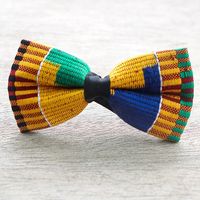
Item added to your cart!
Colorful Cotton Kente Cloth Bow Tie from Ghana 'Akan Delight'
Quantity:


Powered by

Partners and Collaborators




© 2026 
 You havein your cartTop