
Trending Searches
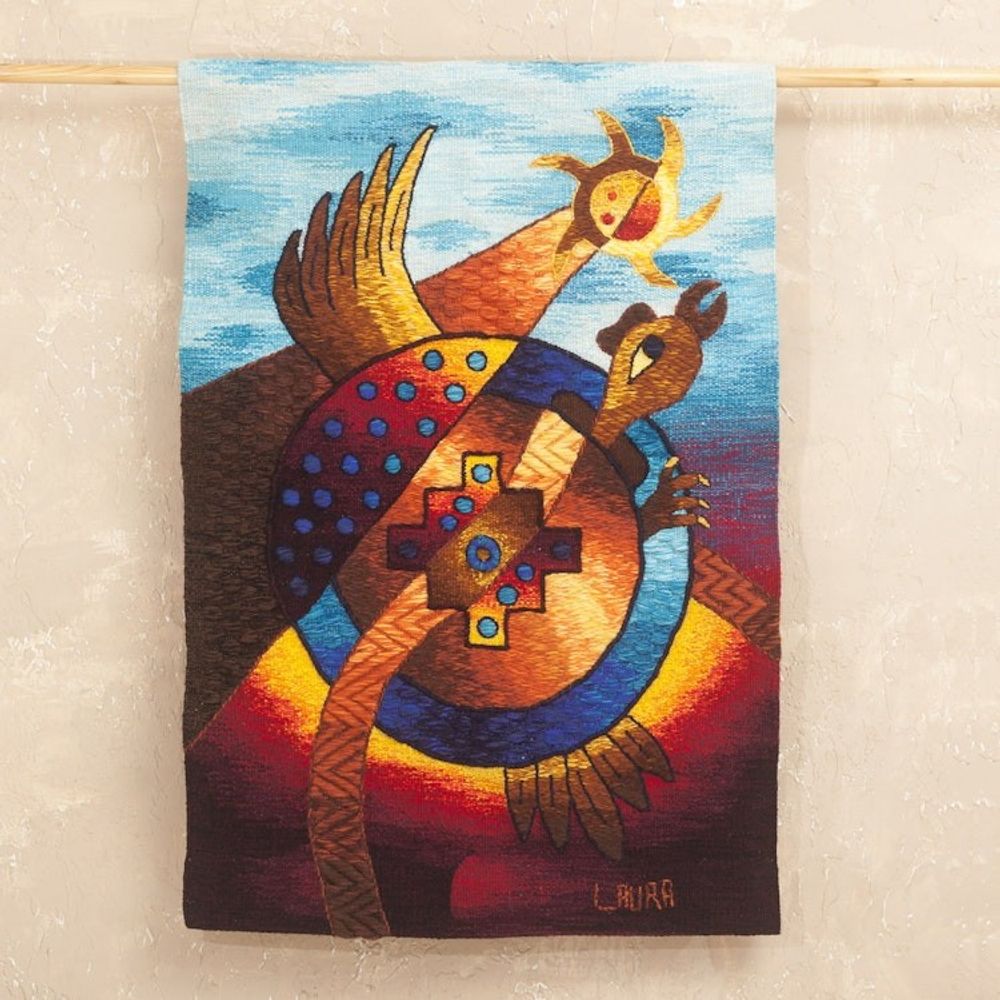
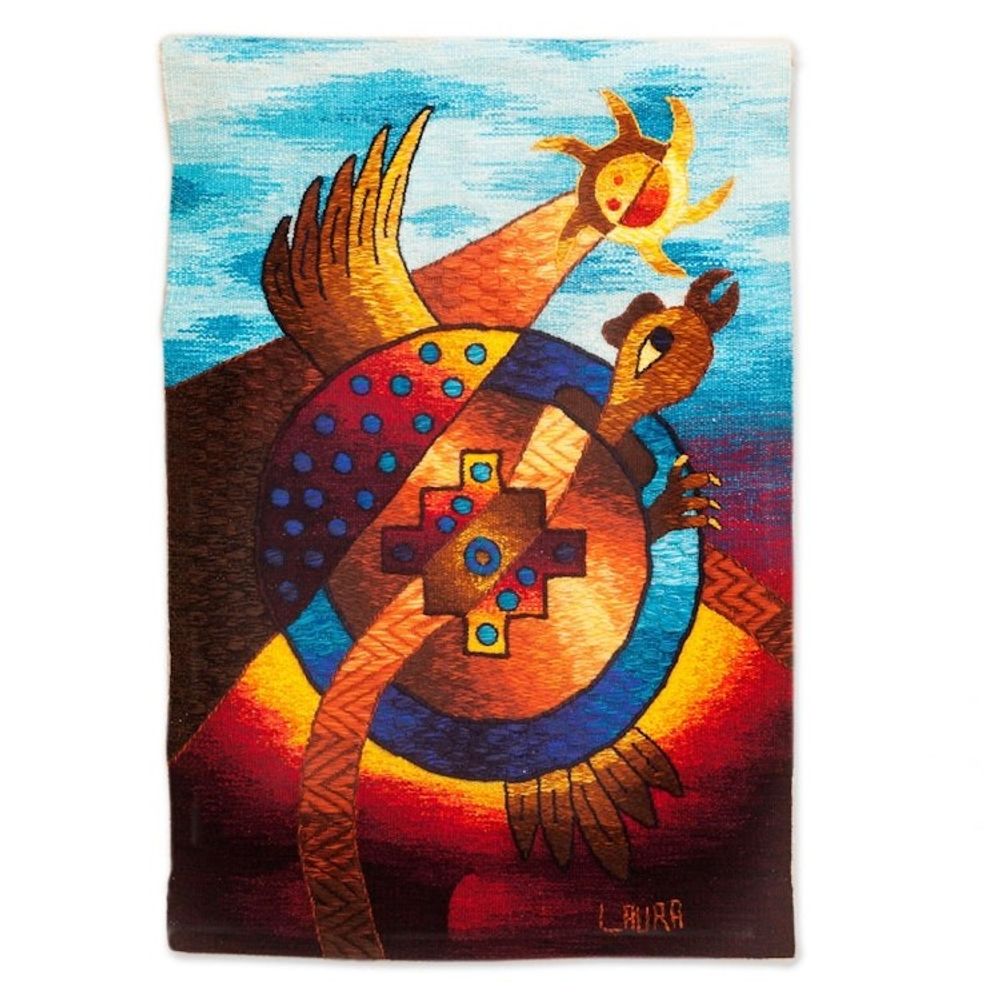
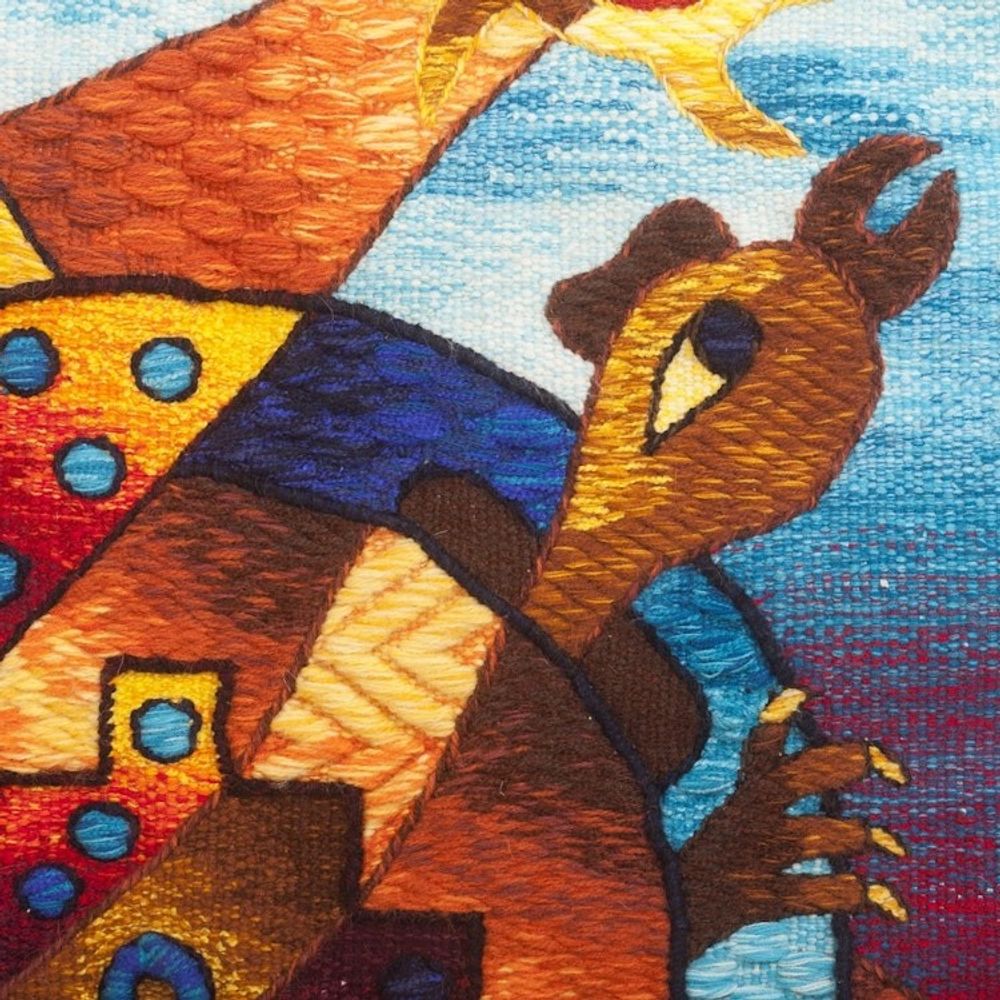
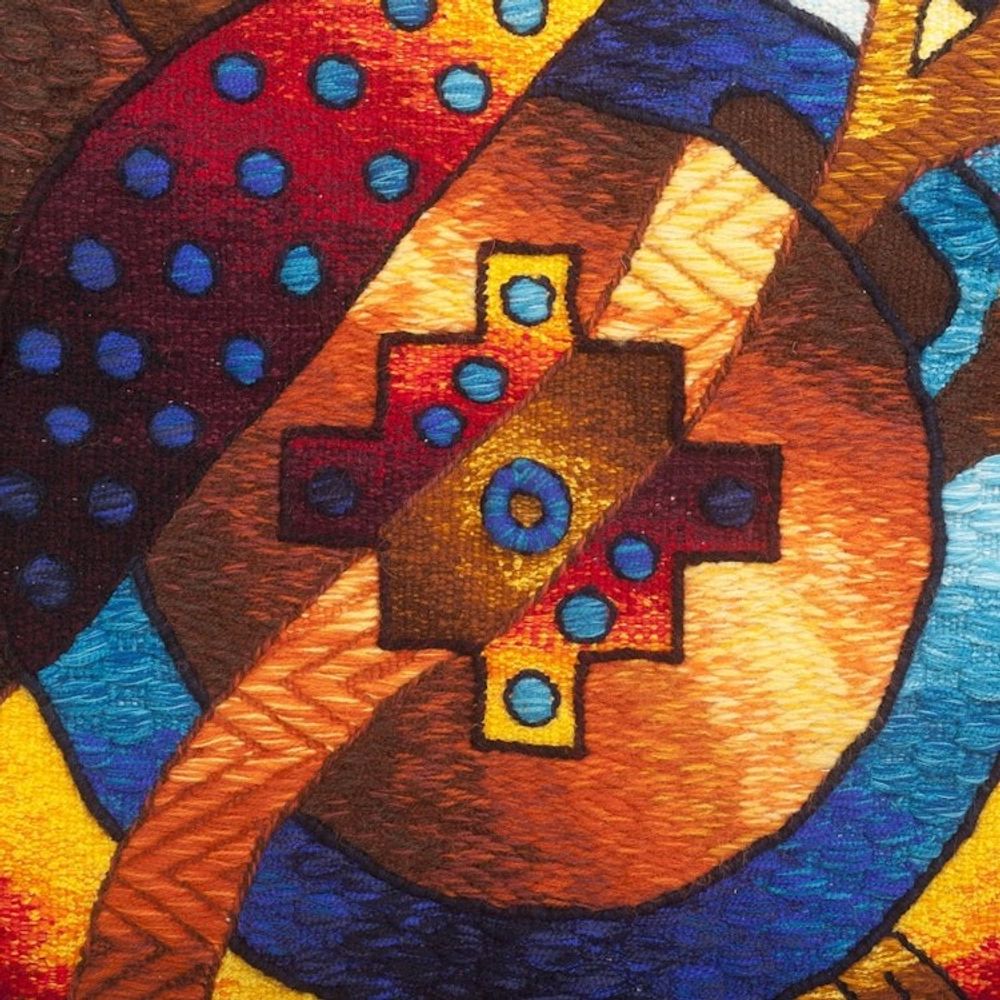
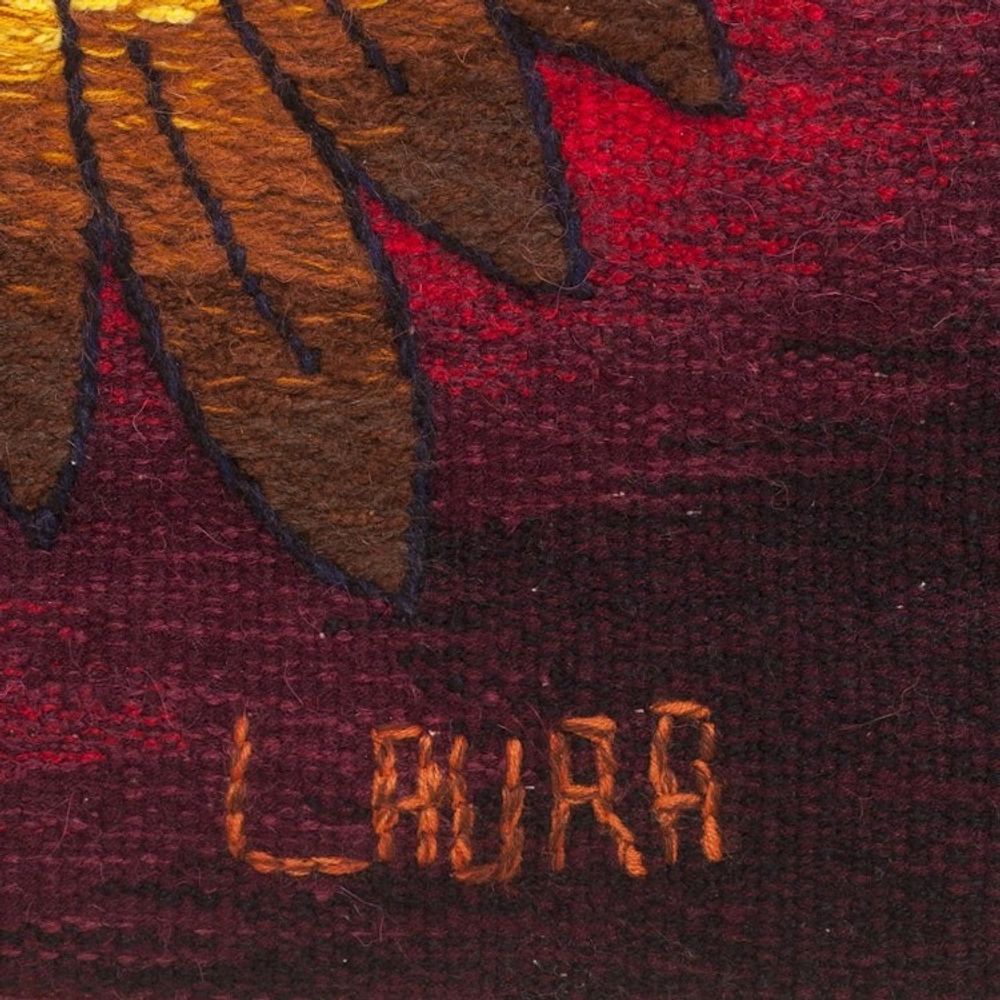

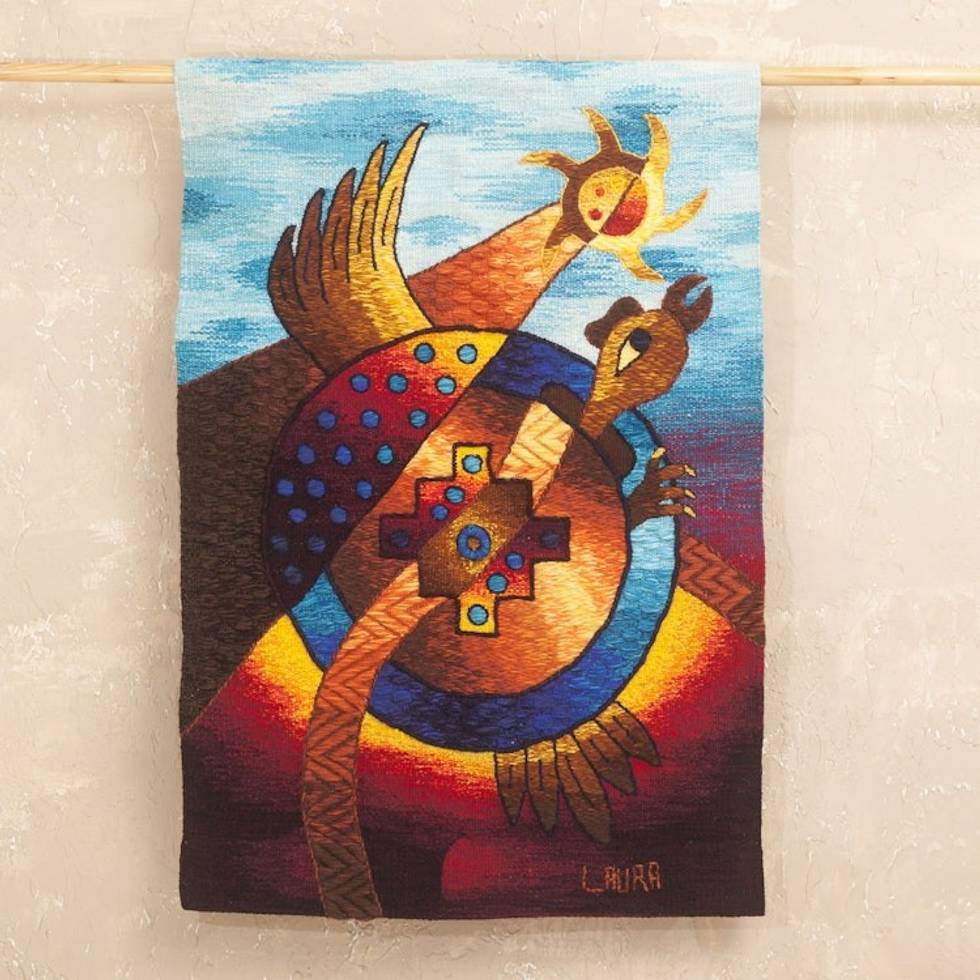
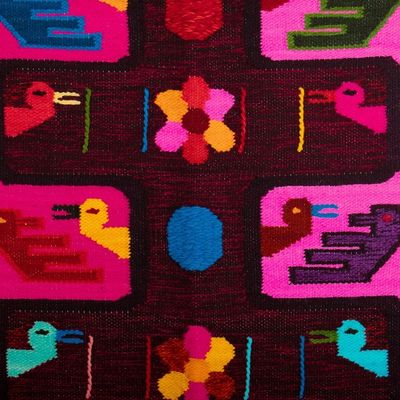
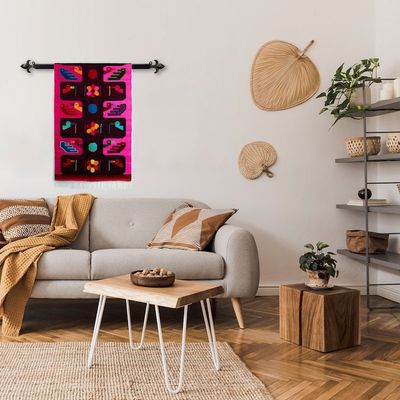
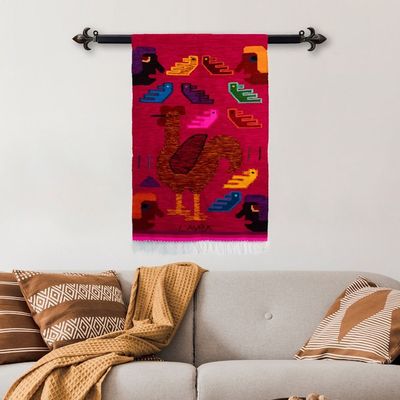
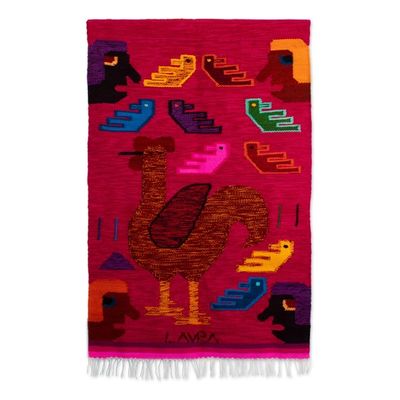
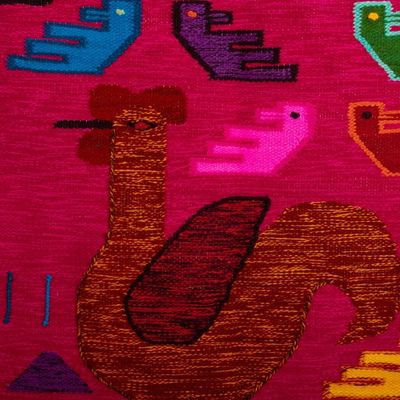
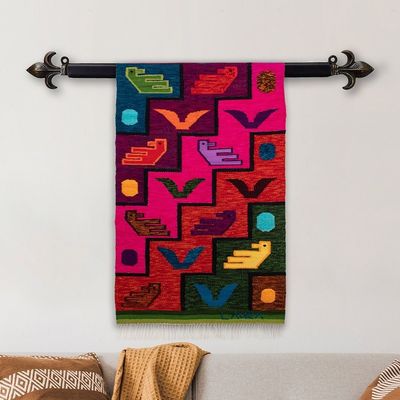
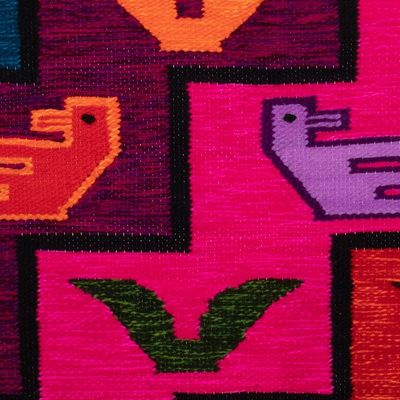
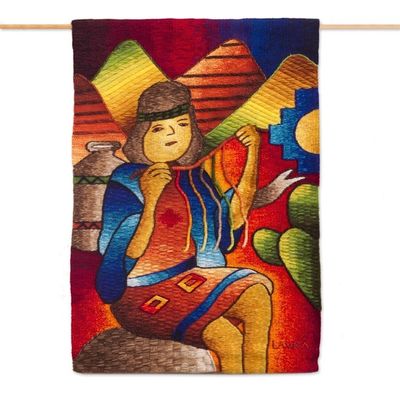
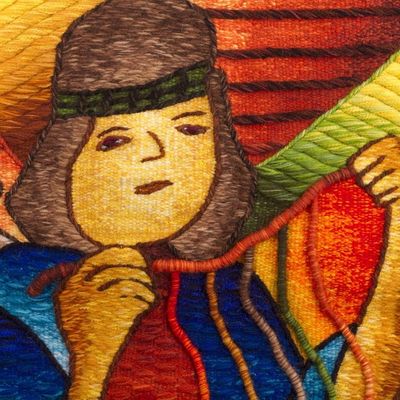
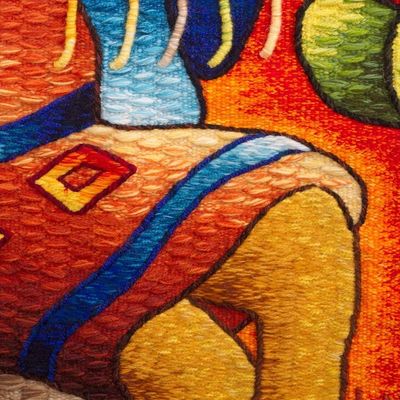
Chakana Condor Bird Alpaca Blend Tapestry from Peru 'Apu Kuntur' Item ID: 2671691365
$349Currently not available
We're sorry but it looks like we're late on getting more items for you. Please check back in a few days.
This is your own listing item.
- 3.09 lb
- 35 inches L x 23.5 inches W
- 1.98 lbs
- 35 inches L x 23.5 inches W
- 95% alpaca
- 5% acrylic
- Display rod not included
- Hand-crafted item -- color
- size and/or motif may vary slightly
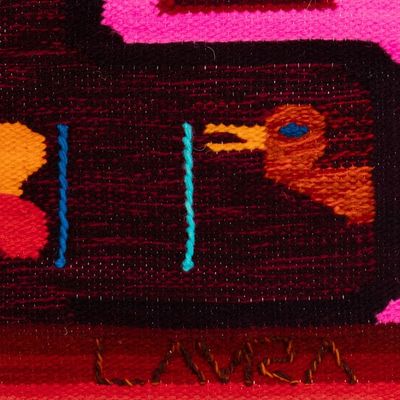
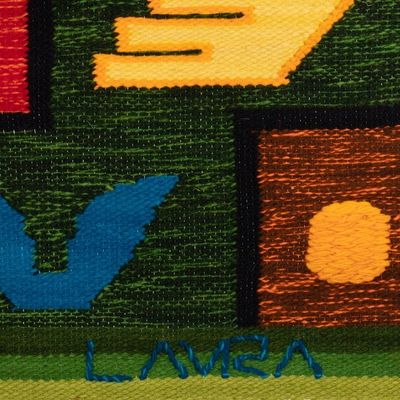
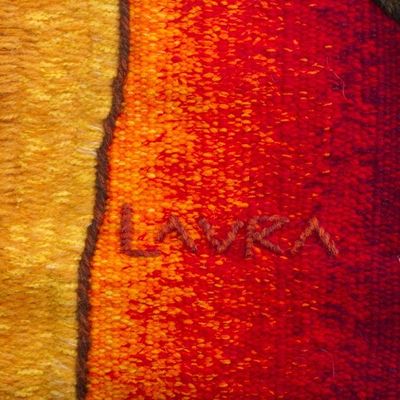
- Marked with artist's initials or trademark
 Made in Peru
100% Happiness Guaranteed!
 Shop with Confidence
 Easy 30 day returns!
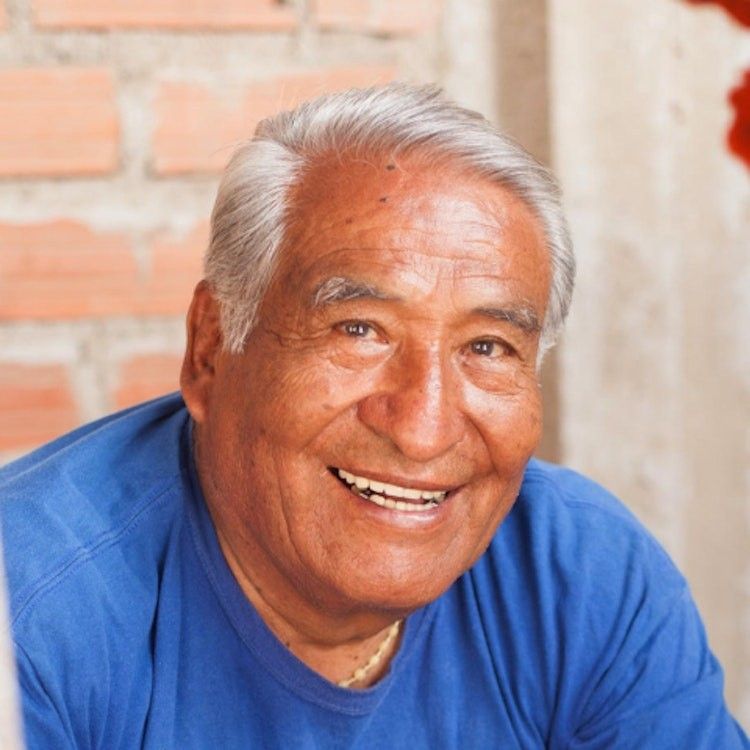
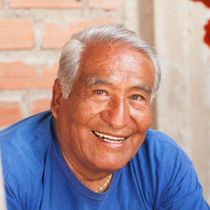
Coming from a family with a long tradition of handicrafts, David Laura is an artisan in textiles. He was born in in 1945 in a highland city that, along with being the cradle of superior pottery, also possesses enormous prestige for its exuberant textile art represented in tapestries and rugs of singular design and color. With his family, David has a workshop dedicated to textiles, making his own name and reputation in this branch of Peruvian art.
My grandparents and parents were textile artisans, having cultivated this art from their predecessors, so my formation was essentially learned through observation. Nevertheless, I have taken textile courses on various occasions. My work deals with reviving our ancestral culture and linking it to the present while, at the same time, fulfilling a longing that I feel. I work in my workshop with my family and it's a full-time dedication. Through my art, I want to show the Andean people and our capacity to redeem the past.
In my work, I employ very select materials. My textile base is composed primarily of wool on a strong cotton warp, complemented by both natural and commercial dyes. As tools, I use a loom, which consists of a big wooden table designed for this type of work, and also combs and winding frames. Before weaving the tapestry, I draw the design on paper so it serves as a guide. Then, before translating it into wool, I complete the warping chain. During the weaving process I can change the design when it occurs to me that it can improve by moving the figures, and I use a wide spectrum of colors. Finally, I cut the borders and knot them so they don't come undone. My colors maintain their vivacity throughout time, in fact, the natural dyes are eternal. I'd like to mention that for the natural dyes, we ourselves cultivate the plants, including walnut, tare, molle and alder. Generally, I participate in regional fairs and sometimes in the capital.
I'd like to say that my work, in addition to its quality, is representative of my people and expresses the culture of my country. Each rug and tapestry is original and one of a kind.
Other favorites
View more









Meet the maker
 Follow
 Following
Coming from a family with a long tradition of handicrafts, David Laura is an artisan in textiles. He... read more


Facilitated by
Explore the Andes region, once home to the Inca, W ... about

David Laura Zanabria wool rugs and tapestries
Coming from a family with a long tradition of handicrafts, David Laura is an artisan in textiles. He was born in in 1945 in a highland city that, along with being the cradle of superior pottery, also possesses enormous prestige for its exuberant textile art represented in tapestries and rugs of singular design and color. With his family, David has a workshop dedicated to textiles, making his own name and reputation in this branch of Peruvian art.
My grandparents and parents were textile artisans, having cultivated this art from their predecessors, so my formation was essentially learned through observation. Nevertheless, I have taken textile courses on various occasions. My work deals with reviving our ancestral culture and linking it to the present while, at the same time, fulfilling a longing that I feel. I work in my workshop with my family and it's a full-time dedication. Through my art, I want to show the Andean people and our capacity to redeem the past.
In my work, I employ very select materials. My textile base is composed primarily of wool on a strong cotton warp, complemented by both natural and commercial dyes. As tools, I use a loom, which consists of a big wooden table designed for this type of work, and also combs and winding frames. Before weaving the tapestry, I draw the design on paper so it serves as a guide. Then, before translating it into wool, I complete the warping chain. During the weaving process I can change the design when it occurs to me that it can improve by moving the figures, and I use a wide spectrum of colors. Finally, I cut the borders and knot them so they don't come undone. My colors maintain their vivacity throughout time, in fact, the natural dyes are eternal. I'd like to mention that for the natural dyes, we ourselves cultivate the plants, including walnut, tare, molle and alder. Generally, I participate in regional fairs and sometimes in the capital.
I'd like to say that my work, in addition to its quality, is representative of my people and expresses the culture of my country. Each rug and tapestry is original and one of a kind.
My grandparents and parents were textile artisans, having cultivated this art from their predecessors, so my formation was essentially learned through observation. Nevertheless, I have taken textile courses on various occasions. My work deals with reviving our ancestral culture and linking it to the present while, at the same time, fulfilling a longing that I feel. I work in my workshop with my family and it's a full-time dedication. Through my art, I want to show the Andean people and our capacity to redeem the past.
In my work, I employ very select materials. My textile base is composed primarily of wool on a strong cotton warp, complemented by both natural and commercial dyes. As tools, I use a loom, which consists of a big wooden table designed for this type of work, and also combs and winding frames. Before weaving the tapestry, I draw the design on paper so it serves as a guide. Then, before translating it into wool, I complete the warping chain. During the weaving process I can change the design when it occurs to me that it can improve by moving the figures, and I use a wide spectrum of colors. Finally, I cut the borders and knot them so they don't come undone. My colors maintain their vivacity throughout time, in fact, the natural dyes are eternal. I'd like to mention that for the natural dyes, we ourselves cultivate the plants, including walnut, tare, molle and alder. Generally, I participate in regional fairs and sometimes in the capital.
I'd like to say that my work, in addition to its quality, is representative of my people and expresses the culture of my country. Each rug and tapestry is original and one of a kind.

Handmade: A Global Artisan Marketplace Lima, Peru
The Andes Fulfillment Hub
Explore the Andes region, once home to the Inca, Wari, Chavin and other ancient empires. Today, the influences of these ancient civilizations can be found in the artistic handicraft traditions that artisans use to create the vast array of jewelry, home furnishings, pottery, textiles, paintings and folk art that preserve the diverse, complex heritage of this colorful Latin land.
Maker BadgeMicrocredit Financing
David Laura Zanabria has received 3 microcredit loans with 0% interest from Kiva and Novica, the first for $400 and the most recent for $600. Proceeds were used to purchase additional wool and dyes for his weaving business.
Maker BadgeCovering Basic Needs
This artist striving to supporting their own or their family's basic needs and improve their livelihood.
More from this maker
View all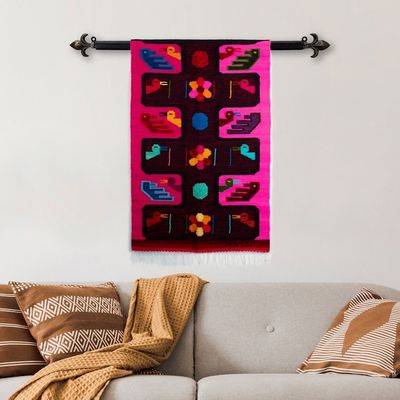








Go!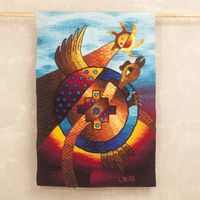
Item added to your cart!
Chakana Condor Bird Alpaca Blend Tapestry from Peru 'Apu Kuntur'
Quantity: