

Related products
Trending searches this week
Home Decor
- Wall Decor (1879)
- Decor Accessories (2786)
- Tableware (0)
- Holiday Decor & Ornaments (0)
- Outdoor Living (0)
- Pillows & Throws (433)
- Furniture (185)
- Musical Instruments (0)
- Baskets (0)
- Chess Sets Games (0)
- Jewelry Boxes (0)
- Kitchen & Dining (2143)
- Vases & Vessels (537)
- Outdoor & Garden (642)
- Holiday Decor (1710)
- Candles & Lighting (360)
- Bathroom (0)
- Bedding (7)
- Car Accessories (0)
- Nursery & Kids Room (0)
- Office & Desk (150)
- Rugs & Textiles (208)
- Storage & Organization (68)
Accessories
- Hats (208)
- Keychains and Straps (126)
- Hair Accessories (95)
- Other Accessories (142)
- Walking Sticks (0)
- Footwear (24)
- Bags & Purses (1635)
- Scarves & Wraps (1555)
- Belts & Sashes (68)
- Ties & Formal Accessories (5)
- Gloves & Mittens (106)
- Baby & Kids Accessories (5)
- Luggage & Travel (4)
- Tech Accessories (100)

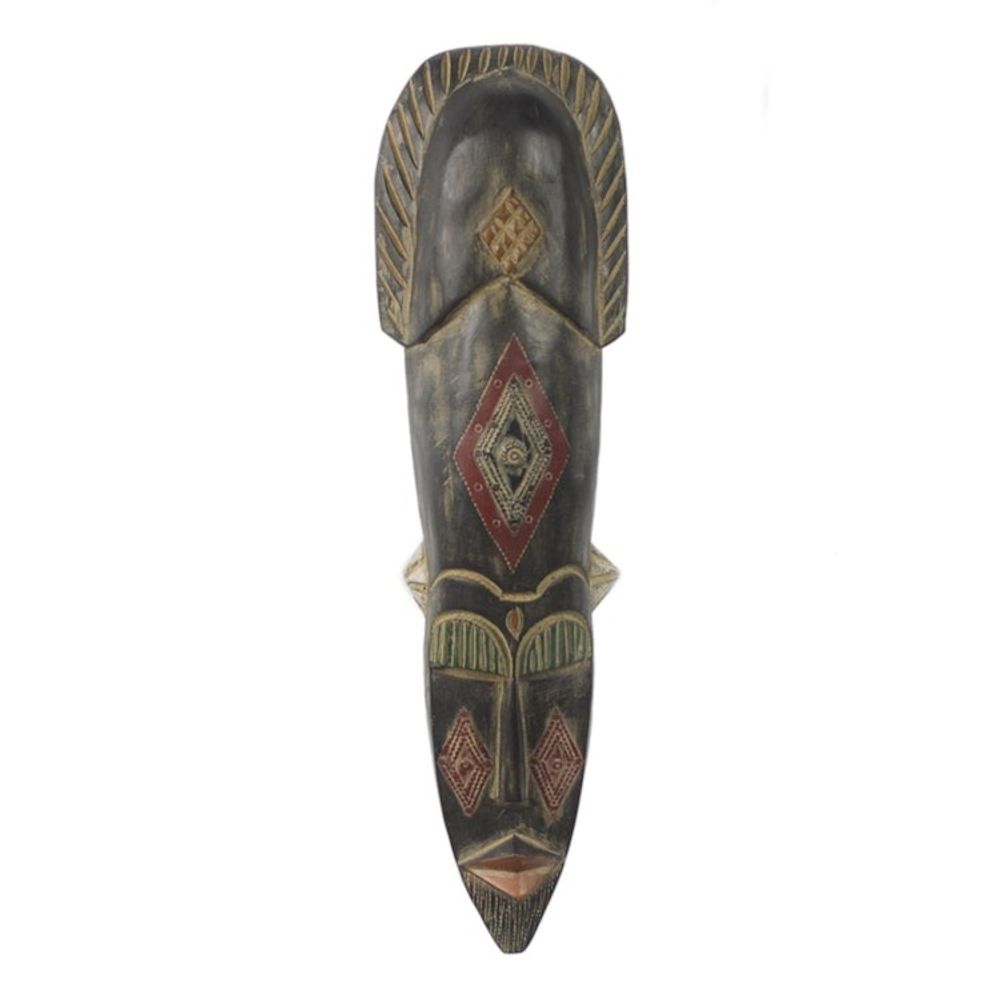

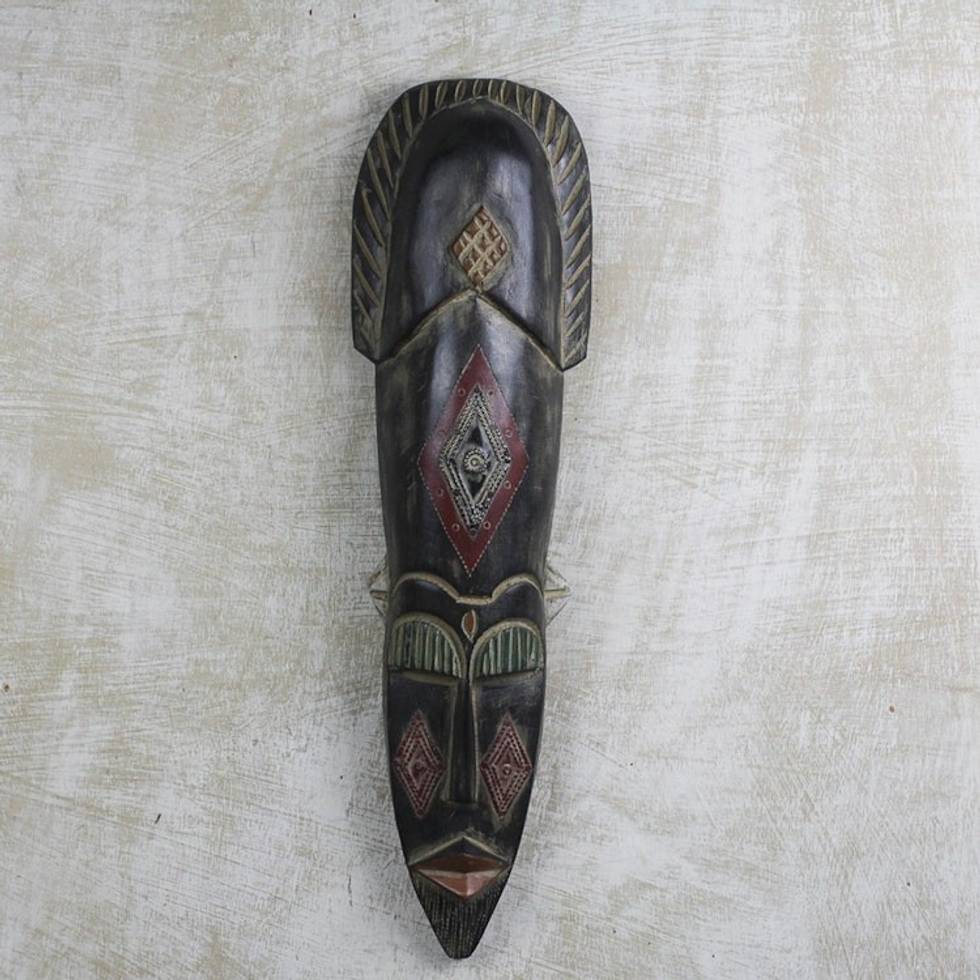
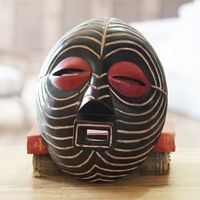
Sese Wood and Aluminum Wall Mask Hand Carved in Ghana 'Barima' Item ID: 2671803825
$89.99-1+
 Add to favorites
 In your favorites.
This is your own listing item.
- 4.05 lb
- 20 inches H x 5.5 inches W x 2.8 inches D
- 1.86 lbs
- 20 inches H x 5.5 inches W x 2.8 inches D
- Sese wood
- aluminum plate
- Features a rustic
- rugged finish
- Hand-crafted item -- color
- size and/or motif may vary slightly
- Intended as wall decor
 Made in Ghana
100% Happiness Guaranteed!
 Shop with Confidence
 Easy 30 day returns!
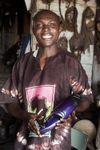
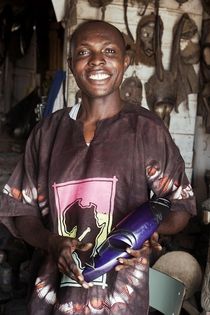
"I am a calm, humble and quiet person who also loves arts and crafts. I was born on November 22, 1985 in a suburb of the Greater Accra region. When I was in primary school, I admired art and used to draw animals and images that I found.
"After school, I'd stop by the workshop of Salihu Ibrahim (a Novica-featured artisan) to observe him and his workers as they carved different objects out of raw wood. They really caught my attention, and I visited the workshop daily. Realizing my interest, Salihu offered to train me. I was most interested, so learning the skill was not a difficult thing. Within a short time, I could finish the carved items. At a certain point in time, my parents could not afford to further my education so I decided to continue learning under Salihu and pursue a career in this field.
"I was first trained as a finisher, but Salihu did not want me to be handicapped in the business so he also trained me in the types of wood and what items they can be used to produce. To be sure I was taking my studies seriously, I was asked to pick up carved items from his carvers in a distant place.
"It was the first time I had gone there all by myself. Unfortunately, after I finished checking on all the carved items, it rained so heavily that no vehicle there was willing to move. I felt so uncomfortable sleeping there. I was really out of my comfort zone!
"When I finally returned home with the carvings, I narrated my story of what I had been through and Salihu burst out laughing. He told me this was all part of the things I needed to learn. The experienced I was faced with meant I needed to consider such delays when planning.
"I worked with Salihu for about seven years. I should have moved out of his workshop but I have not enough resources to start up on my own. I still work from his workshop producing my own carvings to sell, and hope to make enough money to be able to move out and set up on my own.
"What inspires me most is when people express appreciation for my designs. It is my dream to one day become the owner of a well-established art workshop and be able to employ many workers to reduce the alarming rate of unemployment in my country."
6 Reviews for
 Theophilus Sackey
January 29, 2021
★★★★★
L
Linda
Just as you see it. It displays marvelously on my wall and the color is simply wonderful and calming.
Reviewed item
April 20, 2023
★★★★★
M
Marsha
I received this mask today. It is even more beautiful in person than online. I am so pleased! Surprisingly, the mask appears to be black and white only in the online image. In fact, the elephant appears a deep rich purple. This enhances the image. It's a wonderful art work.
Reviewed item
September 24, 2017
★★★★☆
A
Anthony
Elegant carving of an historical figure. Darker in hue than shown in photo. Size is modest but blends well with other wall decor.
Reviewed item
September 20, 2017
★★★★★
D
Deborah D.
My 17 year old son wanted this for his room. He loved the purple elephant in contrast to the other patterns and black/white color on the face.
Reviewed item
October 27, 2023
★★★★★
D
David
The best description of this piece is sexy. Curves of the stripping coupled with colored lips and lids ... awesome!
Reviewed item
"I am a calm, humble and quiet person who also loves arts and crafts. I was born on November 22, 1985 in a suburb of the Greater Accra region. When I was in primary school, I admired art and used to draw animals and images that I found.
"After school, I'd stop by the workshop of Salihu Ibrahim (a Novica-featured artisan) to observe him and his workers as they carved different objects out of raw wood. They really caught my attention, and I visited the workshop daily. Realizing my interest, Salihu offered to train me. I was most interested, so learning the skill was not a difficult thing. Within a short time, I could finish the carved items. At a certain point in time, my parents could not afford to further my education so I decided to continue learning under Salihu and pursue a career in this field.
"I was first trained as a finisher, but Salihu did not want me to be handicapped in the business so he also trained me in the types of wood and what items they can be used to produce. To be sure I was taking my studies seriously, I was asked to pick up carved items from his carvers in a distant place.
"It was the first time I had gone there all by myself. Unfortunately, after I finished checking on all the carved items, it rained so heavily that no vehicle there was willing to move. I felt so uncomfortable sleeping there. I was really out of my comfort zone!
"When I finally returned home with the carvings, I narrated my story of what I had been through and Salihu burst out laughing. He told me this was all part of the things I needed to learn. The experienced I was faced with meant I needed to consider such delays when planning.
"I worked with Salihu for about seven years. I should have moved out of his workshop but I have not enough resources to start up on my own. I still work from his workshop producing my own carvings to sell, and hope to make enough money to be able to move out and set up on my own.
"What inspires me most is when people express appreciation for my designs. It is my dream to one day become the owner of a well-established art workshop and be able to employ many workers to reduce the alarming rate of unemployment in my country."
Read full story →

Theophilus Sackey hand-carved African masks
"I am a calm, humble and quiet person who also loves arts and crafts. I was born on November 22, 1985 in a suburb of the Greater Accra region. When I was in primary school, I admired art and used to draw animals and images that I found.
"After school, I'd stop by the workshop of Salihu Ibrahim (a Novica-featured artisan) to observe him and his workers as they carved different objects out of raw wood. They really caught my attention, and I visited the workshop daily. Realizing my interest, Salihu offered to train me. I was most interested, so learning the skill was not a difficult thing. Within a short time, I could finish the carved items. At a certain point in time, my parents could not afford to further my education so I decided to continue learning under Salihu and pursue a career in this field.
"I was first trained as a finisher, but Salihu did not want me to be handicapped in the business so he also trained me in the types of wood and what items they can be used to produce. To be sure I was taking my studies seriously, I was asked to pick up carved items from his carvers in a distant place.
"It was the first time I had gone there all by myself. Unfortunately, after I finished checking on all the carved items, it rained so heavily that no vehicle there was willing to move. I felt so uncomfortable sleeping there. I was really out of my comfort zone!
"When I finally returned home with the carvings, I narrated my story of what I had been through and Salihu burst out laughing. He told me this was all part of the things I needed to learn. The experienced I was faced with meant I needed to consider such delays when planning.
"I worked with Salihu for about seven years. I should have moved out of his workshop but I have not enough resources to start up on my own. I still work from his workshop producing my own carvings to sell, and hope to make enough money to be able to move out and set up on my own.
"What inspires me most is when people express appreciation for my designs. It is my dream to one day become the owner of a well-established art workshop and be able to employ many workers to reduce the alarming rate of unemployment in my country."
"After school, I'd stop by the workshop of Salihu Ibrahim (a Novica-featured artisan) to observe him and his workers as they carved different objects out of raw wood. They really caught my attention, and I visited the workshop daily. Realizing my interest, Salihu offered to train me. I was most interested, so learning the skill was not a difficult thing. Within a short time, I could finish the carved items. At a certain point in time, my parents could not afford to further my education so I decided to continue learning under Salihu and pursue a career in this field.
"I was first trained as a finisher, but Salihu did not want me to be handicapped in the business so he also trained me in the types of wood and what items they can be used to produce. To be sure I was taking my studies seriously, I was asked to pick up carved items from his carvers in a distant place.
"It was the first time I had gone there all by myself. Unfortunately, after I finished checking on all the carved items, it rained so heavily that no vehicle there was willing to move. I felt so uncomfortable sleeping there. I was really out of my comfort zone!
"When I finally returned home with the carvings, I narrated my story of what I had been through and Salihu burst out laughing. He told me this was all part of the things I needed to learn. The experienced I was faced with meant I needed to consider such delays when planning.
"I worked with Salihu for about seven years. I should have moved out of his workshop but I have not enough resources to start up on my own. I still work from his workshop producing my own carvings to sell, and hope to make enough money to be able to move out and set up on my own.
"What inspires me most is when people express appreciation for my designs. It is my dream to one day become the owner of a well-established art workshop and be able to employ many workers to reduce the alarming rate of unemployment in my country."
Handmade: A Global Artisan Marketplace

Africa Artisan Empowerment Hub
The traditional arts are a vibrant aspect of everyday life in West Africa. From richly intricate handwoven kente cloth fabrics, to intricately colorful beaded arts, ceremonial masks, and exquisite jewelry, to traditional throne-stools hand-carved for customers by the Ashanti king's actual chief carver, artisans proudly offer their region's finest handmade works of art.
Maker BadgeCaring for Children
This artist supports children under the age of 18.
Maker BadgeJob Creator
This artist positively impacts their community through job creation and provides jobs for 2 or more people.
Maker BadgeMoving On Up
This artist has dramatically improved their livelihood by working with NOVICA.
Maker BadgePreserving Traditions
This artist uses traditional techniques handed down through the generations and/or creates culturally significant items, helping keep these traditions alive.
Maker BadgeProfound Impact
Every purchase from this artist has a profound impact on their livelihood and income.
Maker BadgeMicrocredit Financing
Theophilus Sackey has received 6 microcredit loans with 0% interest from Kiva and Novica, the first for $200 and the most recent for $1200.
More from this maker
Visit store











Other favorites
View more












100% Happiness Guaranteed
If you aren't in LOVE with your purchases, let us know within 30 days and we'll make it right.
- Easy Returns
- Hassle-free Exchange
- Dedicated Support

Powered by Human Creativity
Established alongside our parent company NOVICA
10K+
Master Artisans
1M+
Happy Customers
25 yrs
Empowering Makers
4.8
Average Rating
More than a Marketplace
Enjoyed by over 1,000,000
customers across 50+ countries
Powered by NOVICA, a beloved global leader
in fair trade artisan goods.
Go!
Item added to your cart!
Sese Wood and Aluminum Wall Mask Hand Carved in Ghana 'Barima'
Quantity:


Powered by

Partners and Collaborators




© 2026 
 You havein your cartTop