
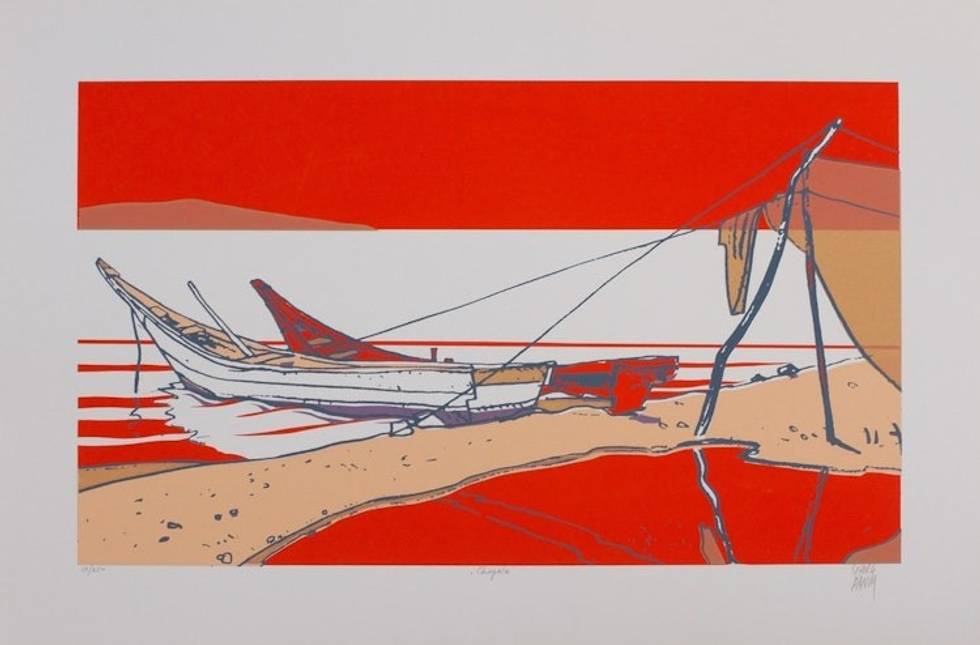
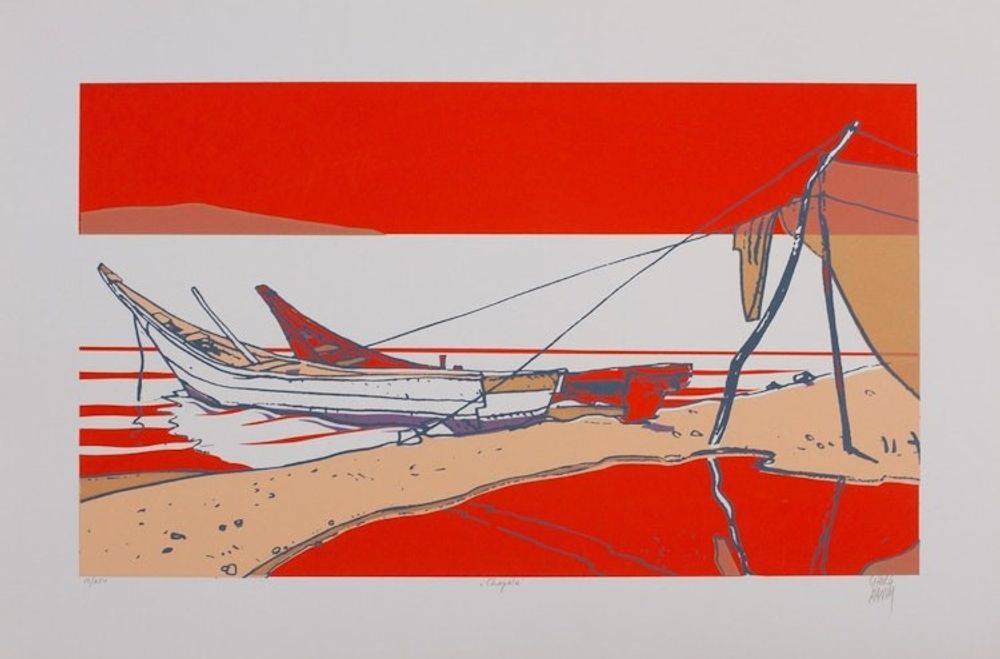

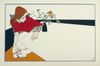
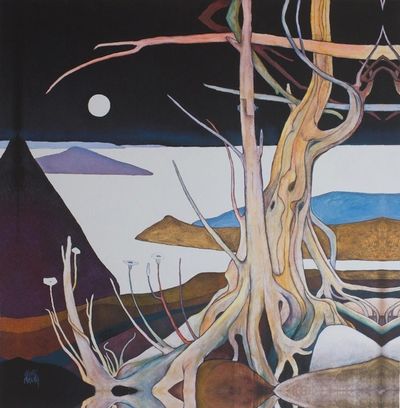
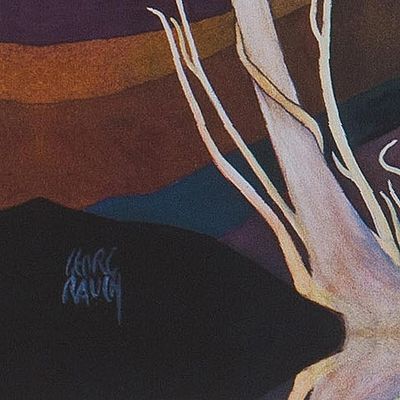
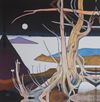
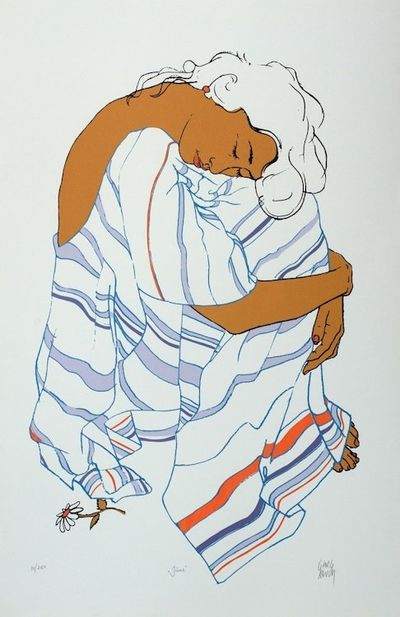
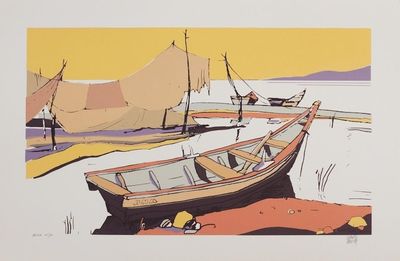
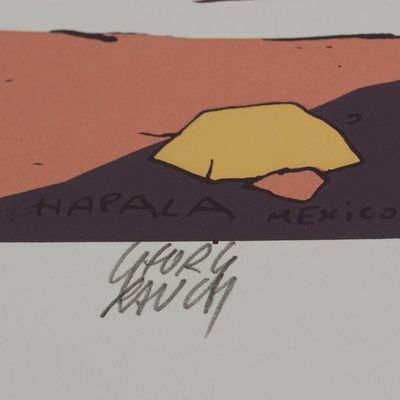
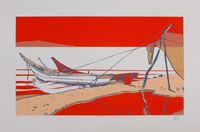
Bold Red-Orange Silkscreen Print of Mexico's Lake Chapala 'Chapala' Item ID: 2671808834
$359Currently not available
We're sorry but it looks like we're late on getting more items for you. Please check back in a few days.
This is your own listing item.
- 21.82 lb
- 35 inches W x 23 inches H
- 0.40 lbs
- 35 inches W x 23 inches H
- Ink on paper
- Arrives unframed
- Limited edition
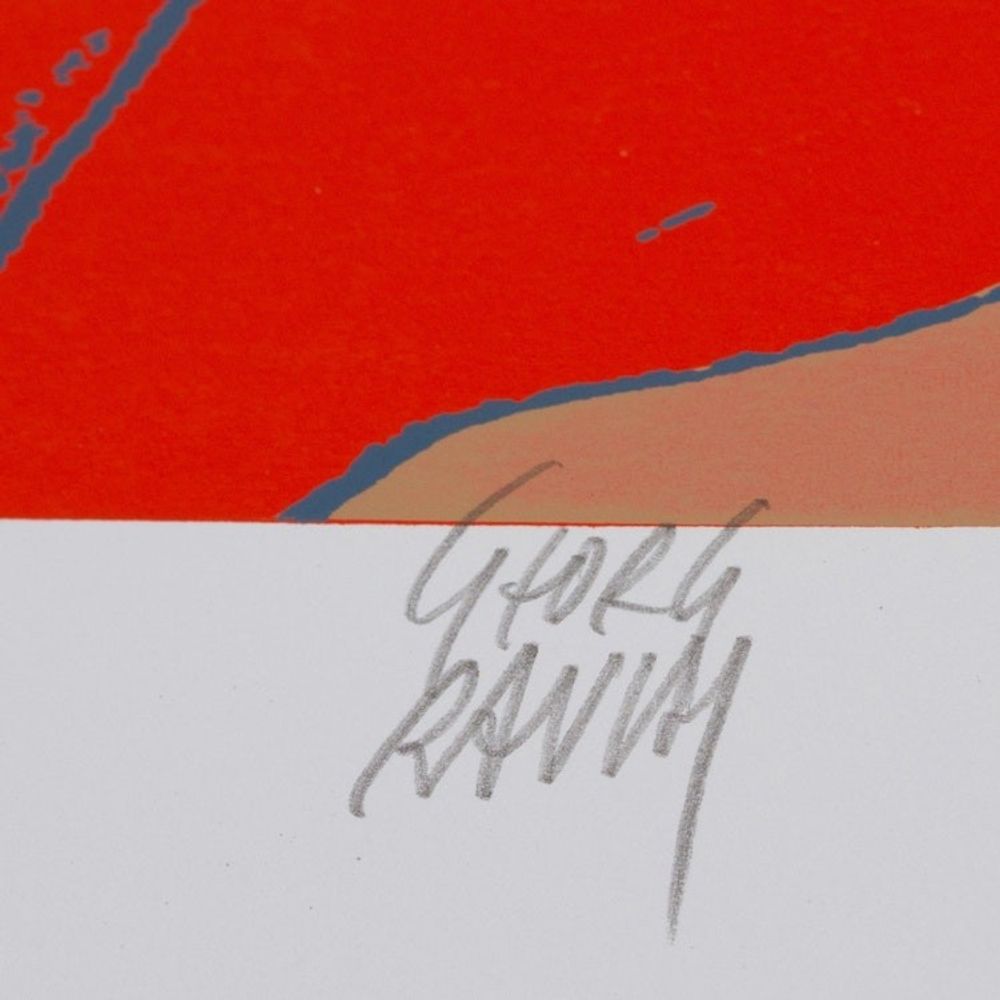
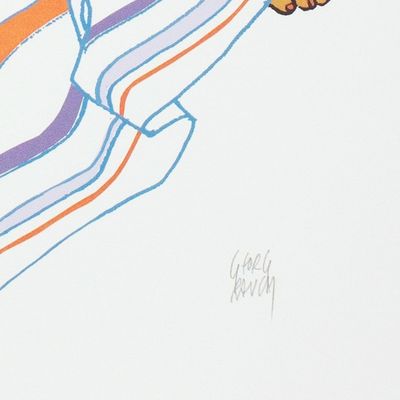
- Signed by the artist
 Made in Mexico
100% Happiness Guaranteed!
 Shop with Confidence
 Easy 30 day returns!
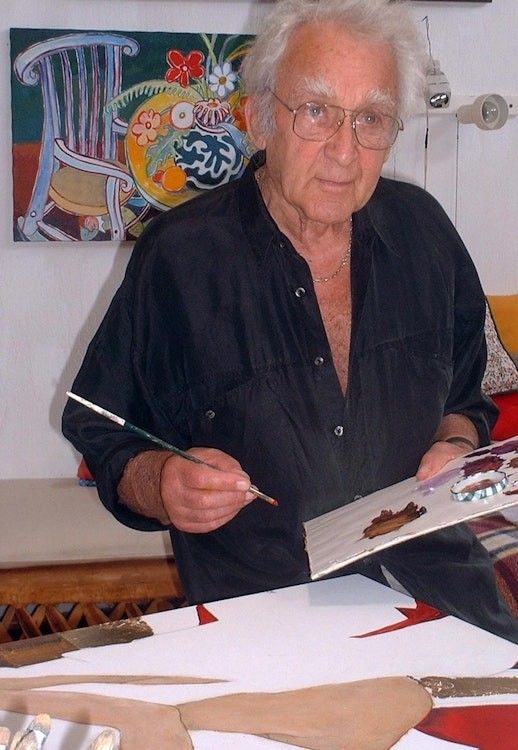
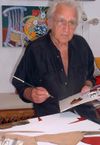
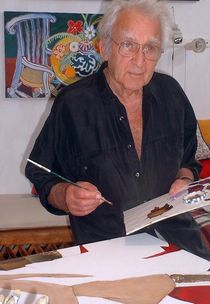
Georg Rauch was born in Salzburg, Austria in 1924. He was a great, charismatic expressionist artist. He loved to laugh and people laughed with him. He observed everything around him like a game of chess and imagine the next moves in the game, his wife Phyllis says of the late artist.
When Georg was a boy, he loved to draw, paint and invent things. His first themes were the long paths that extended between the tree-lined boulevards in Europe. Horizons always fascinated him. When he was nine, he would take his bicycle to a nearby town again and again to try to improve his watercolor paintings of a small church there.
Even though his mother was Jewish, he was drafted into Hitler's army during World War II. While his mother hid her Jewish friends in her attic, young Georg was sent to Russia to fight a losing war. After the awful winter there, he was captured and almost died as a prisoner of war in Ukraine. In his memoirs, Unlikely Warrior: A Jewish Soldier in Hitler's Army, he told how many of his self-taught talents helped him survive when others around him died.
As a boy, Georg learned Morse code, how to make shortwave radios, to cook, play the harmonica and to play chess. Each one of these talents - along with his ability to plan ahead - helped him escape, survive and save other people's lives. He never felt proud of those achievements and was embarrassed when he was awarded the Iron Cross for saving an entire battalion. He simply felt lucky to be alive.
His achievements in Russia inspired his work for the rest of his artistic life. In the prison camp, he contracted tuberculosis of the bone, and this also impacted his art. Georg spent two years in a sanatorium, where he passed the time by entertaining fellow patients while they rested in the Alpine sun. He would later say, 'That was my best art school.'
Before his hospital stay, Georg attended the Vienna Fine Arts Academy and was a student of the famous professor, Boecki. He also audited some classes at the University of Vienna. In one art class, Georg wanted to know what the teacher had to say about crimson. The teaching assistant said, 'It's not a color for the art master's palette.' Everyone who has painted in oils knows how important and versatile crimson can be. So Georg took his brushes and paints, and left. He was a self-taught artist in general and often thought that many art teachers tend to destroy everything good and creative in their students in trying to make copies of themselves.
After the war and his hospital stay, Georg's life began again. He became famous in Vienna for his incredible parties. But he had to decide what he wanted to do for the rest of his life. Although he'd thought of being an architect, his hip joint had been surgically fused, so he couldn't sit long at a drafting table. He asked his mother for guidance and she replied, 'Why don't you become an artist?' He said, 'But, how will I earn a living and support a family?' His mother smiled. 'As far as I know, no one in the family has ever died of hunger and I don't think you'll be the first.' How many mothers have said that to their children? Phyllis says with admiration.
For the next ten years, Georg painted sad men and clowns as he dealt with all that had happened since his 18th birthday. Although his friends could see it, he wasn't ready to recognize or accept that these men were representations of himself. Little by little he came to accept his feelings of fears, sadness and shame, expressed through oil on canvas.
He lived and showed his art in Europe, New York City, California and Mexico. Each of these places had a special effect on his themes and colors.
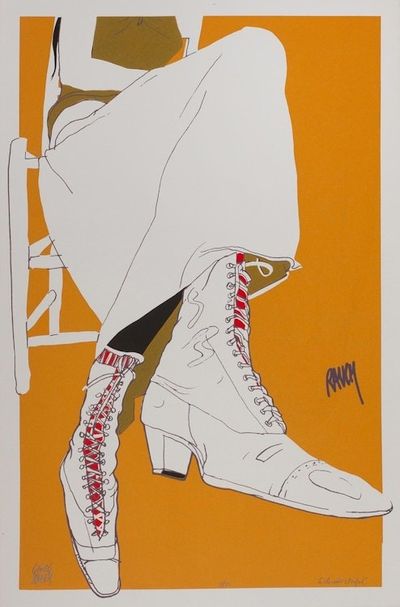
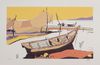
A friend, John Front, was an aerial photographer who taught Georg the silkscreen process during the 1970s. Georg made many silkscreen prints depicting nature, boats, nudes and Harlequins. He always worked alone.
While he used intense and bright colors, the sketch was very important in his works. 'Everything begins with the drawings... then the painting, silkscreening and watercolors,' he'd say.
Georg was an expressionist. He painted what was in his heart and soul. He painted his joy, his sense of humor, his anger and worries. He didn't talk much about his work or think about the reasons and motives. He preferred that people look at his work through feelings instead of questions.
Other favorites
View more































Meet the maker
 Follow
 Following
Georg Rauch was born in Salzburg, Austria in 1924. He was a great, charismatic expressionist artist.... read more

Georg and Phyllis Rauch giclee prints of original paintings, silk screen prints
Georg Rauch was born in Salzburg, Austria in 1924. He was a great, charismatic expressionist artist. He loved to laugh and people laughed with him. He observed everything around him like a game of chess and imagine the next moves in the game, his wife Phyllis says of the late artist.
When Georg was a boy, he loved to draw, paint and invent things. His first themes were the long paths that extended between the tree-lined boulevards in Europe. Horizons always fascinated him. When he was nine, he would take his bicycle to a nearby town again and again to try to improve his watercolor paintings of a small church there.
Even though his mother was Jewish, he was drafted into Hitler's army during World War II. While his mother hid her Jewish friends in her attic, young Georg was sent to Russia to fight a losing war. After the awful winter there, he was captured and almost died as a prisoner of war in Ukraine. In his memoirs, Unlikely Warrior: A Jewish Soldier in Hitler's Army, he told how many of his self-taught talents helped him survive when others around him died.
As a boy, Georg learned Morse code, how to make shortwave radios, to cook, play the harmonica and to play chess. Each one of these talents - along with his ability to plan ahead - helped him escape, survive and save other people's lives. He never felt proud of those achievements and was embarrassed when he was awarded the Iron Cross for saving an entire battalion. He simply felt lucky to be alive.
His achievements in Russia inspired his work for the rest of his artistic life. In the prison camp, he contracted tuberculosis of the bone, and this also impacted his art. Georg spent two years in a sanatorium, where he passed the time by entertaining fellow patients while they rested in the Alpine sun. He would later say, 'That was my best art school.'
Before his hospital stay, Georg attended the Vienna Fine Arts Academy and was a student of the famous professor, Boecki. He also audited some classes at the University of Vienna. In one art class, Georg wanted to know what the teacher had to say about crimson. The teaching assistant said, 'It's not a color for the art master's palette.' Everyone who has painted in oils knows how important and versatile crimson can be. So Georg took his brushes and paints, and left. He was a self-taught artist in general and often thought that many art teachers tend to destroy everything good and creative in their students in trying to make copies of themselves.
After the war and his hospital stay, Georg's life began again. He became famous in Vienna for his incredible parties. But he had to decide what he wanted to do for the rest of his life. Although he'd thought of being an architect, his hip joint had been surgically fused, so he couldn't sit long at a drafting table. He asked his mother for guidance and she replied, 'Why don't you become an artist?' He said, 'But, how will I earn a living and support a family?' His mother smiled. 'As far as I know, no one in the family has ever died of hunger and I don't think you'll be the first.' How many mothers have said that to their children? Phyllis says with admiration.
For the next ten years, Georg painted sad men and clowns as he dealt with all that had happened since his 18th birthday. Although his friends could see it, he wasn't ready to recognize or accept that these men were representations of himself. Little by little he came to accept his feelings of fears, sadness and shame, expressed through oil on canvas.
He lived and showed his art in Europe, New York City, California and Mexico. Each of these places had a special effect on his themes and colors.
A friend, John Front, was an aerial photographer who taught Georg the silkscreen process during the 1970s. Georg made many silkscreen prints depicting nature, boats, nudes and Harlequins. He always worked alone.
While he used intense and bright colors, the sketch was very important in his works. 'Everything begins with the drawings... then the painting, silkscreening and watercolors,' he'd say.
Georg was an expressionist. He painted what was in his heart and soul. He painted his joy, his sense of humor, his anger and worries. He didn't talk much about his work or think about the reasons and motives. He preferred that people look at his work through feelings instead of questions.
When Georg was a boy, he loved to draw, paint and invent things. His first themes were the long paths that extended between the tree-lined boulevards in Europe. Horizons always fascinated him. When he was nine, he would take his bicycle to a nearby town again and again to try to improve his watercolor paintings of a small church there.
Even though his mother was Jewish, he was drafted into Hitler's army during World War II. While his mother hid her Jewish friends in her attic, young Georg was sent to Russia to fight a losing war. After the awful winter there, he was captured and almost died as a prisoner of war in Ukraine. In his memoirs, Unlikely Warrior: A Jewish Soldier in Hitler's Army, he told how many of his self-taught talents helped him survive when others around him died.
As a boy, Georg learned Morse code, how to make shortwave radios, to cook, play the harmonica and to play chess. Each one of these talents - along with his ability to plan ahead - helped him escape, survive and save other people's lives. He never felt proud of those achievements and was embarrassed when he was awarded the Iron Cross for saving an entire battalion. He simply felt lucky to be alive.
His achievements in Russia inspired his work for the rest of his artistic life. In the prison camp, he contracted tuberculosis of the bone, and this also impacted his art. Georg spent two years in a sanatorium, where he passed the time by entertaining fellow patients while they rested in the Alpine sun. He would later say, 'That was my best art school.'
Before his hospital stay, Georg attended the Vienna Fine Arts Academy and was a student of the famous professor, Boecki. He also audited some classes at the University of Vienna. In one art class, Georg wanted to know what the teacher had to say about crimson. The teaching assistant said, 'It's not a color for the art master's palette.' Everyone who has painted in oils knows how important and versatile crimson can be. So Georg took his brushes and paints, and left. He was a self-taught artist in general and often thought that many art teachers tend to destroy everything good and creative in their students in trying to make copies of themselves.
After the war and his hospital stay, Georg's life began again. He became famous in Vienna for his incredible parties. But he had to decide what he wanted to do for the rest of his life. Although he'd thought of being an architect, his hip joint had been surgically fused, so he couldn't sit long at a drafting table. He asked his mother for guidance and she replied, 'Why don't you become an artist?' He said, 'But, how will I earn a living and support a family?' His mother smiled. 'As far as I know, no one in the family has ever died of hunger and I don't think you'll be the first.' How many mothers have said that to their children? Phyllis says with admiration.
For the next ten years, Georg painted sad men and clowns as he dealt with all that had happened since his 18th birthday. Although his friends could see it, he wasn't ready to recognize or accept that these men were representations of himself. Little by little he came to accept his feelings of fears, sadness and shame, expressed through oil on canvas.
He lived and showed his art in Europe, New York City, California and Mexico. Each of these places had a special effect on his themes and colors.
A friend, John Front, was an aerial photographer who taught Georg the silkscreen process during the 1970s. Georg made many silkscreen prints depicting nature, boats, nudes and Harlequins. He always worked alone.
While he used intense and bright colors, the sketch was very important in his works. 'Everything begins with the drawings... then the painting, silkscreening and watercolors,' he'd say.
Georg was an expressionist. He painted what was in his heart and soul. He painted his joy, his sense of humor, his anger and worries. He didn't talk much about his work or think about the reasons and motives. He preferred that people look at his work through feelings instead of questions.

Handmade: A Global Artisan Marketplace
Mexico Fulfillment Hub
Explore Mexico. You'll discover the rich artistic heritage drawn from the Maya, Olmec, Toltec, Zapotec, and Aztec civilizations, as well as the distinctive living folk art traditions of modern Mexico. From Taxco Silver Jewelry to intricate Huichol beadwork, and from handpainted Talavera-style pottery to handblown glassware and fantastical alebrijes, you will fall under the spell of magical Mexico.
More from this maker
View all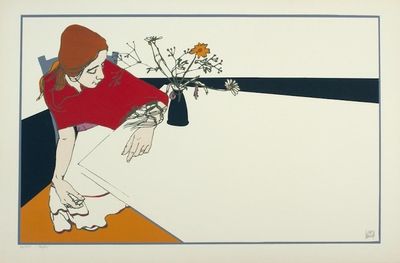








Go!
Item added to your cart!
Bold Red-Orange Silkscreen Print of Mexico's Lake Chapala 'Chapala'
Quantity: