

Related products
Trending searches this week
Home Decor
- Wall Decor (1879)
- Decor Accessories (2786)
- Tableware (0)
- Holiday Decor & Ornaments (0)
- Outdoor Living (0)
- Pillows & Throws (436)
- Furniture (185)
- Musical Instruments (0)
- Baskets (0)
- Chess Sets Games (0)
- Jewelry Boxes (0)
- Kitchen & Dining (2144)
- Vases & Vessels (537)
- Outdoor & Garden (642)
- Holiday Decor (1710)
- Candles & Lighting (361)
- Bathroom (0)
- Bedding (7)
- Car Accessories (0)
- Nursery & Kids Room (1)
- Office & Desk (150)
- Rugs & Textiles (208)
- Storage & Organization (68)
Accessories
- Hats (210)
- Keychains and Straps (126)
- Hair Accessories (95)
- Other Accessories (143)
- Walking Sticks (0)
- Footwear (24)
- Bags & Purses (1635)
- Scarves & Wraps (1556)
- Belts & Sashes (68)
- Ties & Formal Accessories (5)
- Gloves & Mittens (106)
- Baby & Kids Accessories (5)
- Luggage & Travel (4)
- Tech Accessories (100)

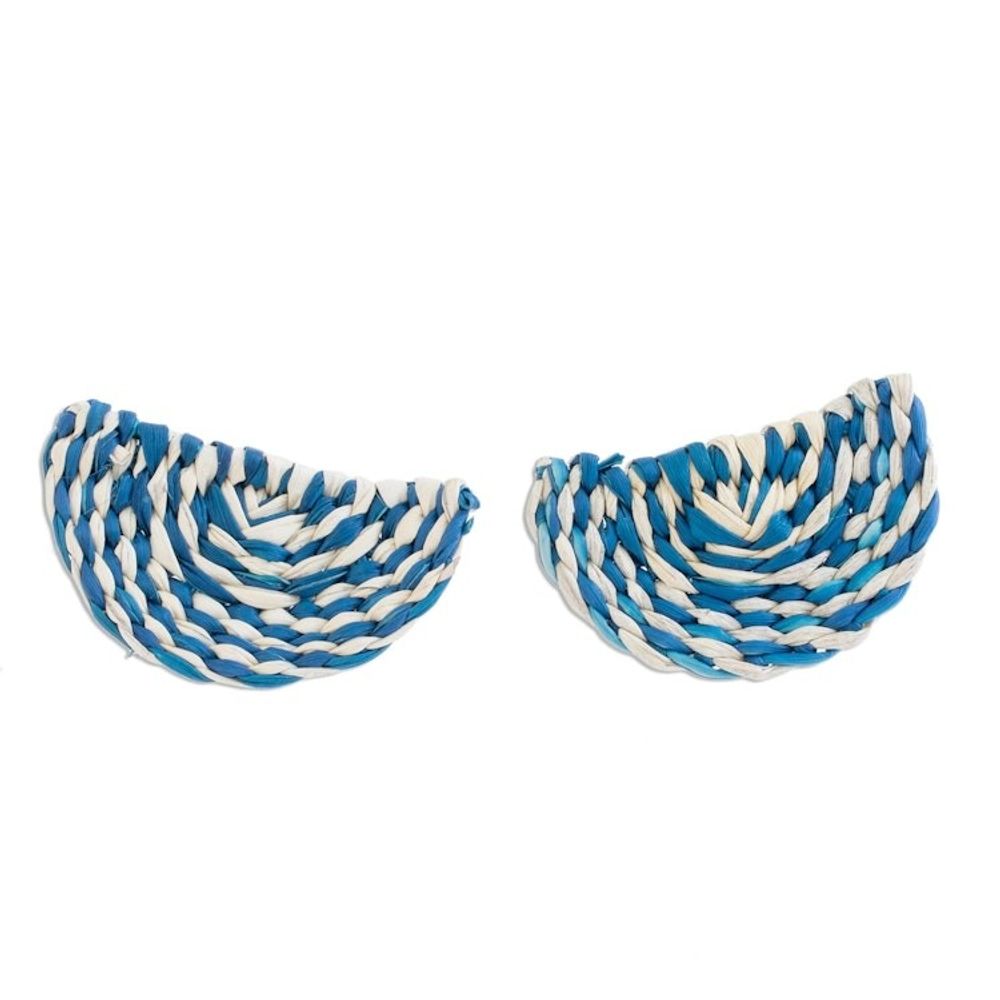
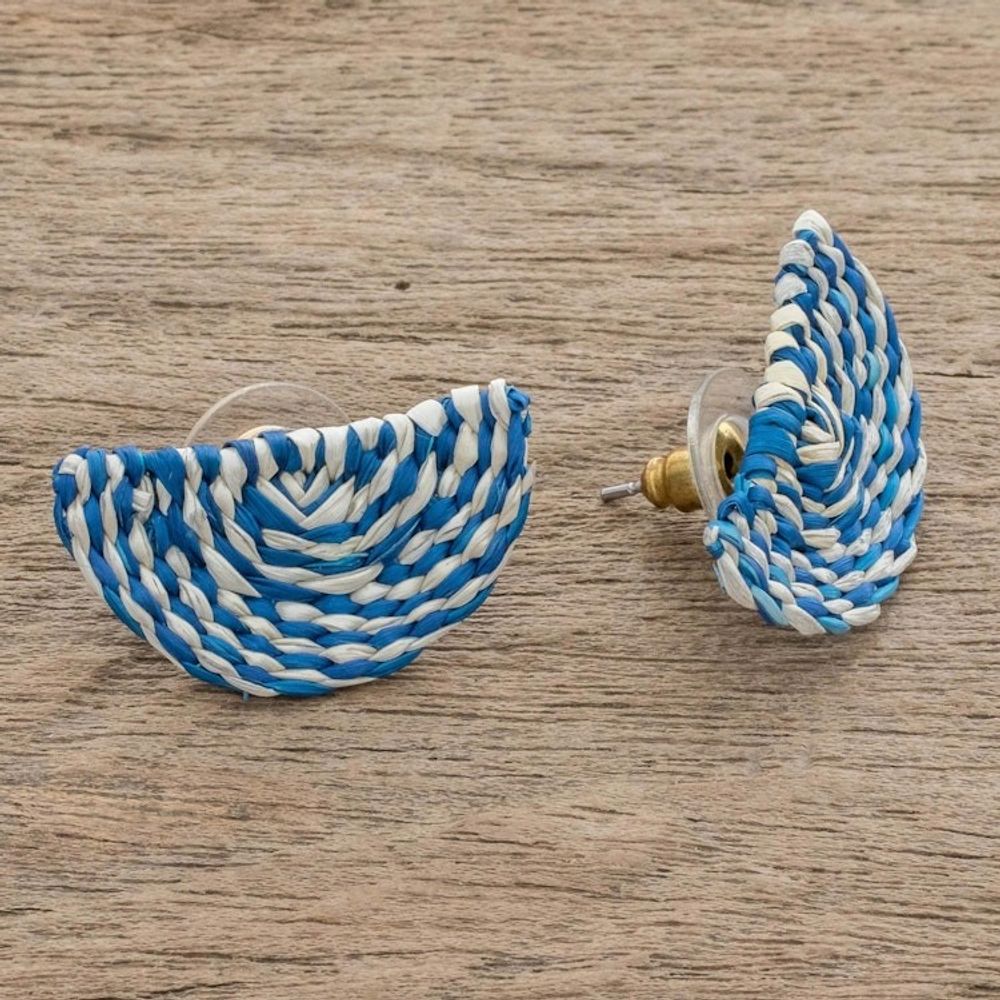
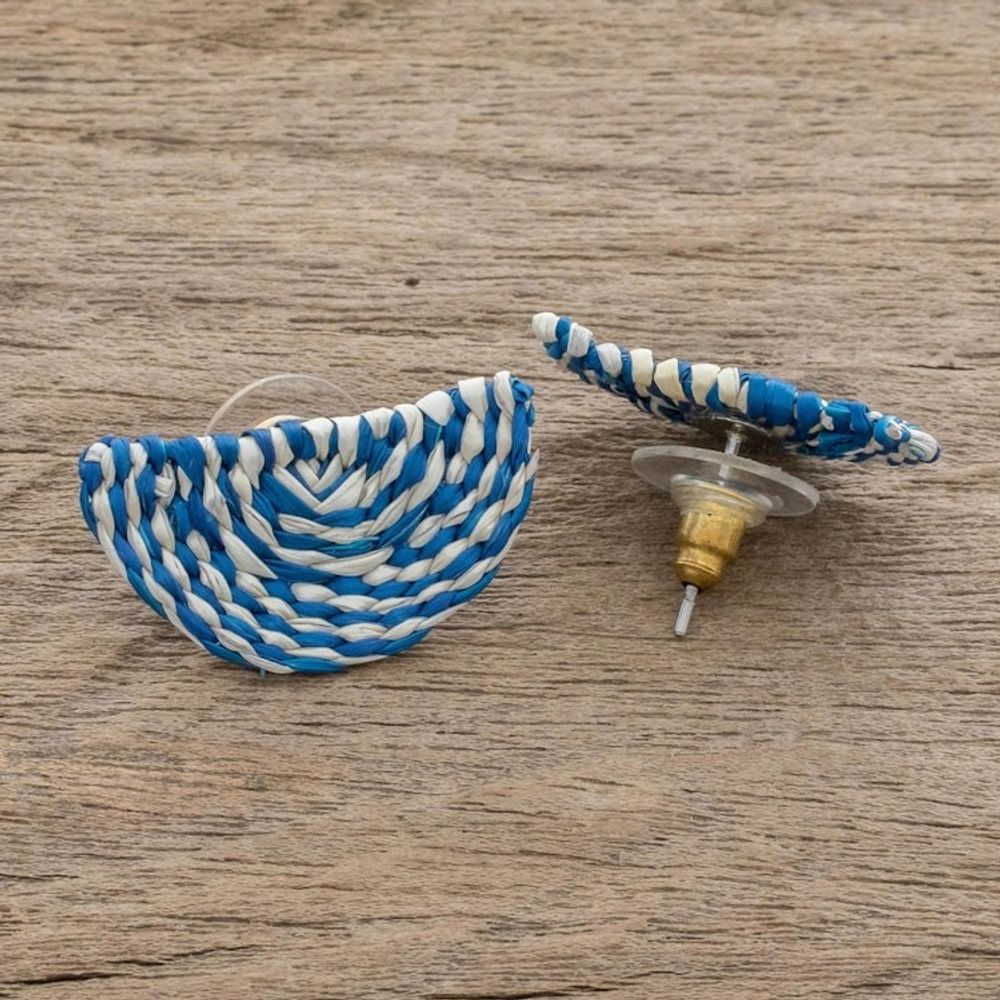
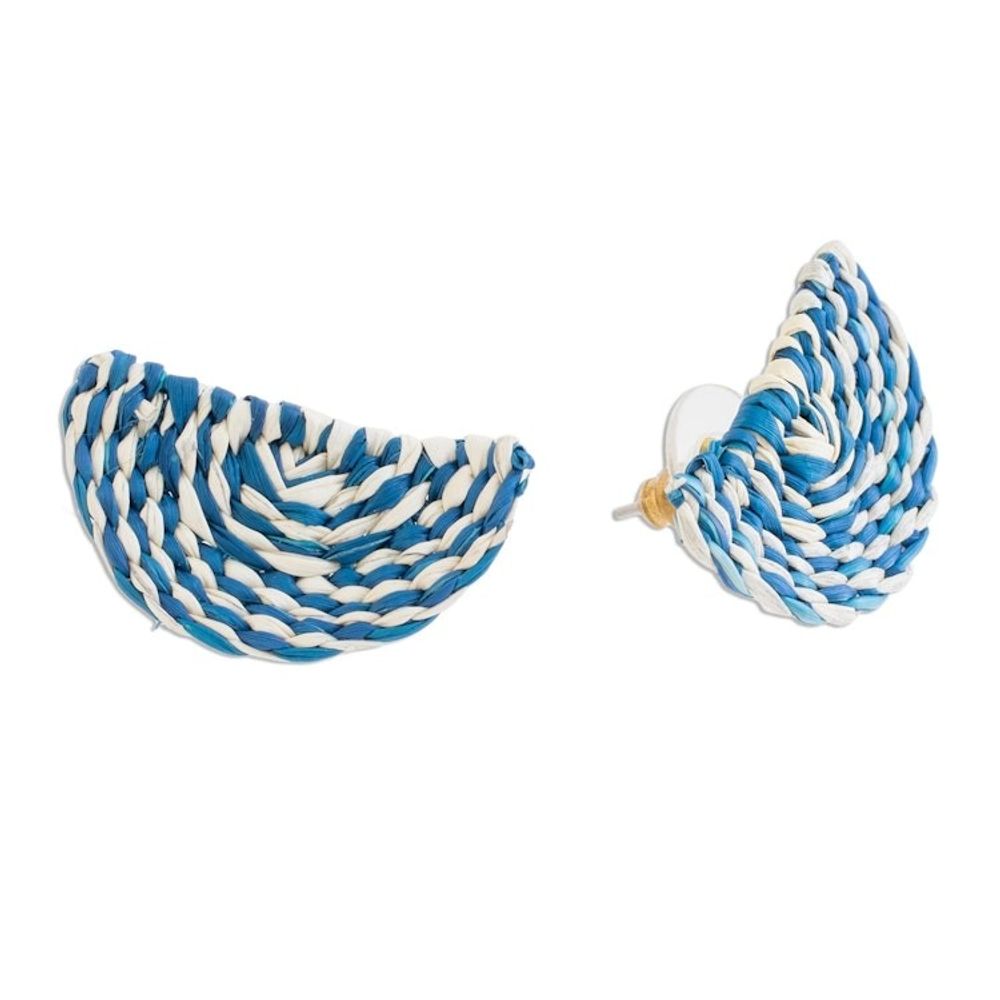
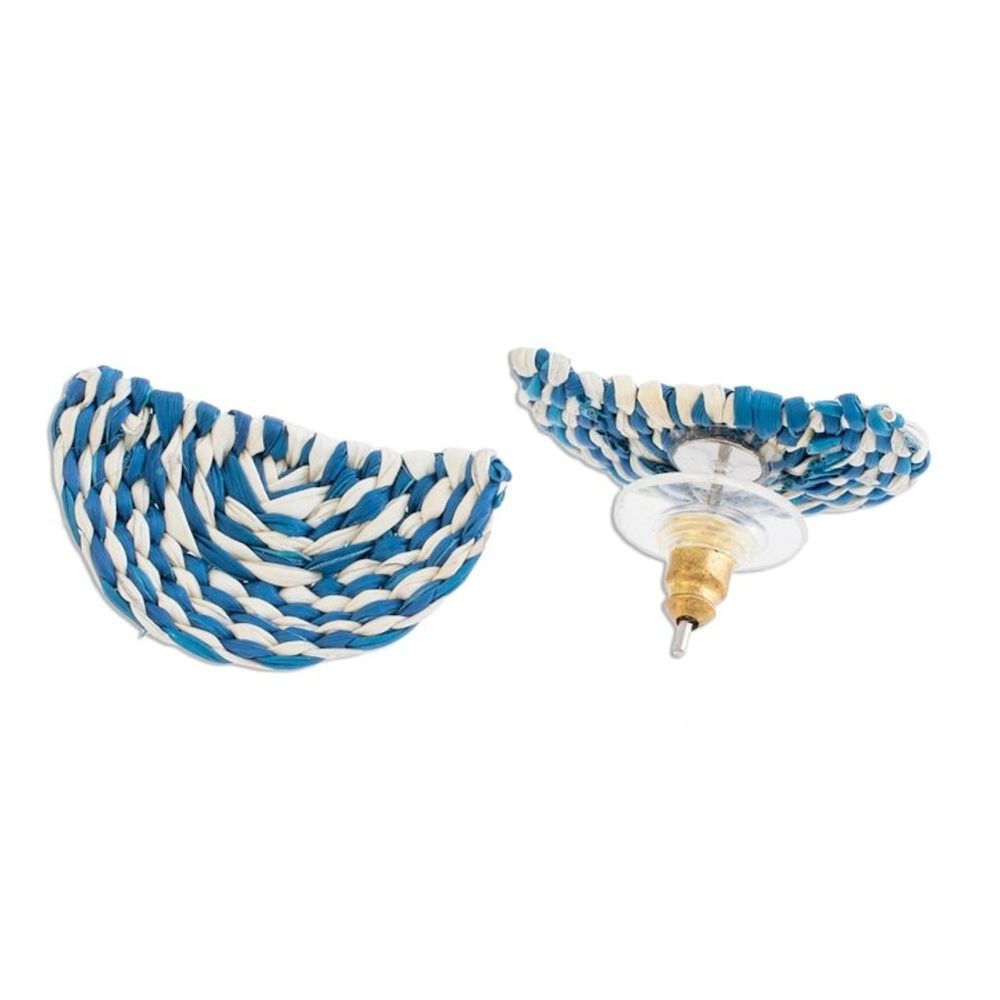

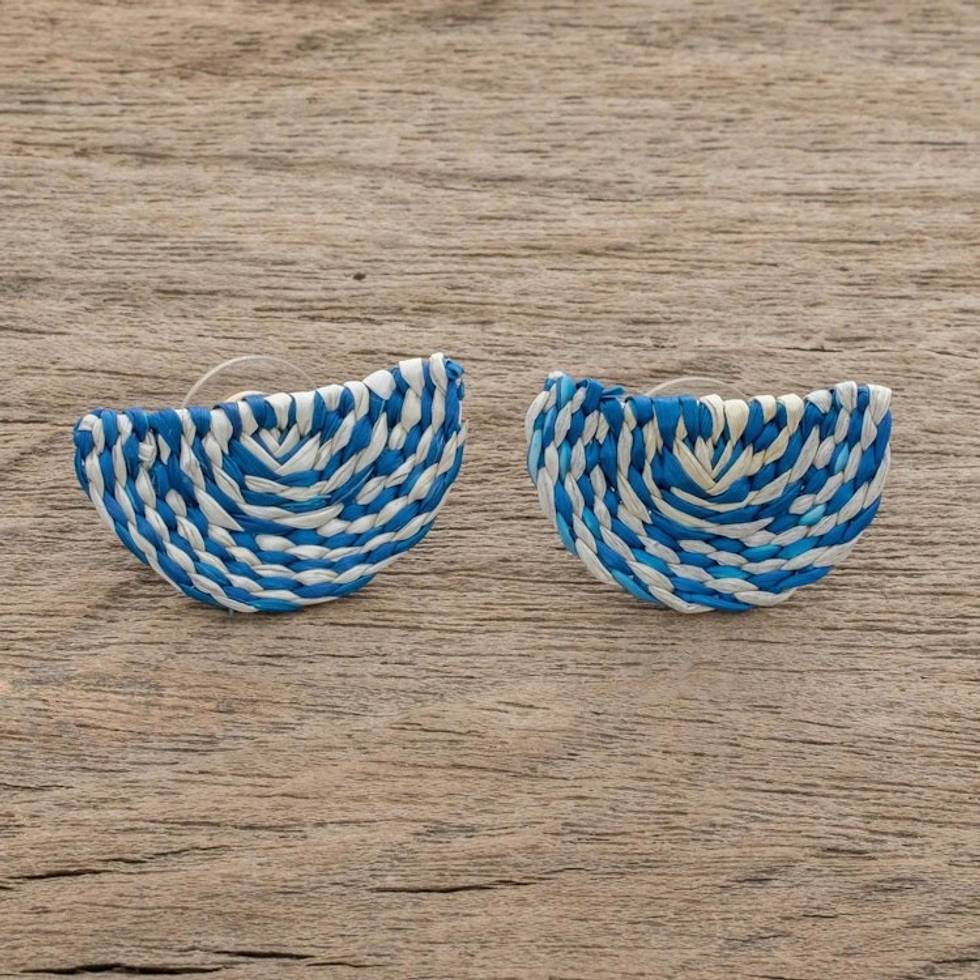
Blue and Ivory Woven Junco Reed Half-Circle Button Earrings 'Creamsicle Swirl' Item ID: 2671777054
$19.99-1+
 Add to favorites
 In your favorites.
This is your own listing item.
- 0.29 lb
- 0.6 inches L x 1.1 inches W x 0.1 inches D
- 0.04 oz
- 0.6 inches L x 1.1 inches W x 0.1 inches D
- Junco reed
- stainless steel posts
- Avoid contact with water
- Hand-crafted item -- color
- size and/or motif may vary slightly
- Post earrings
 Made in Honduras
100% Happiness Guaranteed!
 Shop with Confidence
 Easy 30 day returns!

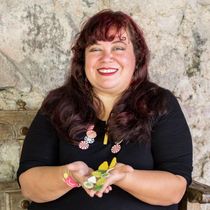
“My name is Cristina Hernandez. I am proud to be Honduran. My passion has always surrounded handicrafts, appreciating the beauty of what is made by hand. Outside of my country, I studied fine arts and entrepreneurship.
“Everything that you see today on our page was born from the time that I coordinated an exportation project for handicrafts in Honduras, where I fell even more in love with everything artisanal. It introduced me to the beautiful life of artisans with marvelous abilities, as well as of the hardship of living in marginalized zones without opportunities to sell their art at fair prices.
“Unfortunately, this project ended; the organization left the country and many artisans were left without opportunities to continue exporting. In that moment, my mom and I decided to continue working with the artisans. The art of weaving in Honduras has been around for more than 80 years; born in South America in countries like Colombia, Ecuador, and Bolivia. This art consisted of the weaving of natural fibers, which today represents a part of Honduran heritage.
“For a lot of artisans, lack of innovation is a problem. I knew that I had to start with that, designing and creating new pieces that still retained a traditional essence. This gave our artisans new pieces to sell. I should mention that a lot of our artisans made hats and baskets, but those pieces took more than a week to create, and clients could not appreciate this dedication. Because of this, our artisans would often not receive fair prices for their pieces.
“For business reasons, I lived in Vietnam for a while. In 2001, there were more than 1,000 weavers. When I returned, there were only 25 weavers left. In the interim years, many of the women had emigrated to other places, such as the United States, or they had simply gotten old and were not able to dedicate themselves to weaving anymore. In this moment, I decided to dedicate myself 100% to working with them. We had to start fresh with a lot of enthusiasm in order to save this marvelous technique, allowing us to help many families.
“We started to make small pieces, such as jewelry, which did not take a lot of time to make and could be sold at fair prices. Our artisans can create many of these pieces each day, and it also allows them to take care of their homes and children.
“My commitment is to offer employment to every talented woman in these villages where opportunities are scarce, but where there is a lot of talent and desire to get ahead and offer their children a better future. Because of this, each piece is made with a lot of love and dedication. You can see this in each piece, which carries the essence of each artisan.”
“My name is Cristina Hernandez. I am proud to be Honduran. My passion has always surrounded handicrafts, appreciating the beauty of what is made by hand. Outside of my country, I studied fine arts and entrepreneurship.
“Everything that you see today on our page was born from the time that I coordinated an exportation project for handicrafts in Honduras, where I fell even more in love with everything artisanal. It introduced me to the beautiful life of artisans with marvelous abilities, as well as of the hardship of living in marginalized zones without opportunities to sell their art at fair prices.
“Unfortunately, this project ended; the organization left the country and many artisans were left without opportunities to continue exporting. In that moment, my mom and I decided to continue working with the artisans. The art of weaving in Honduras has been around for more than 80 years; born in South America in countries like Colombia, Ecuador, and Bolivia. This art consisted of the weaving of natural fibers, which today represents a part of Honduran heritage.
“For a lot of artisans, lack of innovation is a problem. I knew that I had to start with that, designing and creating new pieces that still retained a traditional essence. This gave our artisans new pieces to sell. I should mention that a lot of our artisans made hats and baskets, but those pieces took more than a week to create, and clients could not appreciate this dedication. Because of this, our artisans would often not receive fair prices for their pieces.
“For business reasons, I lived in Vietnam for a while. In 2001, there were more than 1,000 weavers. When I returned, there were only 25 weavers left. In the interim years, many of the women had emigrated to other places, such as the United States, or they had simply gotten old and were not able to dedicate themselves to weaving anymore. In this moment, I decided to dedicate myself 100% to working with them. We had to start fresh with a lot of enthusiasm in order to save this marvelous technique, allowing us to help many families.
“We started to make small pieces, such as jewelry, which did not take a lot of time to make and could be sold at fair prices. Our artisans can create many of these pieces each day, and it also allows them to take care of their homes and children.
“My commitment is to offer employment to every talented woman in these villages where opportunities are scarce, but where there is a lot of talent and desire to get ahead and offer their children a better future. Because of this, each piece is made with a lot of love and dedication. You can see this in each piece, which carries the essence of each artisan.”
Read full story →

Cristina Hernandez natural fiber jewelry
“My name is Cristina Hernandez. I am proud to be Honduran. My passion has always surrounded handicrafts, appreciating the beauty of what is made by hand. Outside of my country, I studied fine arts and entrepreneurship.
“Everything that you see today on our page was born from the time that I coordinated an exportation project for handicrafts in Honduras, where I fell even more in love with everything artisanal. It introduced me to the beautiful life of artisans with marvelous abilities, as well as of the hardship of living in marginalized zones without opportunities to sell their art at fair prices.
“Unfortunately, this project ended; the organization left the country and many artisans were left without opportunities to continue exporting. In that moment, my mom and I decided to continue working with the artisans. The art of weaving in Honduras has been around for more than 80 years; born in South America in countries like Colombia, Ecuador, and Bolivia. This art consisted of the weaving of natural fibers, which today represents a part of Honduran heritage.
“For a lot of artisans, lack of innovation is a problem. I knew that I had to start with that, designing and creating new pieces that still retained a traditional essence. This gave our artisans new pieces to sell. I should mention that a lot of our artisans made hats and baskets, but those pieces took more than a week to create, and clients could not appreciate this dedication. Because of this, our artisans would often not receive fair prices for their pieces.
“For business reasons, I lived in Vietnam for a while. In 2001, there were more than 1,000 weavers. When I returned, there were only 25 weavers left. In the interim years, many of the women had emigrated to other places, such as the United States, or they had simply gotten old and were not able to dedicate themselves to weaving anymore. In this moment, I decided to dedicate myself 100% to working with them. We had to start fresh with a lot of enthusiasm in order to save this marvelous technique, allowing us to help many families.
“We started to make small pieces, such as jewelry, which did not take a lot of time to make and could be sold at fair prices. Our artisans can create many of these pieces each day, and it also allows them to take care of their homes and children.
“My commitment is to offer employment to every talented woman in these villages where opportunities are scarce, but where there is a lot of talent and desire to get ahead and offer their children a better future. Because of this, each piece is made with a lot of love and dedication. You can see this in each piece, which carries the essence of each artisan.”
“Everything that you see today on our page was born from the time that I coordinated an exportation project for handicrafts in Honduras, where I fell even more in love with everything artisanal. It introduced me to the beautiful life of artisans with marvelous abilities, as well as of the hardship of living in marginalized zones without opportunities to sell their art at fair prices.
“Unfortunately, this project ended; the organization left the country and many artisans were left without opportunities to continue exporting. In that moment, my mom and I decided to continue working with the artisans. The art of weaving in Honduras has been around for more than 80 years; born in South America in countries like Colombia, Ecuador, and Bolivia. This art consisted of the weaving of natural fibers, which today represents a part of Honduran heritage.
“For a lot of artisans, lack of innovation is a problem. I knew that I had to start with that, designing and creating new pieces that still retained a traditional essence. This gave our artisans new pieces to sell. I should mention that a lot of our artisans made hats and baskets, but those pieces took more than a week to create, and clients could not appreciate this dedication. Because of this, our artisans would often not receive fair prices for their pieces.
“For business reasons, I lived in Vietnam for a while. In 2001, there were more than 1,000 weavers. When I returned, there were only 25 weavers left. In the interim years, many of the women had emigrated to other places, such as the United States, or they had simply gotten old and were not able to dedicate themselves to weaving anymore. In this moment, I decided to dedicate myself 100% to working with them. We had to start fresh with a lot of enthusiasm in order to save this marvelous technique, allowing us to help many families.
“We started to make small pieces, such as jewelry, which did not take a lot of time to make and could be sold at fair prices. Our artisans can create many of these pieces each day, and it also allows them to take care of their homes and children.
“My commitment is to offer employment to every talented woman in these villages where opportunities are scarce, but where there is a lot of talent and desire to get ahead and offer their children a better future. Because of this, each piece is made with a lot of love and dedication. You can see this in each piece, which carries the essence of each artisan.”
Handmade: A Global Artisan Marketplace

Central America Artisan Empowerment Hub
Explore Central America. Rich rainforests and active volcanoes shelter the vestiges of the Mayan civilization that lives on in the languages and the arts of Central America. You'll discover the weaving traditions recorded on the backstrap looms, the glyphs and geometry that define the jewelry and pottery, and the vibrantly-painted folk art statues and masks among all the unique, handcrafted artisan treasures in our Central America Collection.
More from this maker
Visit store













Other favorites
View more












100% Happiness Guaranteed
If you aren't in LOVE with your purchases, let us know within 30 days and we'll make it right.
- Easy Returns
- Hassle-free Exchange
- Dedicated Support

Powered by Human Creativity
Established alongside our parent company NOVICA
10K+
Master Artisans
1M+
Happy Customers
25 yrs
Empowering Makers
4.8
Average Rating
More than a Marketplace
Enjoyed by over 1,000,000
customers across 50+ countries
Powered by NOVICA, a beloved global leader
in fair trade artisan goods.
Go!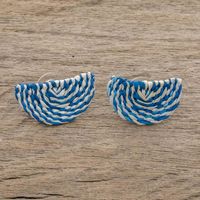
Item added to your cart!
Blue and Ivory Woven Junco Reed Half-Circle Button Earrings 'Creamsicle Swirl'
Quantity:


Powered by

Partners and Collaborators




© 2026 
 You havein your cartTop